
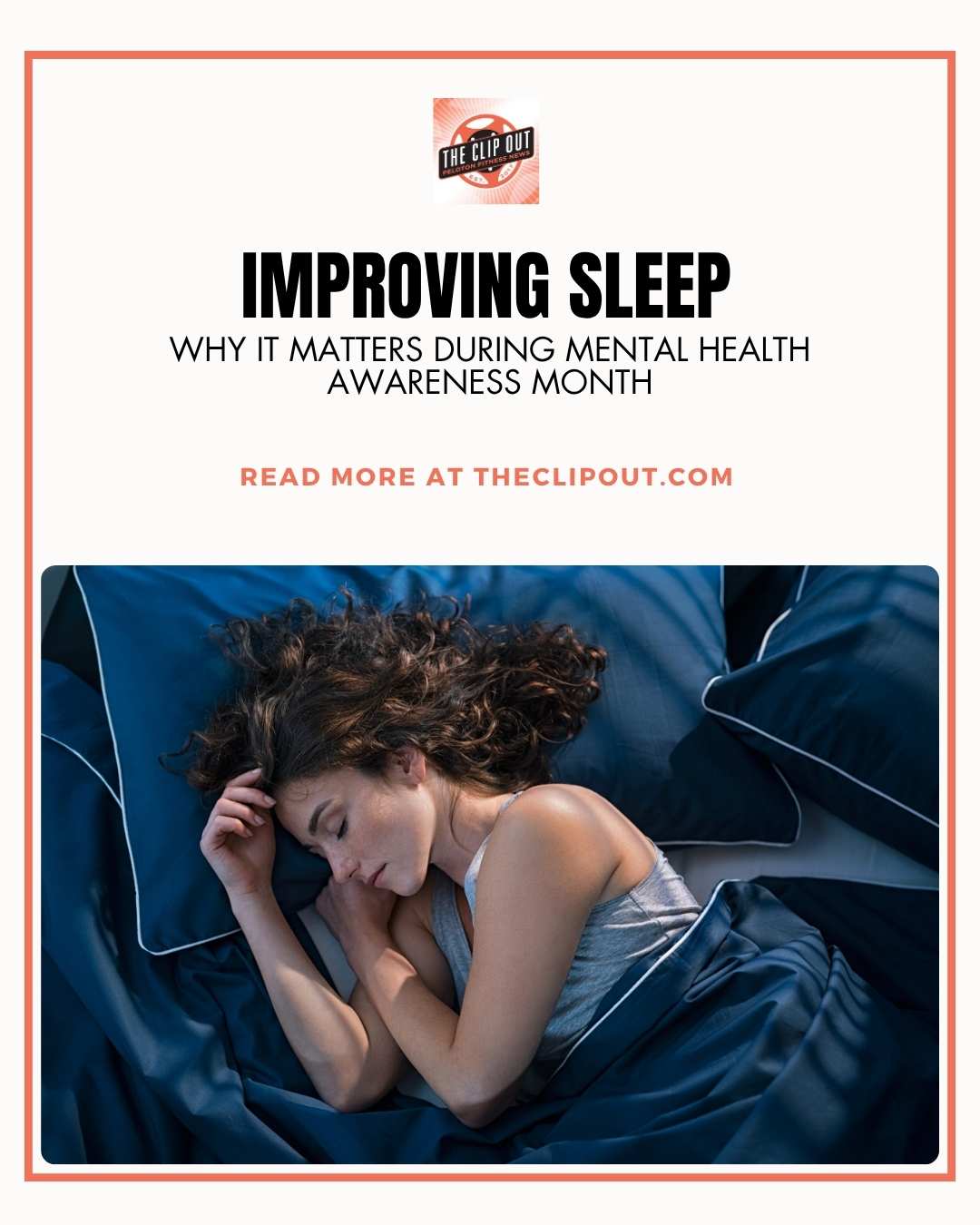
Improving Sleep for Mental Health Month
Improving sleep is one of the most powerful things you can do for your overall health. Sleep is when your body recovers, your muscles repair, and your brain processes everything from the day. Without enough quality sleep, both your physical performance and mental well-being can take a hit.
From a mental health perspective, lack of sleep can increase stress, anxiety, and irritability. It can also make it harder to focus, stay motivated, and manage emotions. Physically, poor sleep can affect recovery, energy levels, and even your immune system.
For Peloton members, improving sleep can directly impact your workouts. You may notice lower output, slower recovery, or less motivation when you are not well rested. Mental Health Awareness Month is a great reminder that rest is not a luxury. It is essential.
Improving Sleep With Simple, Effective Habits
Improving sleep does not have to be complicated. Small changes to your routine and environment can make a big difference over time. Here are six practical tips to help you get better rest.
1. Keep a Consistent Sleep Schedule
One of the most effective ways of improving sleep is going to bed and waking up at the same time each day. This helps regulate your internal clock and makes it easier to fall asleep and wake up naturally.
Try to keep your schedule consistent, even on weekends. Over time, your body will start to recognize when it is time to wind down.
2. Create a Wind-Down Routine
Improving sleep often starts before your head hits the pillow. A calming pre-bed routine can signal to your body that it is time to relax.
This might include dimming the lights, putting away devices, or doing something quiet like reading. Peloton also offers sleep meditations, evening stretches, and evening yoga classes that can help you transition from a busy day into a more restful state. Adding these into your repatoire before bed can be a great way to build this habit.

3. Limit Screen Time Before Bed
Screens from phones, tablets, and TVs can make improving sleep more difficult. The light from these devices can interfere with your body’s natural sleep signals and disrupt the body’s circadian rhythm. This could lead to delayed sleep onset or decreased sleep quality.
Try to avoid screens for at least 30 to 60 minutes before bed. If that feels unrealistic, start small by reducing usage or switching to something more relaxing.
4. Watch Your Caffeine and Late Meals
Improving sleep can also depend on what you consume. Caffeine can stay in your system for hours, making it harder to fall asleep later.
Try limiting caffeine in the afternoon and evening. Large or heavy meals right before bed can also disrupt sleep, so aim to finish eating a few hours before you plan to go to sleep.
5. Make Your Sleep Environment Comfortable
Your bedroom plays a big role in improving sleep. A cool, dark, and quiet environment can make it easier to fall and stay asleep.
Consider adjusting your lighting, using blackout curtains, or lowering the temperature slightly. Small changes to your environment can have a noticeable impact.
6. Move Your Body During the Day
Regular movement supports improving sleep by helping regulate your energy levels and reduce stress. Even a short workout can make it easier to fall asleep at night.
Peloton rides, runs, rows, walks, or strength sessions earlier in the day can support better rest later. Just try to avoid intense workouts too close to bedtime if they leave you feeling energized.
When Sleep Struggles Persist
Improving sleep is not always immediate. If you are consistently having trouble falling or staying asleep, or waking up feeling exhausted, it may be worth talking to a sleep medicine physician or a therapist certified in CBT for Insomnia.
CBTi is a structured, evidence-based program that targets the underlying thoughts and behaviors that contribute to sleep struggles. Unlike medication, which addresses symptoms, CBT-I focuses on identifying and replacing habits, such as irregular sleep schedules or excessive screen time, with routines that promote better rest. It often incorporates techniques like stimulus control, sleep restriction, and relaxation training to “reset” the body’s internal clock and reduce the anxiety associated with being unable to fall asleep. Find a clinician here.
Sleep is a foundational part of health, and ongoing issues deserve attention and support.
Final Thoughts on Improving Sleep
Improving sleep is not about perfection. It is about creating small, supportive habits that help your body and mind recover. Whether it is sticking to a schedule, trying a Peloton sleep meditation, or simply dimming the lights earlier, every step counts.
During Mental Health Awareness Month, remember that rest is a key part of both mental and physical health. Taking care of your sleep is one of the best ways to take care of yourself.
The Clip Out is an independent Peloton news site with reporting, analysis, and community insights. We deliver breaking updates, feature reporting, and expert context on the stories driving the community and the industry.
Our weekly podcast offers deeper conversation and perspective, and you can find us on Apple Podcasts, Spotify, iHeart, TuneIn, and YouTube Music. You can also follow us on our socials on Facebook, Threads, Instagram, BlueSky, and YouTube.
See something in the Peloton universe that you think we should know? Visit us at theclipout.com and submit a tip.
About the Author: Liz Nikol (#JustAskForHelp)

Latest Podcast


Subscribe
Keep up with all the Peloton news!