June is Alzheimer’s & Brain Awareness Month: Andy Speer’s Inspirational and Motivational Message
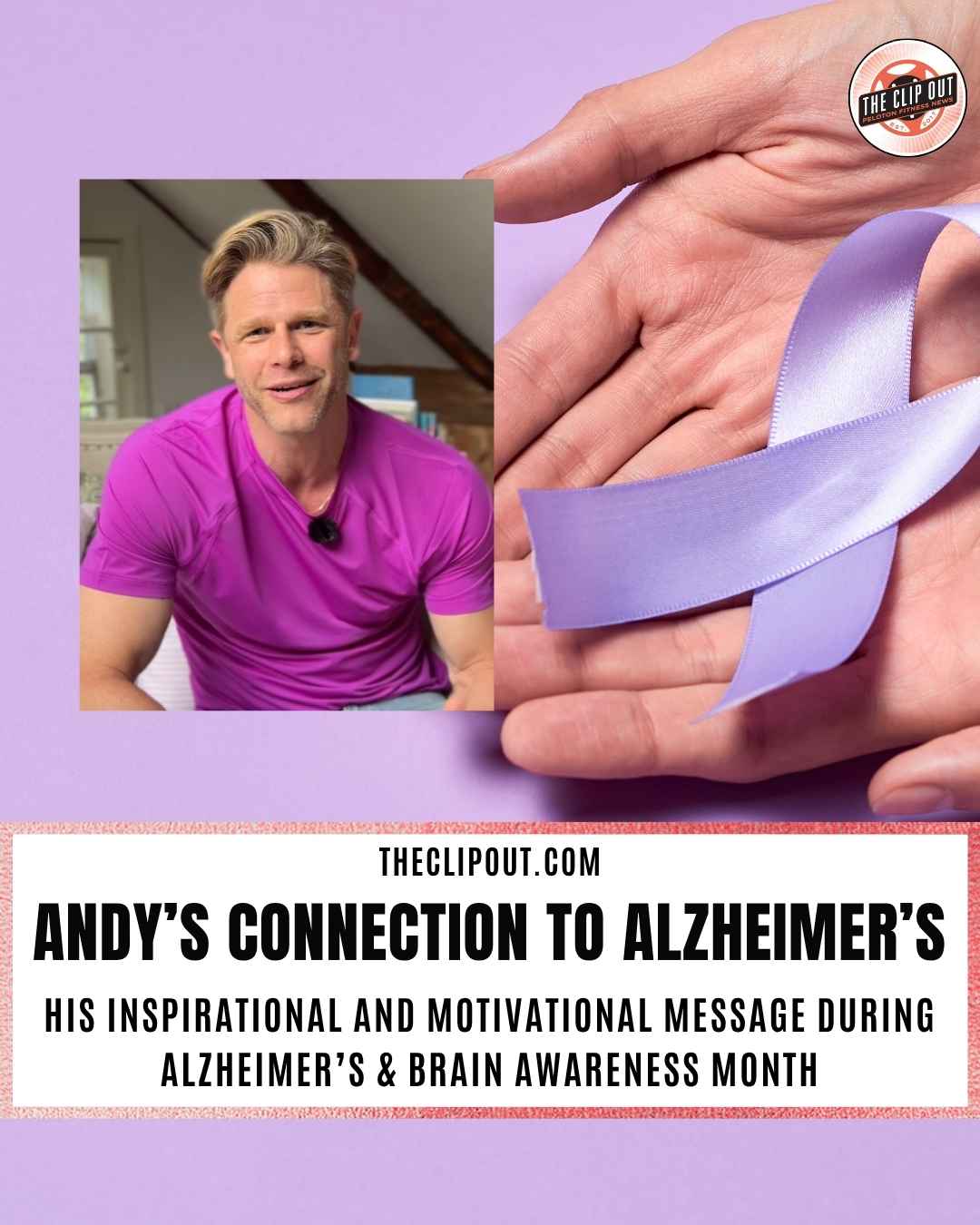
June is Alzheimer’s & Brain Awareness Month, and this year Peloton instructor Andy Speer is making it personal.
In a candid Instagram post, Speer shared that both his maternal grandmother and his stepfather suffered from Alzheimer’s and dementia. It’s a disease that doesn’t just affect the person diagnosed – it reshapes entire families. And Speer, who has made a career out of helping people build stronger, healthier bodies, has channeled that grief into a mission: reminding us all that the best time to fight Alzheimer’s is before symptoms ever begin.
A Month With a Mission
The roots of Alzheimer’s & Brain Awareness Month stretch back to 1983, when President Ronald Reagan first designated November as Alzheimer’s Disease Awareness Month to raise public understanding of the disease and the care it demands. Decades later, the Alzheimer’s Association officially established June as Alzheimer’s & Brain Awareness Month in 2014, inviting a global conversation about brain health. The timing was deliberate. June closes with the summer solstice, which the Alzheimer’s Association has declared “The Longest Day,” a fundraising event where supporters take on activities of their choice to fight the darkness of the disease on the day with the most light. Today, more than 7 million Americans age 65 and older are living with Alzheimer’s, and the lifetime risk at age 45 is 1 in 5 for women and 1 in 10 for men.
Who Is Andy Speer?
If you’re a Peloton member, you know Andy Speer. A Certified Strength and Conditioning Specialist (CSCS) and NASM-certified personal trainer with over 25 years of fitness experience, Speer is one of the platform’s most respected strength and tread instructors. A former gymnast and pole vaulter who competed at the University of Miami, Speer went on to open Soho Strength Lab, one of Manhattan’s most elite private training facilities, before joining Peloton. He was named Men’s Health Next Top Trainer in 2014. On Peloton, he’s known for his technique-driven Total Strength classes, his signature TS60 program, Tread Bootcamp workouts, and a coaching philosophy rooted in purpose. Every exercise he programs has a reason behind it.

“What’s Good for Your Heart Is Good for Your Brain”
In his Instagram message, Speer didn’t just share his story – he offered a roadmap. “There are things we can do to limit our chances of developing Alzheimer’s later in life,” he said. “It starts with a healthy lifestyle, and specifically fitness. What’s good for your heart is good for your brain.”
The science backs him up. Regular aerobic exercise has been shown to significantly reduce disease markers associated with Alzheimer’s, including the amyloid plaques and tau tangles that accumulate in the brain. Research published in Brain Research found that physical activity not only protects healthy brain cells but also helps restore balance in the aging brain – particularly in the hippocampus, the region responsible for memory and learning.
Speer specifically called out high-intensity cardiovascular training, noting that it produces lactate, which has been shown in multiple studies to support brain health. He’s right: emerging evidence suggests that higher-intensity cardio generates compounds that cross the blood-brain barrier and may have neuroprotective effects.
On the strength side, Speer’s message is equally clear: start lifting if you haven’t, and keep lifting if you have. Research supports him here too. Studies have shown that sustained resistance training can lower pro-inflammatory markers, increase the secretion of brain-derived neurotrophic factor (BDNF) – essentially a growth hormone for brain cells – and in animal models, has even been shown to reduce the volume of amyloid plaques in the brain. A 2025 study published in JAMA Network Open found that exercising during midlife may lower dementia risk by as much as 41 percent, and exercising in later life could reduce it by up to 45 percent.
You’re Worth the Work
Perhaps the most powerful line in Speer’s message wasn’t about lactate thresholds or resistance training loads. It was this: “You’re worth the work.”
For those who have watched a parent or grandparent disappear slowly to Alzheimer’s, that sentence lands differently. It’s not just fitness motivation – it’s an act of love for your future self and for the people who love you.
There is still no cure for Alzheimer’s. But the window between when brain changes begin (often 20 or more years before symptoms appear) and when a diagnosis is made is a window of opportunity. The Alzheimer’s Association, along with the researchers behind some of the most compelling studies on dementia prevention, consistently point to physical activity as one of the most modifiable risk factors we have.
This June, let Andy Speer’s story be a reminder. Lace up your shoes. Pick up the weights. Get on the Tread. The workout you do today may be protecting the mind you’ll need tomorrow.
Want to know more about Andy’s classes? Check out our deep dive here.
The Clip Out is an independent Peloton news site with reporting, analysis, and community insights. We deliver breaking updates, feature reporting, and expert context on the stories driving the community and the industry.
Our weekly podcast offers deeper conversation and perspective, and you can find us on Apple Podcasts, Spotify, iHeart, TuneIn, and YouTube Music. You can also follow us on our socials on Facebook, Threads, Instagram, BlueSky, and YouTube.
See something in the Peloton universe that you think we should know? Visit us at theclipout.com and submit a tip.
About the Author: Liz Nikol (#JustAskForHelp)

Latest Podcast

Subscribe
Keep up with all the Peloton news!