Peloton Yoga Sculpt Flow Gets Ankle Weights
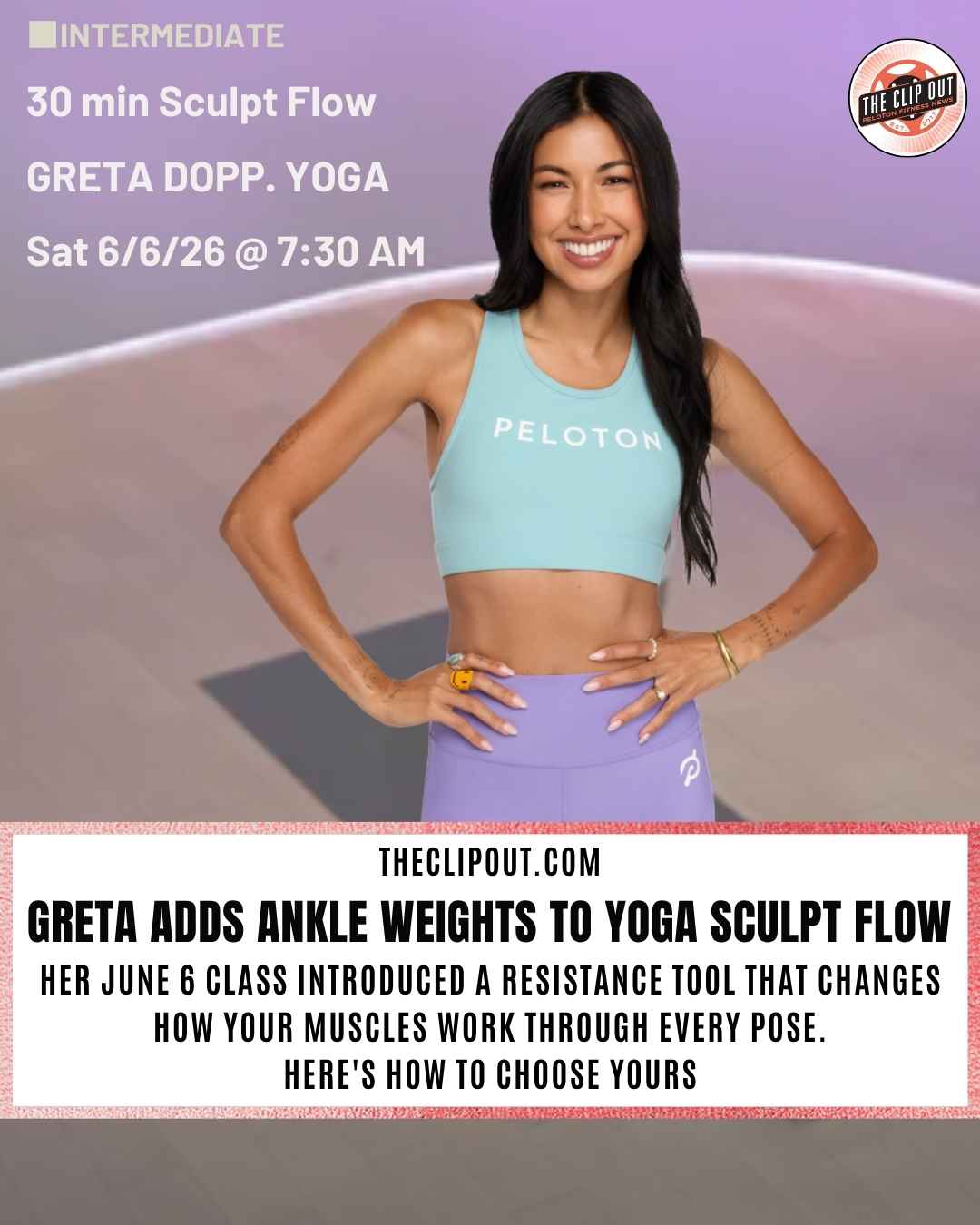
Peloton instructor Greta Dopp brought ankle weights into her 30-minute Yoga Sculpt Flow class on Saturday, June 7, 2026, giving members a low-tech way to significantly increase the challenge of their practice. The addition is simple in concept but meaningful in execution — the right pair of ankle weights can sharpen muscle engagement, raise your metabolic burn, and force more controlled movement through every transition.
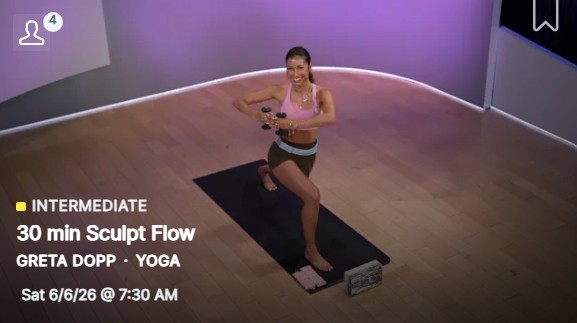
Greta Dopp’s 30 minute Intermediate Sculpt Flow class from June 6, 2026 includes ankle weights for most of the workout.
What to Look for in Ankle Weights for Yoga Sculpt
Not all ankle weights are built for this kind of work. For a yoga sculpt class, the recommended starting range is 1 to 3 pounds. Your limbs function as long levers during yoga movement, which means even a light weight feels substantially heavier than it reads on the label. Keeping the load modest protects your joints and lets you move safely through rapid transitions without sacrificing your form.
Four factors should guide your selection:
Weight range: Beginners and classes with quick transitions call for 1 to 2 pounds. More advanced practitioners may work up to 3 pounds, but there is rarely a reason to go heavier in a yoga sculpt setting.
Adjustability: An adjustable ankle weight lets you modify the load as your endurance builds or when switching between class formats.
Fit: Skip bulky, sand-filled straps that shift during movement. Sleeker, silicone-coated designs, including Bala Bangles. These have a following in yoga sculpt circles stay in place through fast-paced vinyasa flows.
Two-weight strategy: Many yoga sculpt formats recommend bringing both a lighter and a heavier set. Lower body toning movements can often handle more resistance than upper body work, so having the option to swap mid-class is practical.
What Greta Dopp’s Yoga Sculpt Flow Class Covered
After a 3-minute warm-up and 5 minutes of core work, the class moved into a 19-minute flow sequence built around 11 movements: High Lunge Pose, Standing Good Morning, Overhead Press, Knee Fold Toe Tap, Chair Pose, Warrior 2 Pose, Bicep Curl, French Door, Bird Dog, Single Leg Donkey Kick, and Prone Hip Extension. The class closed with a 2-minute cool-down and 1 minute of Savasana.
That sequence is well-suited to ankle weights. Movements like Donkey Kicks, High Lunge transitions, and Prone Hip Extension load the posterior chain directly, and the added resistance amplifies that work considerably.
Why Ankle Weights Work in Yoga Sculpt
The case for ankle weights in a sculpt format goes beyond simply making poses harder. The resistance operates across four specific mechanisms.
Deeper muscle activation. Glutes, hamstrings, quads, and hips have to generate meaningfully more force during movements like donkey kicks, lunges, and crescent pose transitions when a weighted cuff is attached. The muscles that might coast through an unweighted rep are recruited more fully.
Enhanced core stability. Moving a heavier limb shifts your center of gravity. Your deep abdominal muscles and obliques compensate by working harder to keep you centered and balanced during poses, which benefits your core even on movements that do not target it directly.
Mindful movement and time under tension. Unlike resistance bands, ankle weights apply consistent resistance through the full range of motion. That steady drag discourages swinging and rushing, which increases the time your muscles spend under tension — a key driver of strength and endurance gains.
Higher caloric expenditure. More muscle fiber recruitment and greater force output per movement drive heart rate up and increase metabolic burn throughout the session.
A Note on Safety
Because the benefits come with proportional demands on your joints and connective tissue, starting light matters. A 1- to 2-pound weight is the appropriate entry point for most people. This is especially relevant in heated yoga environments, where warmth can make joints and tendons feel more mobile than they are, which may mask discomfort at end-range positions.
If you are new to Peloton’s Yoga Sculpt Flow format, consider taking a session without ankle weights first to learn the movement patterns, then add resistance once the transitions feel fluid.
The Clip Out is an independent Peloton news site with reporting, analysis, and community insights. We deliver breaking updates, feature reporting, and expert context on the stories driving the community and the industry.
Our weekly podcast offers deeper conversation and perspective, and you can find us on Apple Podcasts, Spotify, iHeart, TuneIn, and YouTube Music. You can also follow us on our socials on Facebook, Threads, Instagram, BlueSky, and YouTube.
See something in the Peloton universe that you think we should know? Visit us at theclipout.com and submit a tip.
About the Author: Nikki Smith

Latest Podcast
Subscribe
Keep up with all the Peloton news!