95 Peloton Foam Rolling Classes to Take Today
Peloton Foam Rolling Classes: Have You Tried Them Yet?
Today is National Foam Rolling Day… what better time!
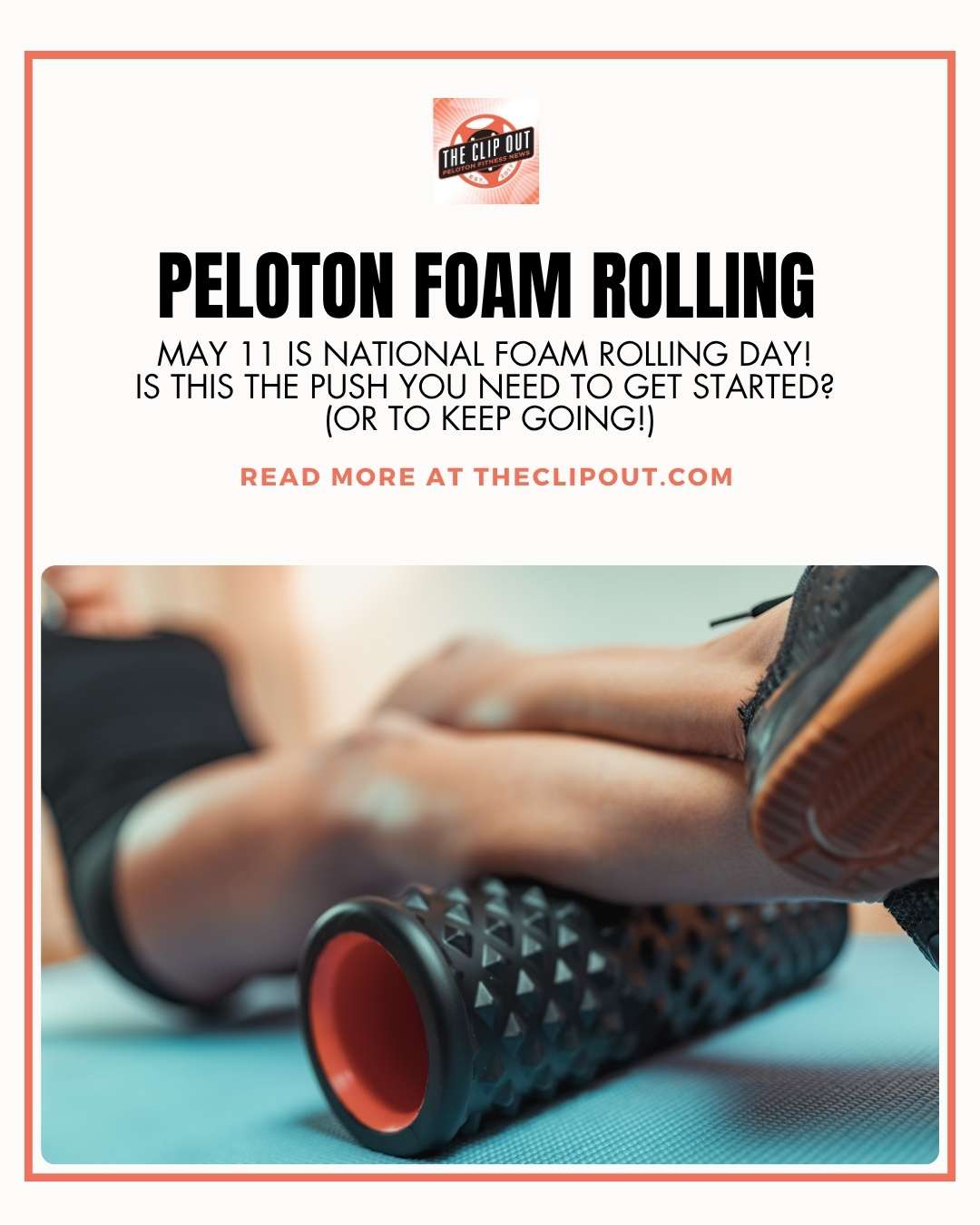
May 11 is National Foam Rolling Day, and Peloton members have more than enough on-platform content to celebrate it properly. With 95 Peloton foam rolling classes currently in the library, there is no shortage of options whether you have five minutes or 20, want to target a specific muscle group, or prefer instruction in English or German.
National Foam Rolling Day was established in 2015 by TriggerPoint, a division of Implus Corporation, to spotlight the benefits of self-myofascial release as part of a regular recovery routine. The premise is simple: foam rolling helps reduce muscle tension, support flexibility, and improve circulation, making it a practical complement to any training program.
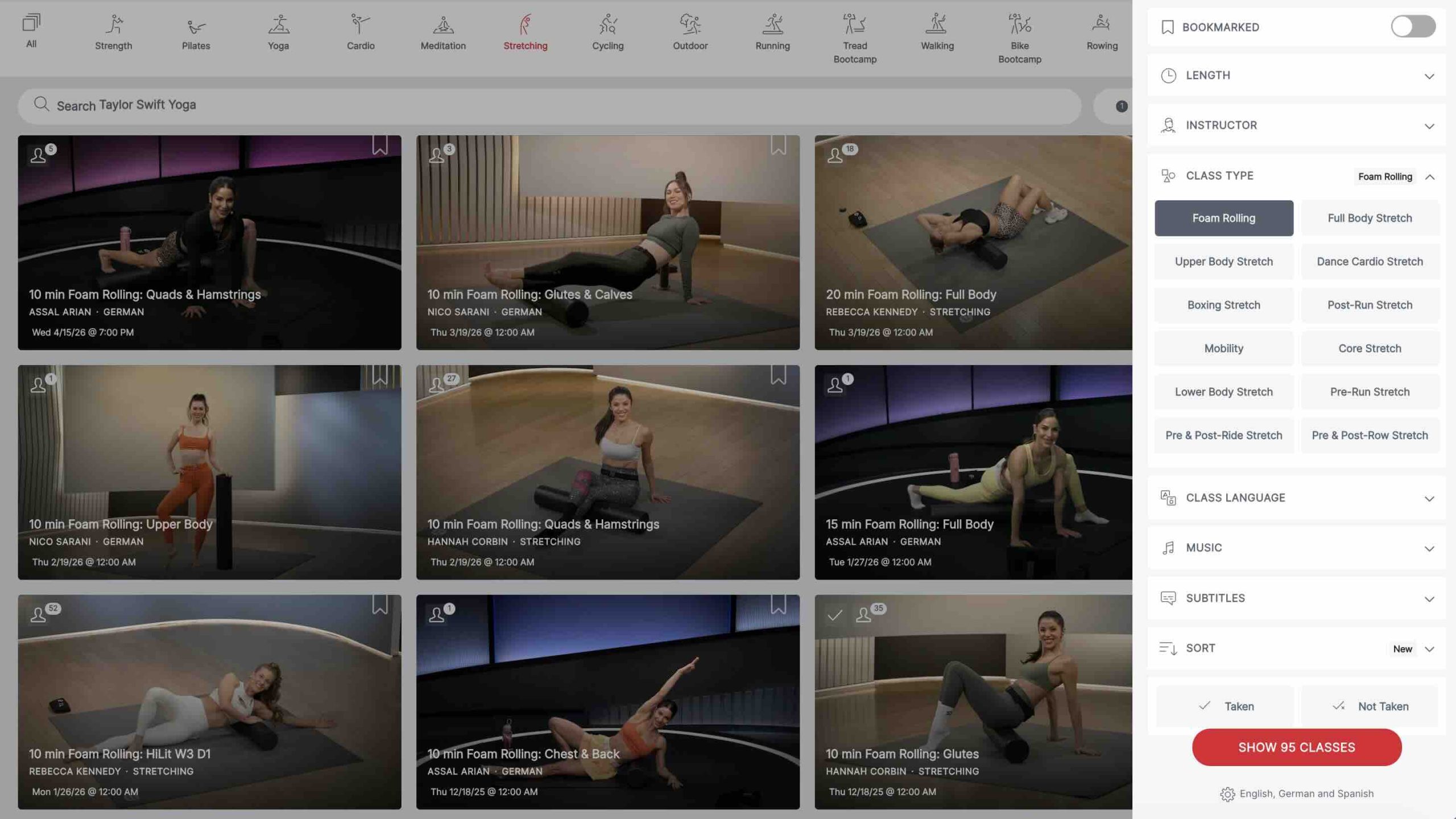
Navigate to Classes>Stretching>Foam Rolling to find all the classes
What is Foam Rolling For?
Foam rolling is all about highlighting SMR (Self-Myofascial Release). If you’ve ever felt like your muscles were wrapped in tight plastic wrap, that’s your fascia. Foam rolling is the “reset” button your muscles need.
Here’s why it’s worth the 10 minutes of effort:
1. Improved Range of Motion
Think of foam rolling as “pre-stretching.” By breaking up adhesions (the “knots”) in your fascia, you allow your muscles to stretch further and move more freely. Unlike static stretching, it doesn’t temporarily sap your muscle power, making it a great warm-up tool.
2. Accelerated Recovery (DOMS)
The bane of every athlete’s existence is Delayed Onset Muscle Soreness (just ask Denis, haha, IYKYK). Rolling increases blood flow and oxygen to the treated area, which helps flush out metabolic waste and reduces the “heavy leg” feeling the day after a big workout.
3. Stress Reduction and Nervous System Down-Regulation
While it can be intense in the moment, rhythmic rolling helps stimulate the parasympathetic nervous system. This helps lower cortisol levels and signals to your brain that it’s time to move from “fight or flight” into “rest and digest” mode.
4. Better Posture
Modern life (the “tech slouch”) tightens our chests, lats, and hip flexors. Rolling out these specific areas can help pull your shoulders back and realign your pelvis, making you stand taller without having to constantly remind yourself to “sit up straight.”
Peloton Foam Rolling to the Rescue
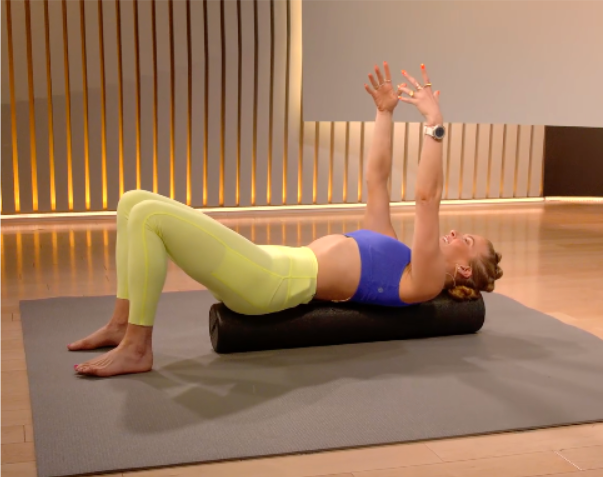
Peloton’s foam rolling library sits within the Stretching category and has grown considerably since Hannah Corbin pioneered the format on the platform. Today, five instructors teach it, including two German-language instructors whose classes serve Peloton’s international community. Classes range from 5 to twenty minutes and target everything from the full body to highly specific areas like the calves, hips, and chest and back.
If you are new to the format, The Clip Out has covered it before. When three new foam rolling classes dropped in August 2023, we noted that Rebecca Kennedy’s addition to the roster was a welcome expansion of a library that had been primarily Hannah’s domain.
Assal Arian and Nico Sarani also joined the crew, and even Marcel Maurer has one single class under Peloton Foam Rolling as part of his Strength for Soccer series.
Check out the German Peloton Foam Rolling Collection here.
Peloton Foam Rolling Tips for Success
Here are some key approaches to help ease you into this important work:
-
Don’t roll directly on bone: Stay on the “meaty” parts of the muscle.
-
Breathe: If you hold your breath because it hurts, your muscles will tense up, defeating the purpose.
-
Go Slow: You aren’t rolling out pizza dough. Move at a pace of about one inch per second.
-
Hydrate: SMR moves fluid through your tissues; drink water afterward to help “rehydrate” that fascia.
Which classes are your go-to’s for warm up or recovery?
About the Author: Elizabeth Schlosberg

Latest Podcast
Subscribe
Keep up with all the Peloton news!