Charlotte Weidenbach on Stress With 6 Valuable Takeaways
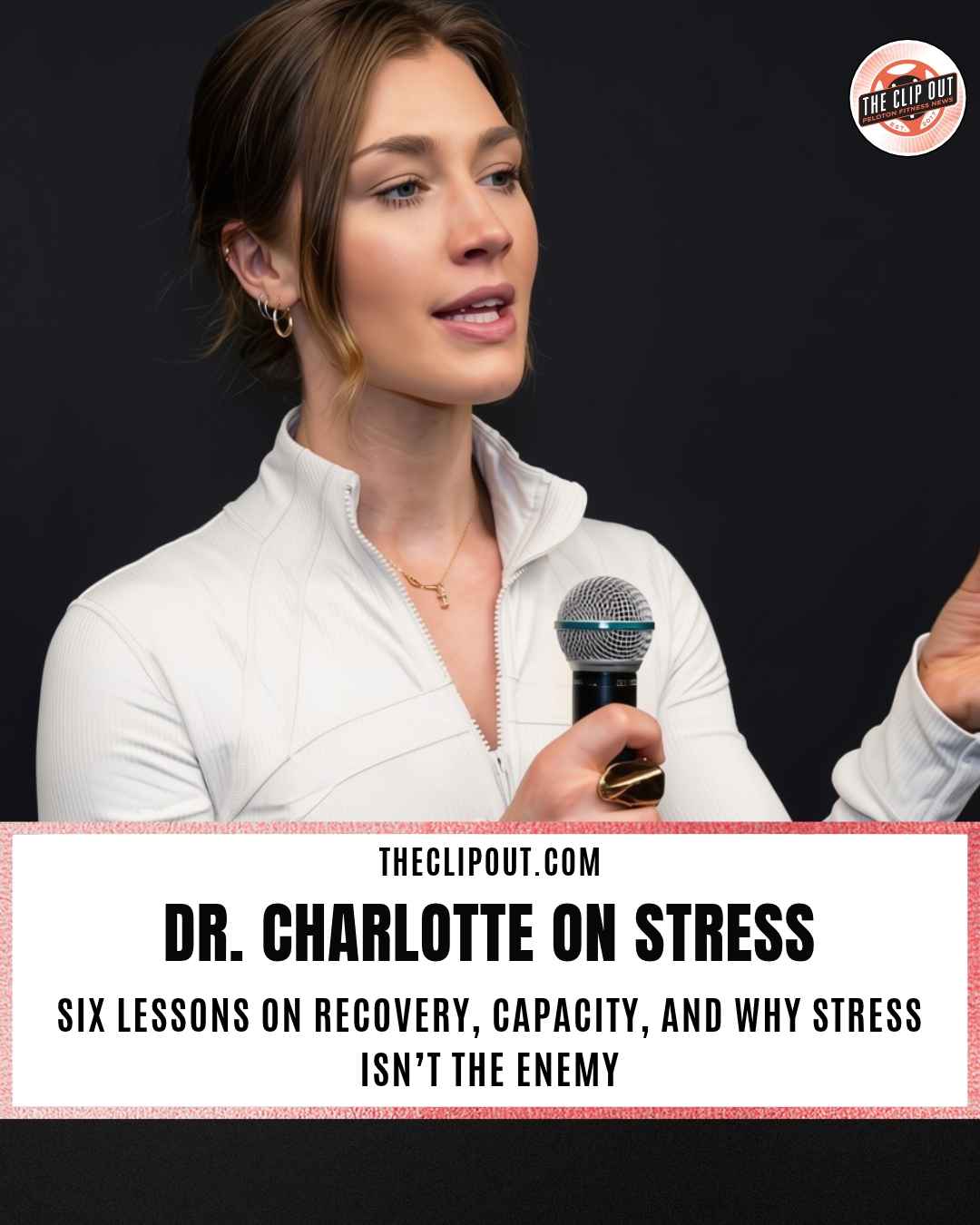
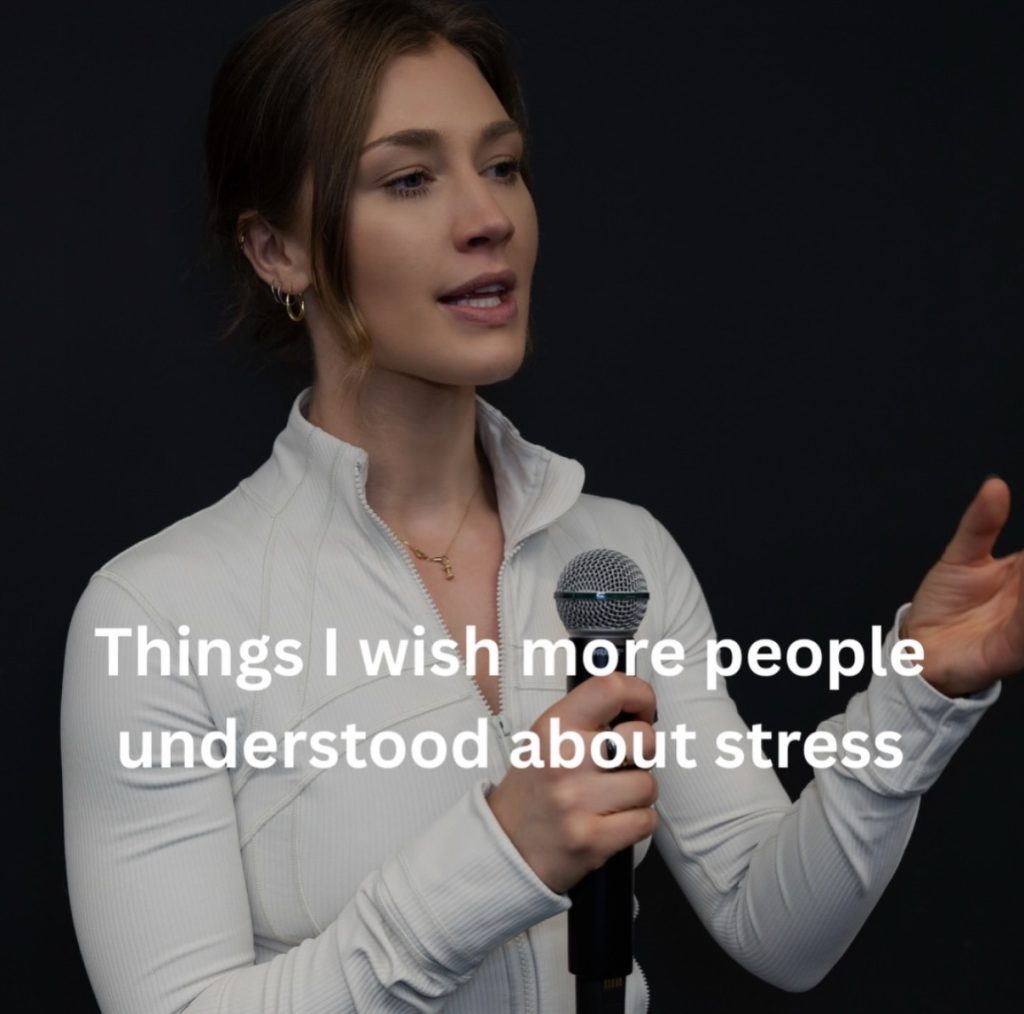 New advice from Dr. Charlotte Weidenbach on stress offers a practical reminder that a tough workout and a looming deadline both land in the same body. In an Instagram carousel posted on November 5, titled “Things I wish more people understood about stress,” the Peloton instructor and trained physician breaks the topic into six short lessons that treat stress as something to manage, not something to fear.
Dr. Charlotte Weidenbach earned her medical degree at Charité Berlin in 2021, and she has made a habit of turning clinical knowledge into everyday coaching, from her Psychology Meets Medicine series with Mayla Wedekind to a recent panel on evidence-based health. Her latest post on stress and recovery follows the same approach.
Charlotte Weidenbach on Stress Starts With a Definition
Her first slide asks a simple question: is stress bad for you? Her answer is “Not necessarily.”
She separates two terms people often treat as one. A stressor is a demand or challenge. Stress is your response to it. That response, she explains, can help you react, cope, and adapt. Her bottom line is clear: “Stress itself isn’t the enemy.” 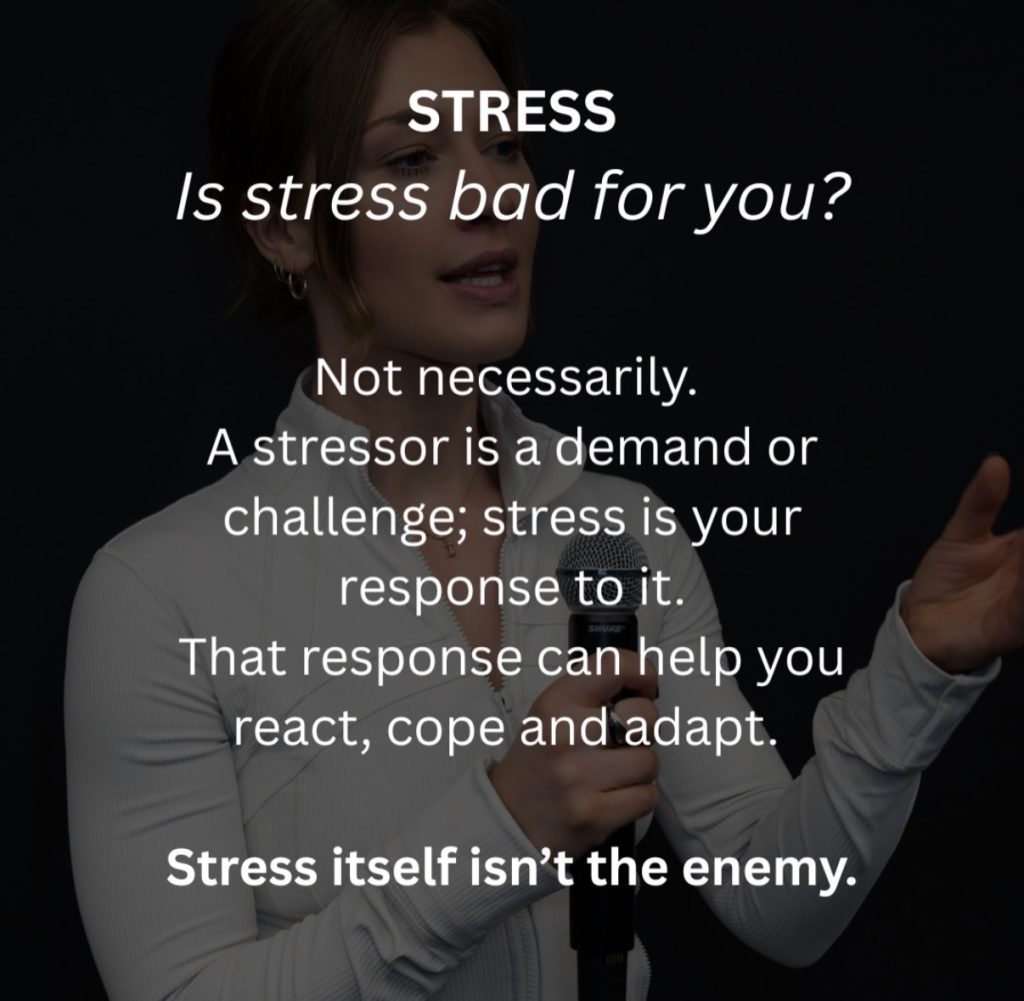
Starting with definitions makes the rest of the lessons from Charlotte Weidenbach on stress easier to follow, because each one builds on the idea that the response matters as much as the trigger.
Stress and Recovery Work as a Sequence
The second slide lays out what happens when we say we’re “stressed” in three stages:
• Stress is the immediate response to a stressor. • Recovery is the process that follows. • Adaptation is a possible result.
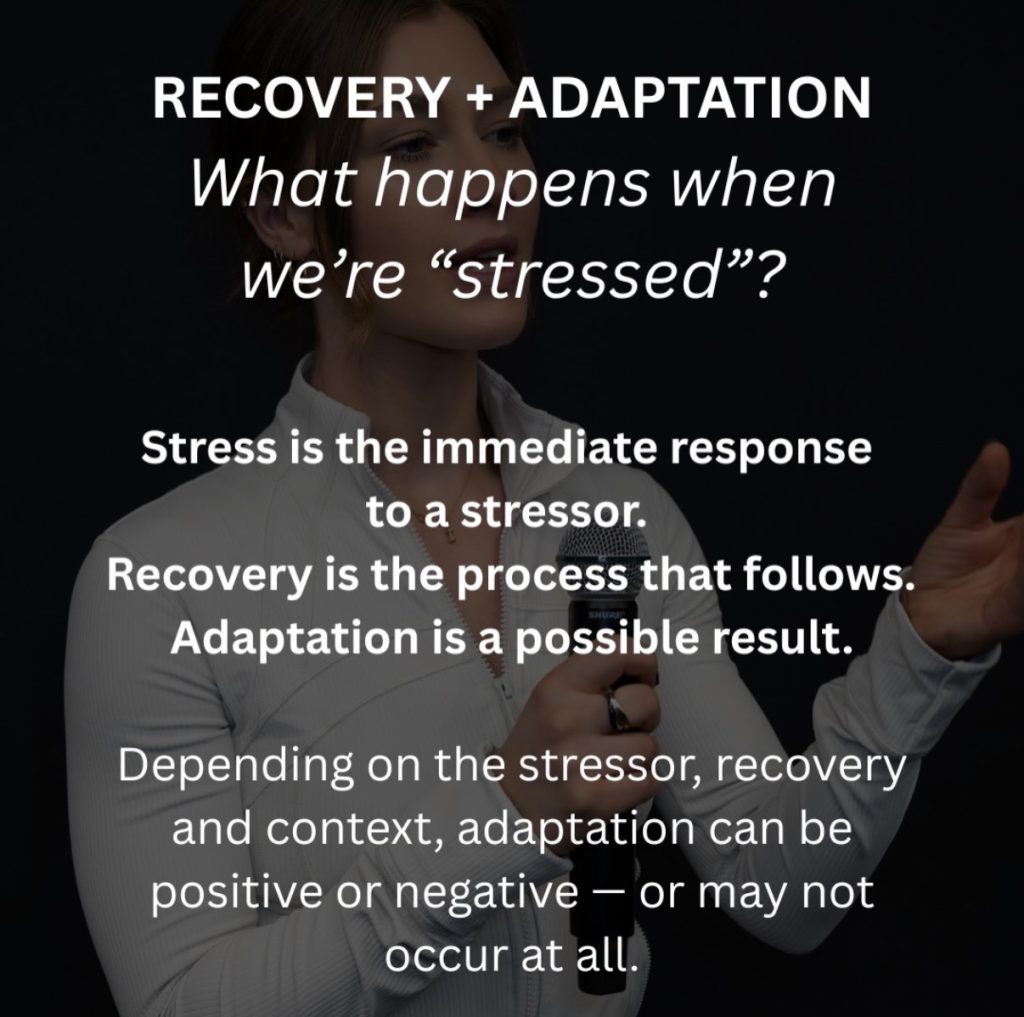 The word “possible” does real work there. Depending on the stressor, the recovery, and the context, adaptation can be positive or negative, or it may not happen at all. That puts stress and recovery on equal footing, with rest treated as part of the process rather than an afterthought.
Why the Same Stressor Hits People Differently
One of the most relatable slides asks why something stresses you out when someone else seems fine. Her answer is that the stressor is only part of the equation.
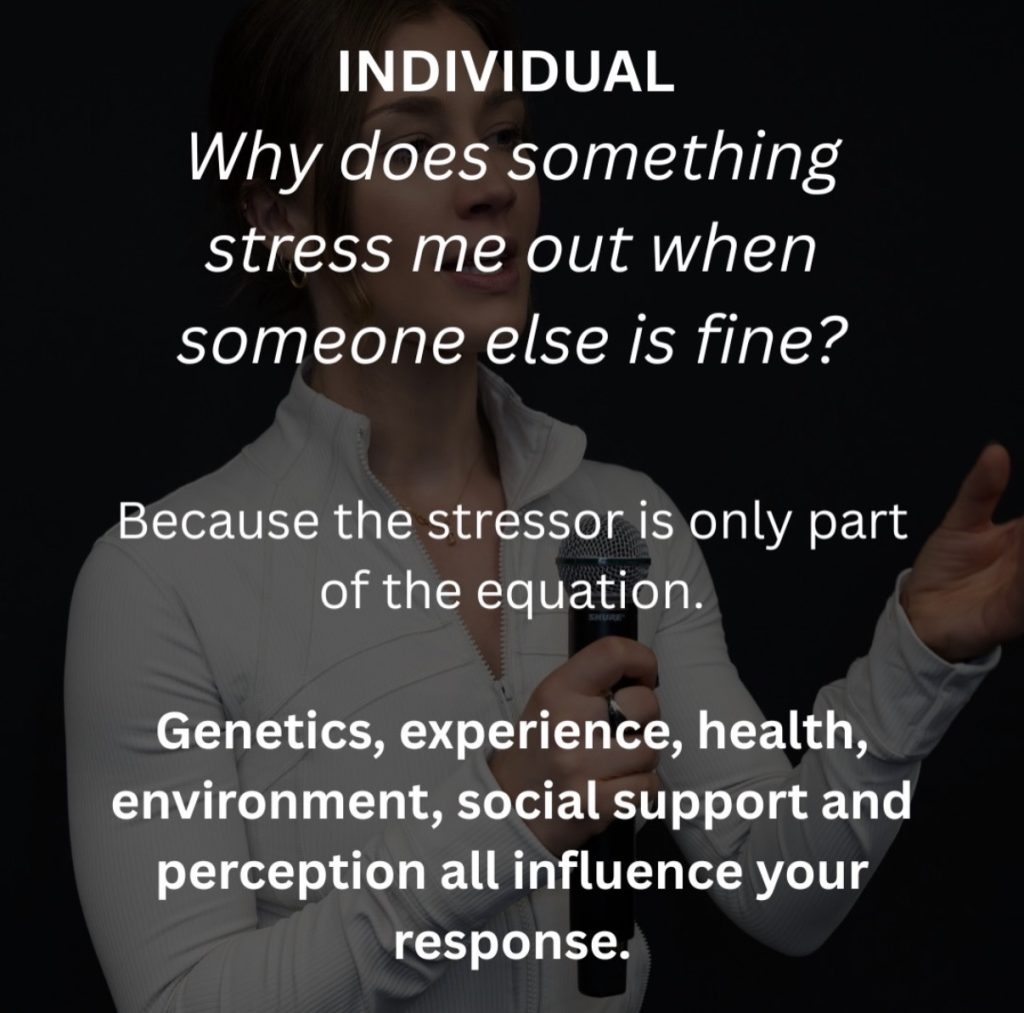 Genetics, experience, health, environment, social support, and perception all shape how a person responds. That view from Charlotte Weidenbach on stress is a helpful check on comparison, whether you’re measuring yourself against a coworker or another member’s training schedule.
How Much Stress Is Too Much?
On the question of dose, the message from Dr. Charlotte Weidenbach on stress is that there is no universal amount. Intensity, duration, and frequency matter, but so do your current capacity and your ability to recover.
She sums it up in one line: “The same demand can be manageable today and overwhelming tomorrow.”
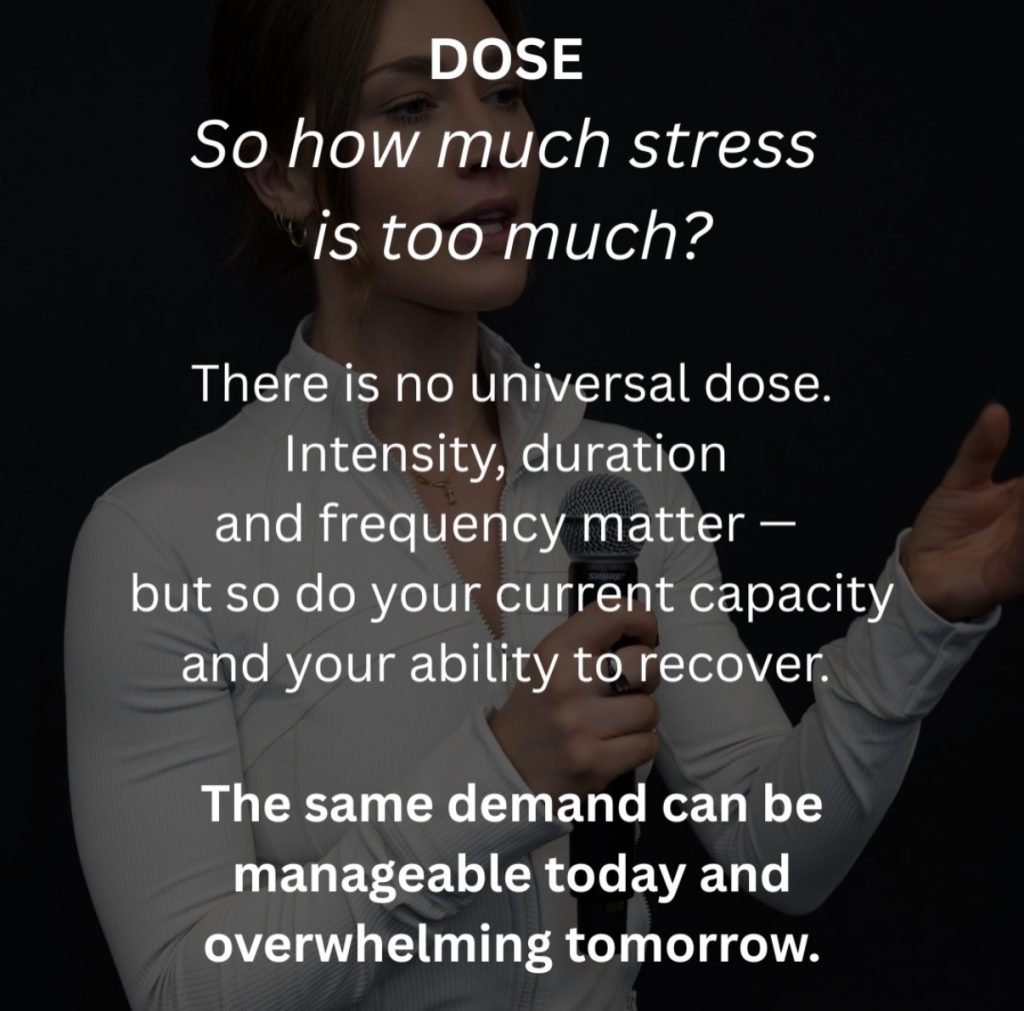 On a Peloton schedule, that could mean a Strength class or a Tread interval session feels manageable one week and much harder the next, even when nothing about the class has changed. The guidance from Charlotte Weidenbach on stress points to your capacity and recovery as part of that difference, not just the class itself.
Does Exercise Help With Stress?
Her answer is yes, and it can also add to it. Different stressors trigger different responses, but they don’t happen in isolation. When demands exceed your capacity to recover, strain can accumulate.
At the right dose, she notes, exercise can improve mood and increase your capacity to cope with future demands. She also points out that “Your body CAN tell the difference between a workout and a deadline,” but it still has to respond to both.
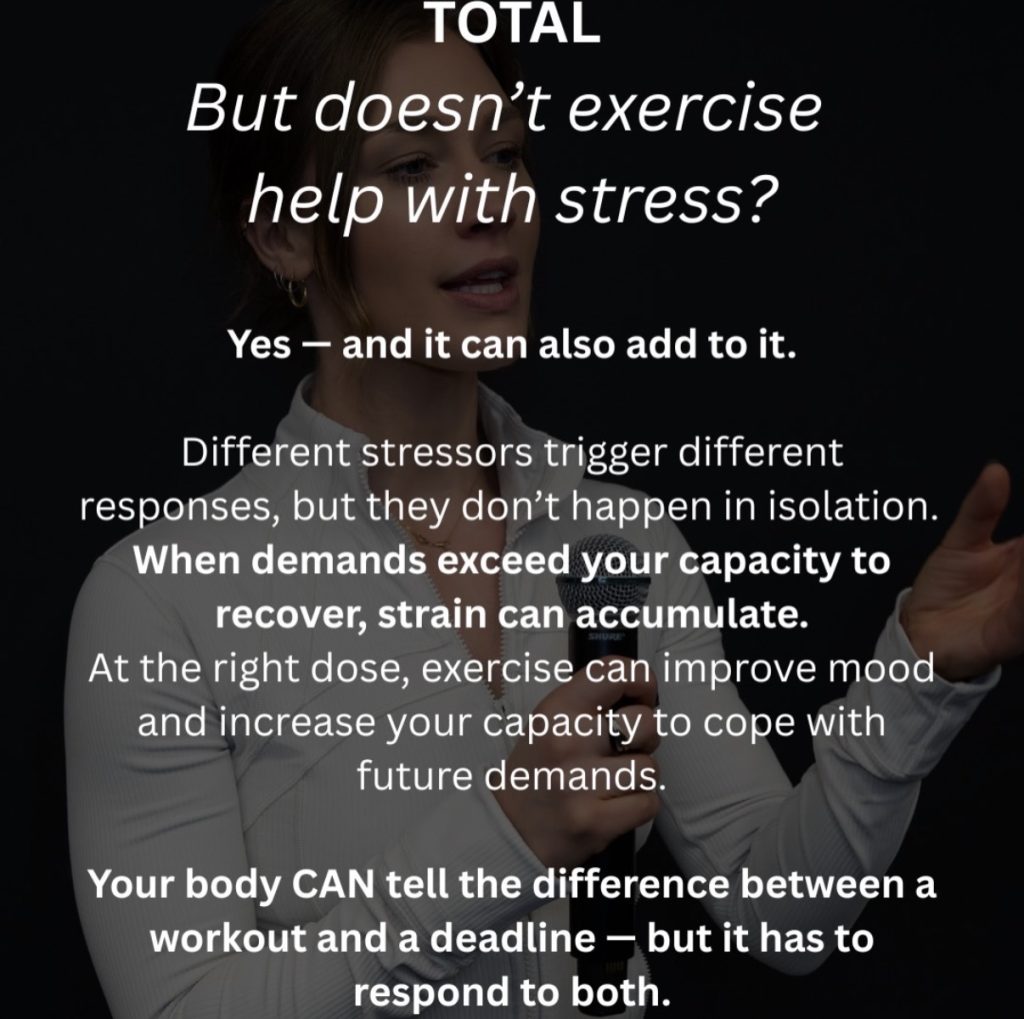 So, does exercise help with stress? In her framing, it can, as long as the workout fits within your total load instead of stacking on top of everything else. That balance is the core of stress and recovery as she describes it.
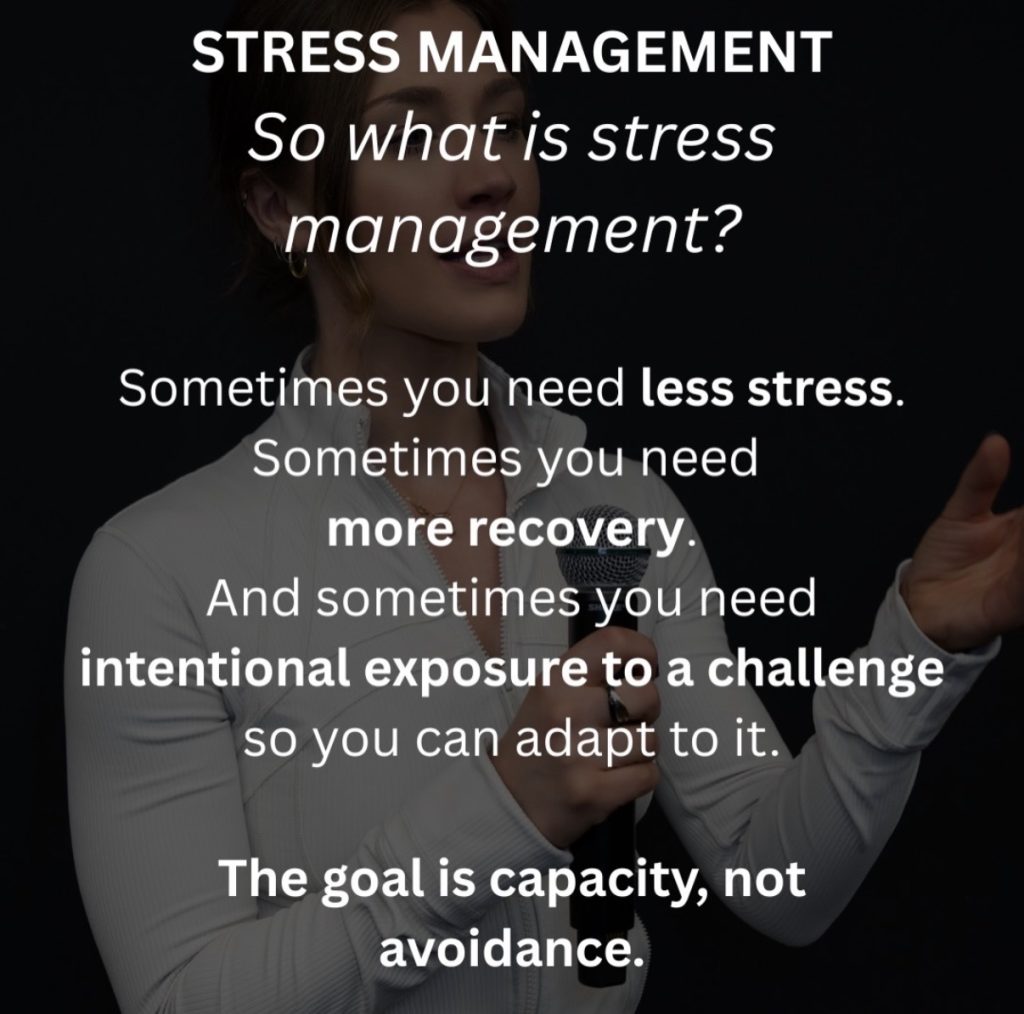
Charlotte Weidenbach on Stress Management and Building Capacity
The final slide defines stress management in three parts:
• Sometimes you need less stress. • Sometimes you need more recovery. • Sometimes you need intentional exposure to a challenge so you can adapt to it.
Her closing line: “The goal is capacity, not avoidance.”
 That idea fits the full range of Peloton training. Meditation, Stretching, and Yoga classes can support recovery, while Strength, Tread, Row, and Bike classes can provide intentional challenge. The lesson from Charlotte Weidenbach on stress is that progress depends on balancing both, and on being honest about which one you need on a given day.
Members who want more of her approach can find her classes on her Peloton instructor page, and our Peloton Hidden Gems feature on Charlotte Weidenbach covers what she brings to the platform beyond her Metal and Power Zone rides. For anyone looking for more from Dr. Charlotte Weidenbach on stress, her Instagram is where she shares this kind of coaching regularly. [/fusion_text]
The Clip Out is an independent Peloton news site with reporting, analysis, and community insights. We deliver breaking updates, feature reporting, and expert context on the stories driving the community and the industry. Our weekly podcast offers deeper conversation and perspective, and you can find us on Apple Podcasts, Spotify, iHeart, TuneIn, and YouTube Music. You can also follow us on our socials on Facebook, Threads, Instagram, BlueSky, and YouTube. See something in the Peloton universe that you think we should know? Visit us at theclipout.com and submit a tip.
Peloton physician Charlotte Weidenbach on stress, recovery, and why capacity beats avoidance
New advice from Dr. Charlotte Weidenbach on stress offers a practical reminder that a tough workout and a looming deadline both land in the same body. In an Instagram carousel posted on November 5, titled "Things I wish more people understood about stress," the Peloton instructor and trained physician breaks the topic into six short lessons that treat stress as something to manage, not something to fear.
Dr. Charlotte Weidenbach earned her medical degree at Charité Berlin in 2021, and she has made a habit of turning clinical knowledge into everyday coaching, from her Psychology Meets Medicine series with Mayla Wedekind to a recent panel on evidence-based health. Her latest post on stress and recovery follows the same approach.
Charlotte Weidenbach on Stress Starts With a Definition
Her first slide asks a simple question: is stress bad for you? Her answer is "Not necessarily."
She separates two terms people often treat as one. A stressor is a demand or challenge. Stress is your response to it. That response, she explains, can help you react, cope, and adapt. Her bottom line is clear: "Stress itself isn't the enemy."
Starting with definitions makes the rest of the lessons from Charlotte Weidenbach on stress easier to follow, because each one builds on the idea that the response matters as much as the trigger.
Stress and Recovery Work as a Sequence
The second slide lays out what happens when we say we're "stressed" in three stages:
• Stress is the immediate response to a stressor. • Recovery is the process that follows. • Adaptation is a possible result.
The word "possible" does real work there. Depending on the stressor, the recovery, and the context, adaptation can be positive or negative, or it may not happen at all. That puts stress and recovery on equal footing, with rest treated as part of the process rather than an afterthought.
Why the Same Stressor Hits People Differently
One of the most relatable slides asks why something stresses you out when someone else seems fine. Her answer is that the stressor is only part of the equation.
Genetics, experience, health, environment, social support, and perception all shape how a person responds. That view from Charlotte Weidenbach on stress is a helpful check on comparison, whether you're measuring yourself against a coworker or another member's training schedule.
How Much Stress Is Too Much?
On the question of dose, the message from Dr. Charlotte Weidenbach on stress is that there is no universal amount. Intensity, duration, and frequency matter, but so do your current capacity and your ability to recover.
She sums it up in one line: "The same demand can be manageable today and overwhelming tomorrow."
On a Peloton schedule, that could mean a Strength class or a Tread interval session feels manageable one week and much harder the next, even when nothing about the class has changed. The guidance from Charlotte Weidenbach on stress points to your capacity and recovery as part of that difference, not just the class itself.
Does Exercise Help With Stress?
Her answer is yes, and it can also add to it. Different stressors trigger different responses, but they don't happen in isolation. When demands exceed your capacity to recover, strain can accumulate.
At the right dose, she notes, exercise can improve mood and increase your capacity to cope with future demands. She also points out that "Your body CAN tell the difference between a workout and a deadline," but it still has to respond to both.
So, does exercise help with stress? In her framing, it can, as long as the workout fits within your total load instead of stacking on top of everything else. That balance is the core of stress and recovery as she describes it.
Charlotte Weidenbach on Stress Management and Building Capacity
The final slide defines stress management in three parts:
• Sometimes you need less stress. • Sometimes you need more recovery. • Sometimes you need intentional exposure to a challenge so you can adapt to it.
Her closing line: "The goal is capacity, not avoidance."
That idea fits the full range of Peloton training. Meditation, Stretching, and Yoga classes can support recovery, while Strength, Tread, Row, and Bike classes can provide intentional challenge. The lesson from Charlotte Weidenbach on stress is that progress depends on balancing both, and on being honest about which one you need on a given day.
Members who want more of her approach can find her classes on her Peloton instructor page, and our Peloton Hidden Gems feature on Charlotte Weidenbach covers what she brings to the platform beyond her Metal and Power Zone rides. For anyone looking for more from Dr. Charlotte Weidenbach on stress, her Instagram is where she shares this kind of coaching regularly.
The Clip Out is an independent Peloton news site with reporting, analysis, and community insights. We deliver breaking updates, feature reporting, and expert context on the stories driving the community and the industry. Our weekly podcast offers deeper conversation and perspective, and you can find us on Apple Podcasts, Spotify, iHeart, TuneIn, and YouTube Music. You can also follow us on our socials on Facebook, Threads, Instagram, BlueSky, and YouTube. See something in the Peloton universe that you think we should know? Visit us at theclipout.com and submit a tip.
About the Author: Jen Kern

Latest Podcast


Subscribe
Keep up with all the Peloton news!