
Volume and Intensity Training: 4 Essential Rules to Know
Why Dr. Charlotte Weidenbach Wants Members to Rethink Training
Peloton instructor Dr. Charlotte Weidenbach is using her platform to clear up one of the most common mix-ups in fitness. In a recent Instagram post, the physician turned cycling instructor broke down volume and intensity training, explaining why the two concepts get confused and why that confusion often stalls progress before members even notice it happening.
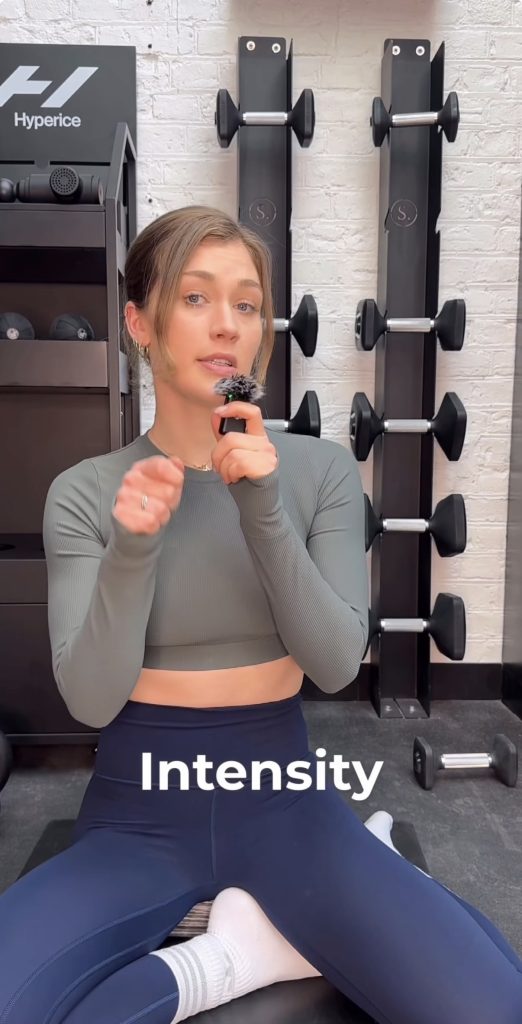

Weidenbach said the biggest misconception in training is that more and harder mean the same thing. They do not. Volume describes how much total work a person does across sets, reps, or duration. Intensity describes how hard that work actually is, whether that is heavier weights, training closer to failure, or a higher cardiovascular effort. Both matter, but treating them as interchangeable is where members run into trouble.

How Volume and Intensity Training Actually Works
According to Weidenbach, the body experiences both volume and intensity as stress, and that shared load is exactly where people accidentally derail their own progress. If every strength session pushes to the limit, recovery becomes the limiting factor long before motivation does. Slightly reducing intensity on some days, she explained, allows members to train more consistently, recover better between sessions, and maintain higher movement quality over time.
View this post on Instagram
That does not mean max effort has no place. Weidenbach was clear that going to the limit occasionally is valuable. Her point is about structure. For members training daily, a program that mixes high and low intensity days, across both cardio and strength, makes it possible to sustain more total productive training without breaking down. Volume and intensity training only works long term when both variables are managed on purpose rather than maxed out by default. This builds on ground she covered in a previous breakdown of whether members can train every day, where she made a similar case for recovery capacity over raw motivation.
The Peloton Training Philosophy Behind Her Approach
Weidenbach’s approach to volume and intensity training did not appear in isolation. In a separate post titled “The Ideas That Shape Everything I Teach,” she laid out the broader Peloton training philosophy that informs how she coaches. Four ideas anchor it.
View this post on Instagram
- More information does not automatically lead to better decisions. Members are surrounded by more health advice than ever, and learning what deserves attention matters more than consuming additional content.
- Health should improve a person’s life, not limit it. The “perfect” plan is often not the best one. The best plan is the one a person can do consistently and enjoy.
- The greatest success in medicine is often invisible, the illness that never develops, the injury that never happens, the treatment that never becomes necessary. That is the power of prevention.
- The body is not working against a person. Fatigue, hunger, pain, and soreness are signals worth understanding, not problems to suppress.
Taken together, these principles explain why Weidenbach frames volume and intensity training the way she does. Her instruction consistently favors sustainable effort over occasional heroics, a pattern The Clip Out has traced through her other Instagram education work, including a muscle-building Q&A where she broke down the physiological drivers of hypertrophy for followers using the same plain-language approach.
What This Looks Like in Practice
For members applying this Peloton training philosophy to their own schedules, the practical takeaway is straightforward. Progress comes from what a person can recover from and repeat, not from how hard a single session felt. Building in lower intensity days alongside harder efforts, across strength and cardio alike, supports the kind of volume and intensity training that holds up over months rather than one standout week.
Weidenbach has built her platform around translating medical training into practical coaching, a pattern The Clip Out first explored in a Peloton Hidden Gems feature on her prevention-focused programming, and one she reinforced again during a recent panel appearance on evidence-based health. Rather than pushing a single formula, she is asking members to understand the two variables driving their results and to manage them with intention.
The Clip Out is an independent Peloton news site with reporting, analysis, and community insights. We deliver breaking updates, feature reporting, and expert context on the stories driving the community and the industry. Our weekly podcast offers deeper conversation and perspective, and you can find us on Apple Podcasts, Spotify, iHeart, TuneIn, and YouTube Music. You can also follow us on our socials on Facebook, Threads, Instagram, BlueSky, and YouTube. See something in the Peloton universe that you think we should know? Visit us at theclipout.com and submit a tip.
About the Author: Jen Kern



Subscribe
Keep up with all the Peloton news!