

Skop Founder Kim Clayton: 7 Years, 1 Wild Week
Skōp Founder Kim Clayton Signed Peloton Deal Hours Before Birth
A new account from a longtime advisor fills in what Peloton’s acquisition announcement left out, and shows how Kim Clayton’s path shapes her role leading Pilates at Peloton.
Skōp founder Kim Clayton signed the paperwork closing Peloton’s acquisition of her company during active labor, three and a half hours before her baby was born. That detail comes from a new tribute written by longtime Skōp advisor Kelly Nyland, and it adds real texture to a story Peloton’s original announcement only summarized in corporate terms. Read Kelly Nyland’s post here.
Skōp Founder Kim Clayton Signed the Deal During Labor
According to Nyland’s account, Clayton went into labor eight days early, at 1:20 in the morning. On the way to the hospital, she noticed her lawyers had sent over signature requests for the acquisition’s closing documents. She signed them during labor. Her son was born three and a half hours later. By 6:30 a.m., with the baby in her arms, Peloton’s New York team, three hours ahead on the East Coast, had already started sending calendar invites for employee onboarding meetings. A few hours after that, according to Nyland, Clayton had her laptop open and was working.
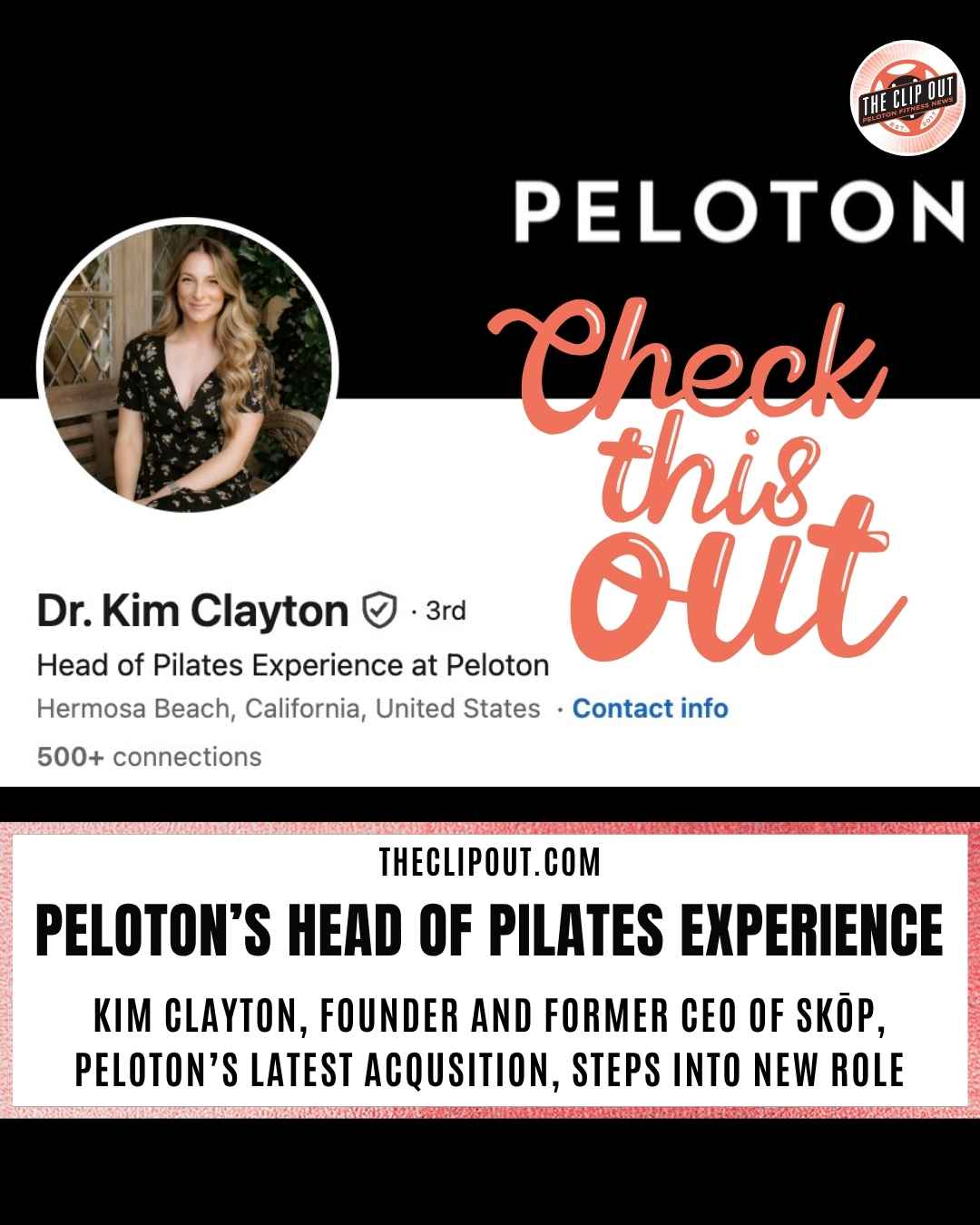
The Clip Out covered Clayton’s move into her new role, Head of Pilates Experience at Peloton Interactive, when it was first confirmed in June. What Nyland’s post adds is the timeline behind it, and just how much personal upheaval sat underneath Peloton’s clean announcement.
Skōp Founder Kim Clayton Used a Clinician’s Eye
Clayton is a doctor of chiropractic and a certified athletic trainer, and that clinical background is central to understanding what she actually built. The Skōp reformer reads a user’s weight distribution, tempo, tension, and range of motion, then delivers real-time feedback when form breaks down. Nyland describes it as a clinician’s eye, productized, built by someone who spent years watching people compensate and get hurt doing exercises meant to help them.
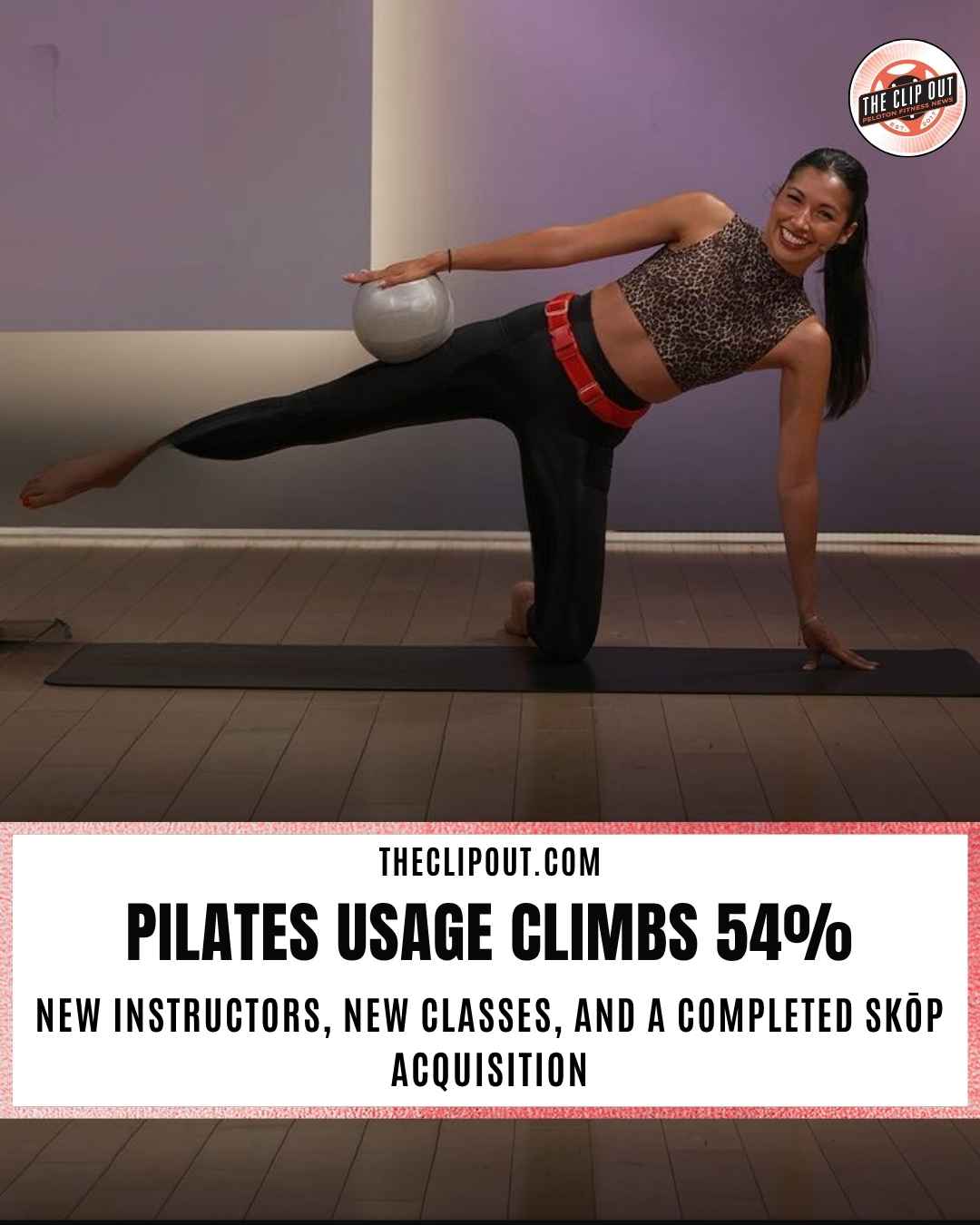
That framing lines up with how Peloton has talked about the deal since it closed. The Clip Out reported that Pilates usage on the platform climbed 54 percent year over year following the acquisition, and Peloton has pointed to Skōp’s form-tracking technology as the reason it moved on Pilates hardware at all. A reformer designed around correcting movement, rather than just tracking output, fits squarely into that pitch.
Six Years Building Consumer Hardware Alone
Nyland’s post is also a reminder of how unusual Clayton’s path to this point was. She built Skōp as a solo founder, funding herself in part by continuing to run her physical therapy practice in LA’s South Bay and taking no salary from the company. Consumer hardware is a difficult category for any founder to survive, let alone one working without a co-founder to share the load. Three years into the company’s life, investor Tom Bergmann stepped in as what Nyland calls a fractional co-founder, someone who showed up daily rather than checking in quarterly, which by Nyland’s account changed what was possible for the business.
The company’s early cap table also got a real-sizing along the way. Skōp started with six equal co-founders, each holding an even split despite only Clayton working on the business full time. Nyland credits the original group for agreeing to restructure ownership so it reflected who was actually building the company, a decision that made the business fundable and, eventually, sellable.
What Skōp Founder Kim Clayton’s Story Means for Peloton’s Pilates Push
Peloton member engagement with Pilates content grew 48 percent year over year before the Skōp deal closed, part of a broader industry shift the Sports and Fitness Industry Association has flagged as the fastest-growing modality in the country. Clayton’s background gives that push a specific point of view: someone who built her entire product around correcting form, not just measuring effort.
Clayton described joining Peloton as stepping into “the gold standard in connected fitness” when her new role was first announced. Read alongside Nyland’s account of the seven years, one deal, and one delivery room that got her there, that description carries more weight. The company now overseeing Pilates strategy at Peloton is being shaped by someone who has already spent years solving the exact problem Peloton says it wants to solve.
What do you think about Kim Clayton’s journey to this point and what comes next?
The Clip Out is an independent Peloton news site with reporting, analysis, and community insights. We deliver breaking updates, feature reporting, and expert context on the stories driving the community and the industry.
Our weekly podcast offers deeper conversation and perspective, and you can find us on Apple Podcasts, Spotify, iHeart, TuneIn, and YouTube Music. You can also follow us on our socials on Facebook, Threads, Instagram, BlueSky, and YouTube.
See something in the Peloton universe that you think we should know? Visit us at theclipout.com and submit a tip.
About the Author: Elizabeth Schlosberg

Latest Podcast


Subscribe
Keep up with all the Peloton news!