
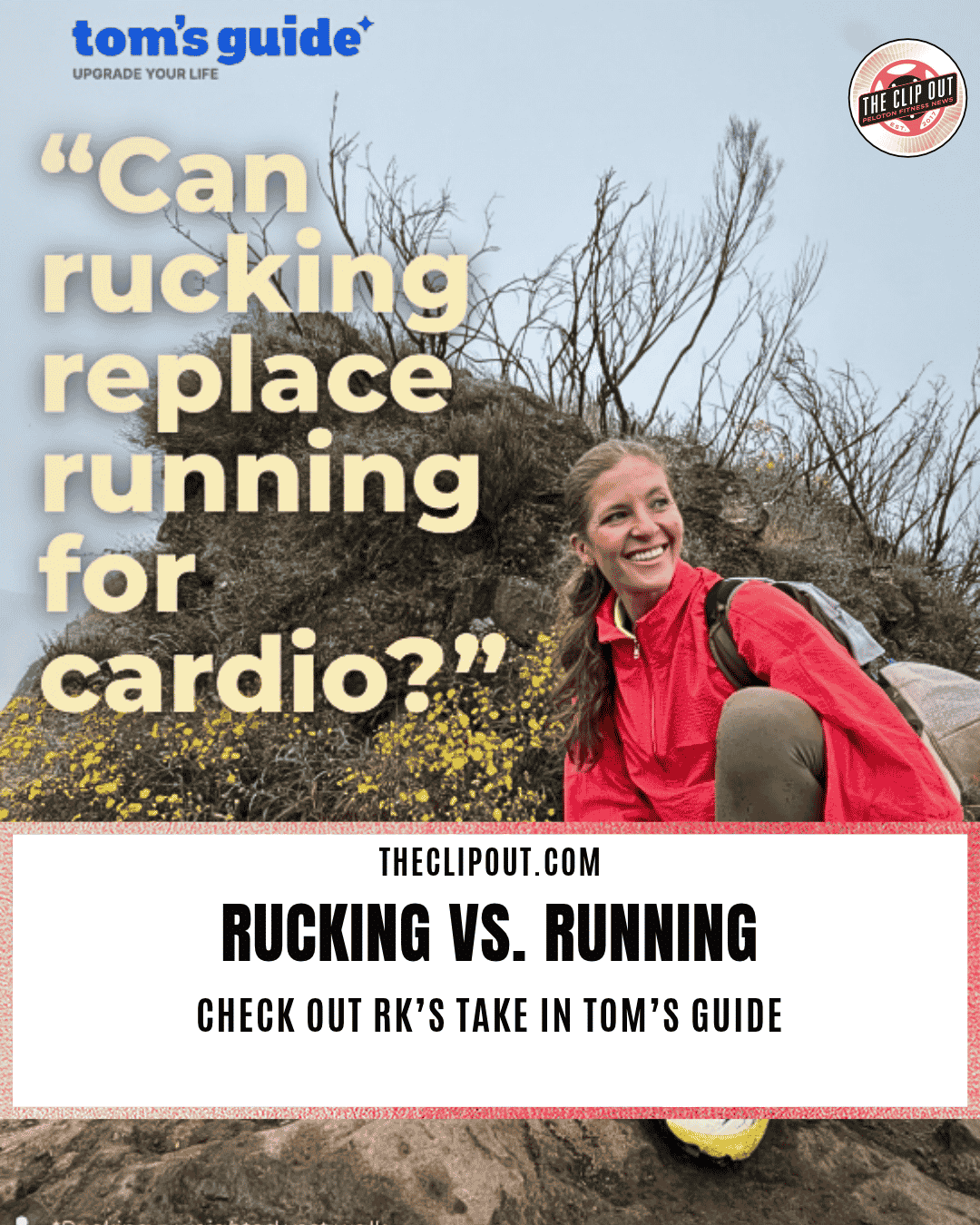
Rucking vs Running: Rebecca Kennedy Reveals Her Take
Rucking, which Tom’s Guide defines as a weighted vest walk, is raising a practical question for people who want cardio without the pounding of a run. Can it replace running? Peloton instructor and strength coach Rebecca Kennedy answered that question in a Tom’s Guide Instagram post, and her response is more nuanced than a simple yes or no.
The post is a multi-slide carousel titled “Can rucking replace running for cardio?” It covers the benefits of rucking, the benefits of running, whether one can stand in for the other, contraindications, and a closing takeaway. Rebecca also joined the comment section with a personal endorsement of her weighted vest.
Who Rebecca Kennedy?
Rebecca is a Peloton instructor and strength coach whose programming reaches well beyond a single format. Recent Clip Out coverage shows the range. Her Low Impact Cardio collection launched in February 2026, the HiLIt+ program returned for seven weeks beginning July 6, and her beloved 10-minute mobility class came back to the on-demand library in November after members noticed it was missing and expressed their need to have it back.
Her work has also drawn attention outside the app. The Clip Out covered her Forbes feature on the stronger not smaller movement and her four strength rules for PopSugar Australia. In September, she explained that low-impact strength training isn’t about going easy.
Peloton’s catalog also includes weighted vest content. The platform added a 10-minute Weighted Vest Walk and a 20-minute Weighted Vest Hike led by Rebecca, which makes her a natural voice on rucking.
Tom’s Guide Brings Rebecca a Wider Audience
Tom’s Guide has published since 2007 and is part of Future US Inc. The site describes itself as a tech publication focused on upgrading its readers’ lives, with coverage that spans reviews, buying advice, how-to articles, entertainment, fitness, and sleep. It also points to lab testing, peer review, and multi-editor signoff behind its product reviews.
For Rebecca, the platform offers a different audience from the one that finds her in the Peloton app. Tom’s Guide readers compare wearables, gear, and training methods, and many may never have taken a Peloton class. A question about rucking suits that readership because it is practical, gear-adjacent, and easy to act on.
The placement also fits a pattern. Rebecca has been quoted in People on the rise of menopause-specific fitness classes and has appeared in Forbes and PopSugar Australia. Tom’s Guide adds a consumer technology and wellness outlet to that list.
Rucking Versus Running in Rebecca’s Words
Rebecca described rucking as a way to build cardiovascular fitness, muscular endurance, and functional capacity. She added that it supports postural strength, offers low-impact conditioning with adjustable intensity, and is accessible and enjoyable.
Running earned its own slide. She credited it with benefits for mental and metabolic health, muscular endurance, cardiovascular fitness, bone health, and joint and connective tissue capacity. She also called it time-efficient and useful for running-specific performance.
On the central question, Rebecca said rucking can replace running, but it depends on the goal. She first noted that running is not a requirement for good cardiovascular health or overall fitness. She suggested people ask what they hope to accomplish instead of treating it as a binary choice.
Both improve cardiovascular health, aerobic endurance, metabolic health, and muscular conditioning, but they challenge the body differently. Running allows higher cardiovascular intensities and adds repetitive high impact, which helps build bone strength, joint and tendon capacity, and the ability to absorb and produce force. Rucking adds resistance to walking, challenging the cardiovascular system, muscular endurance, and postural muscles without that repetitive impact.
The adaptations are not identical, and neither option is inherently better. For people who do not enjoy running, she pointed to plyometrics, HIIT, jump rope, boxing, and dancing as ways to build similar fitness. Preferences, enjoyability, barrier to entry, and current fitness level should guide the choice.

Rucking Risks and Vest Advice
Rebecca flagged several cautions. Rucking adds load to the spine and can cause postural fatigue when the load is carried too long or is too heavy too soon. It may not suit people who want higher-impact or higher-intensity workouts, and it does not replace strength training.
She prefers a weighted vest to a backpack because the weight sits closer to the body and distributes more evenly, which reduces potential neck strain. A backpack can work for beginners if it is snug and the straps are pulled down so it does not sag.
Running carries its own considerations, she said, including repetitive impact and overuse, higher recovery demands, a longer adaptation period, and individual limitations such as injuries, osteopenia, osteoporosis, or sarcopenia.
Rebecca’s Takeaway and the Comments
Rebecca closed by calling both rucking and running valuable tools. She enjoys her weighted vest walks before, during, and after, and she loves walking. A person can be exceptionally fit without running, she said, though fitness in one area does not guarantee readiness for every physical demand. Her goal is a routine that builds strength, capability, adaptability, and resilience, with neither rucking nor running as the only workout.
In the comments, Rebecca wrote that her weighted vest would have to be pried from her grip, and she named YVO, The Carry, and Aion as favorites to check out.
For Peloton members who prefer walking to running, the guidance is practical: choose by goal, enjoyment, and fitness level, and keep strength training in the plan. With weighted vest walks and hikes already in the Peloton library, rucking sits alongside the strength, cardio, and mobility classes Rebecca leads.
The Clip Out is an independent Peloton news site with reporting, analysis, and community insights. We deliver breaking updates, feature reporting, and expert context on the stories driving the community and the industry.
Our weekly podcast offers deeper conversation and perspective, and you can find us on Apple Podcasts, Spotify, iHeart, TuneIn, and YouTube Music. You can also follow us on our socials on Facebook, Threads, Instagram, BlueSky, and YouTube.
See something in the Peloton universe that you think we should know? Visit us at theclipout.com and submit a tip.
About the Author: Liz Nikol (#JustAskForHelp)

Latest Podcast


Subscribe
Keep up with all the Peloton news!