
Peloton AI Workout Patents Cover 2 New Real-Time Features
Peloton AI Workout Patents Reveal Real-Time Coaching Plans
Two newly published patent applications describe classes that could change structure and instructor cues while a workout is still underway.
Applications for Peloton AI workout patents published recently outline a system that could change a class while it is still underway, adjusting length, difficulty and even instructor coaching cues based on how a member performs in real time. The filings land in the same window as Peloton executives taking the stage at IFA Berlin to describe AI-driven personalization as one of three pillars behind the company’s next chapter, and as a new integration with Meta’s Muse AI agent is launched. Together, the pieces point toward personalization becoming a mid-workout feature rather than a pre-workout one.
According to reporting from AtheleteTech on September 3, 2026, two applications from Peloton Interactive were published by the U.S. Patent and Trademark Office on August 27, 2026, though both were originally filed in February 2025. Peloton chief technology officer Francis Shanahan is listed as the inventor on both. As patent applications rather than granted patents, neither guarantees a shipped feature, and Peloton has not announced commercialization plans.
The first application, “Real-Time Modification of Workouts Within a Connected Fitness Platform,” describes a workout that can branch depending on data collected while a member exercises. The system could insert, remove, shorten, lengthen or swap segments based on heart rate and other performance signals pulled from equipment or a connected wearable. The filing frames most current connected fitness classes as fixed once they start, even when a workout was already recommended specifically for that member.
A companion filing, “Real-Time Modification of Audio Content for a Virtual Coach Application,” extends the idea to instructor audio. It describes using a large language model to generate new coaching instructions based on those same performance signals, then pairing that language with a speech synthesis model trained on a specific instructor’s voice. In one example, a runner finishes an interval several seconds ahead of pace, and the system delivers a coaching cue during recovery telling them to ease up on the next one. In another, a strength set proves too difficult, so the system trims the final set to six reps and generates matching coaching language.
Peloton AI Workout Patents Build on Peloton IQ
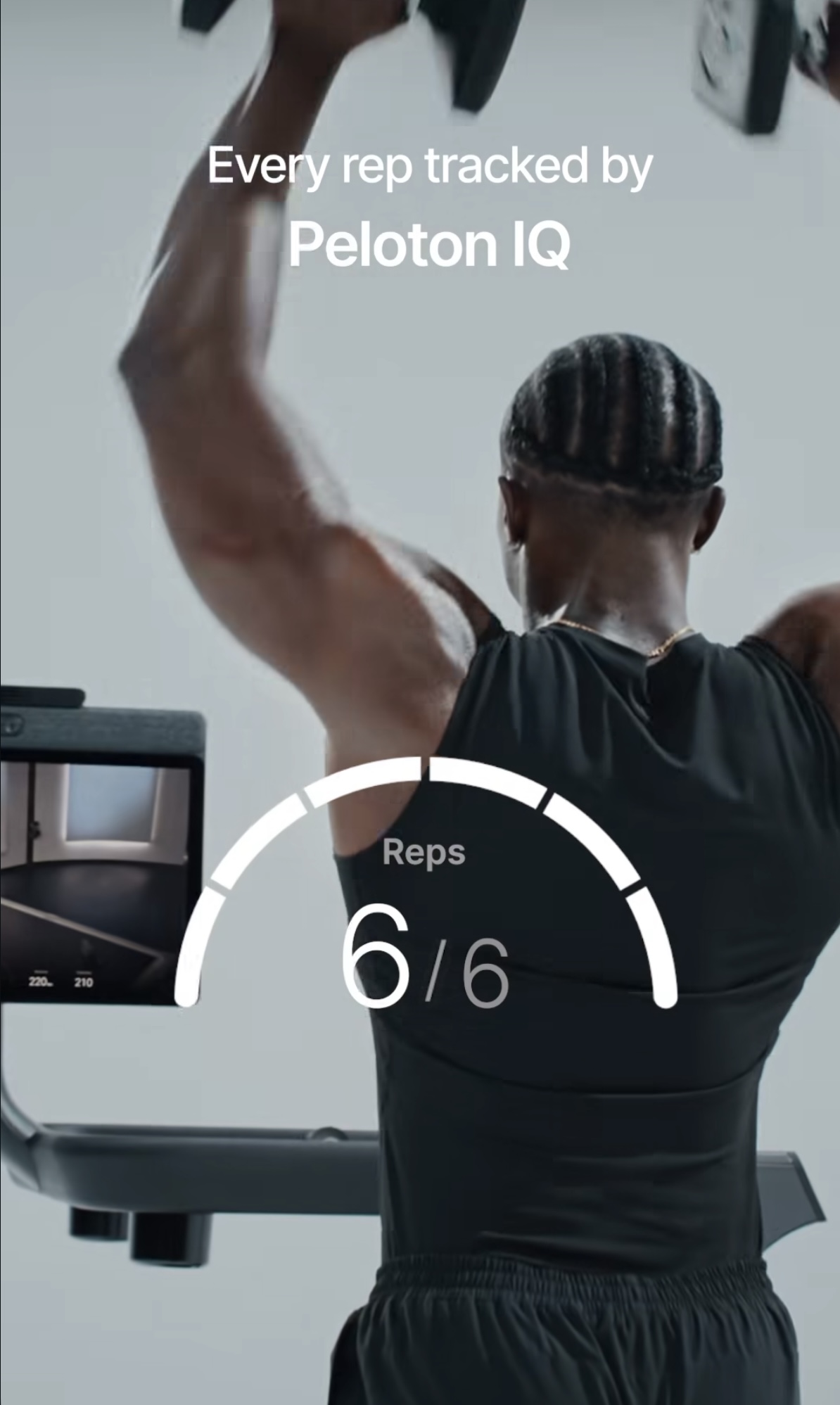
The timing connects directly to Peloton IQ, the AI and computer vision system Peloton launched in October 2025. Nearly half of active members had engaged with Peloton IQ insights and recommendations by the end of the company’s fiscal second quarter, and Peloton has continued expanding the system’s reach across strength, form feedback and workout generation.
At IFA Berlin, Chief Product Officer Nick Caldwell described legacy fitness technology as functioning like a digital diary that records a workout without helping members decide what to do next, and framed Peloton’s next phase as more personal and connected. These patents describe exactly that kind of shift made concrete: an instructor still builds the framework for a class, while software determines which version of it an individual member experiences, with AI-generated audio designed to preserve that instructor’s coaching style even as the underlying structure changes.
CEO Peter Stern has described Peloton’s AI strategy as a shift from tracking what members did toward coaching them on what to do next. Whether that shows up first on the Bike, Tread, Row or in Strength classes remains unclear from the filings, but the structure applies to any modality where performance data can be measured mid-class, not just cycling.
For now, these are patent applications, not confirmed product features. But paired with Peloton IQ’s rollout pace, the Berlin messaging, and the company’s recent AI partnerships, they offer a clear signal of where Peloton’s coaching technology is headed next.
How do you feel about this direction?
The Clip Out is an independent Peloton news site with reporting, analysis, and community insights. We deliver breaking updates, feature reporting, and expert context on the stories driving the community and the industry.
Our weekly podcast offers deeper conversation and perspective, and you can find us on Apple Podcasts, Spotify, iHeart, TuneIn, and YouTube Music. You can also follow us on our socials on Facebook, Threads, Instagram, BlueSky, and YouTube.
See something in the Peloton universe that you think we should know? Visit us at theclipout.com and submit a tip.
About the Author: Elizabeth Schlosberg

Latest Podcast

Subscribe
Keep up with all the Peloton news!