
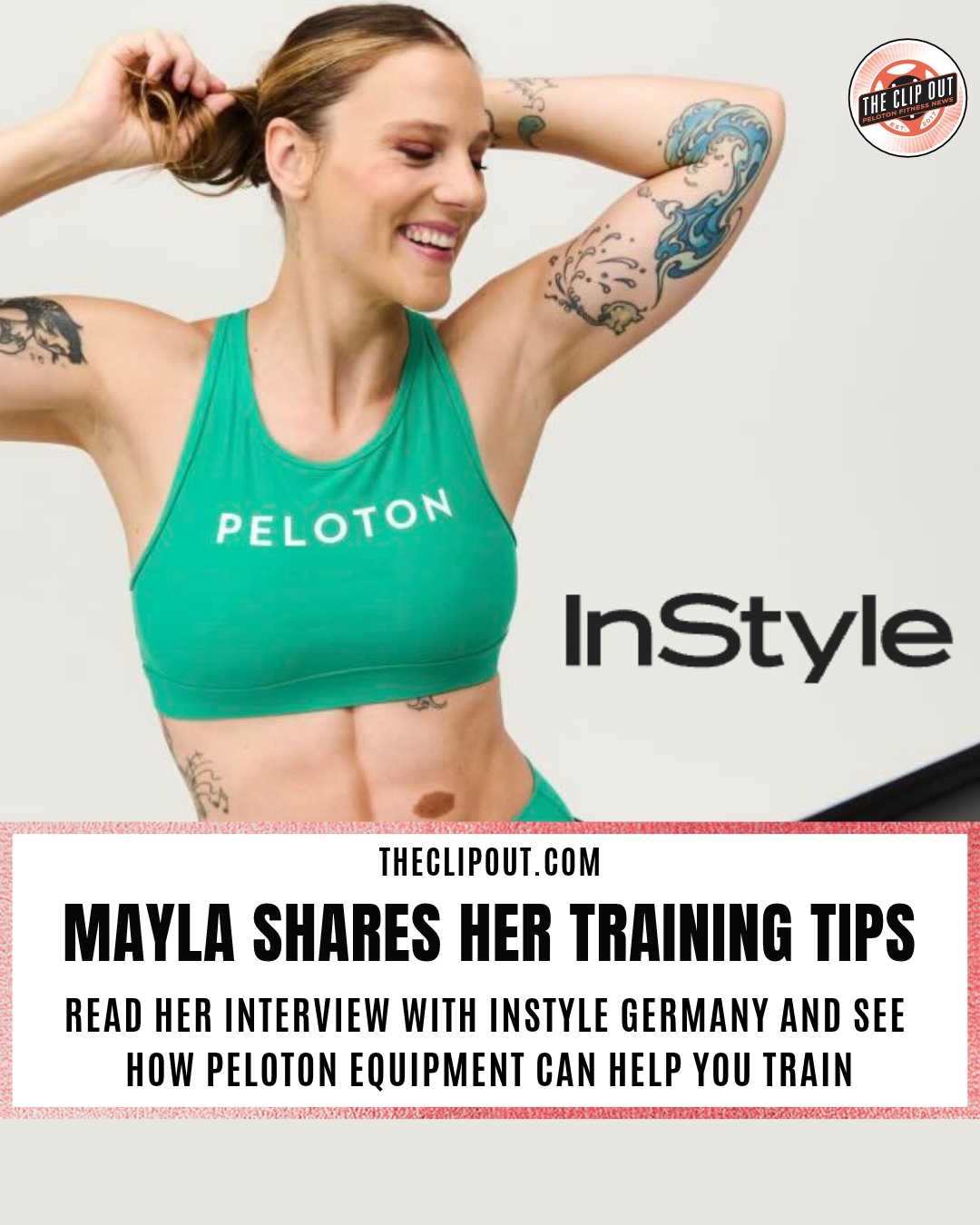
Mayla Wedekind Training Advice Reveals 3 Parts to InStyle
Mayla Wedekind Training Advice Cuts Through Workout FOMO
In an interview with InStyle Germany, the Peloton instructor explains how running, strength training, and rest work together as one weekly plan.
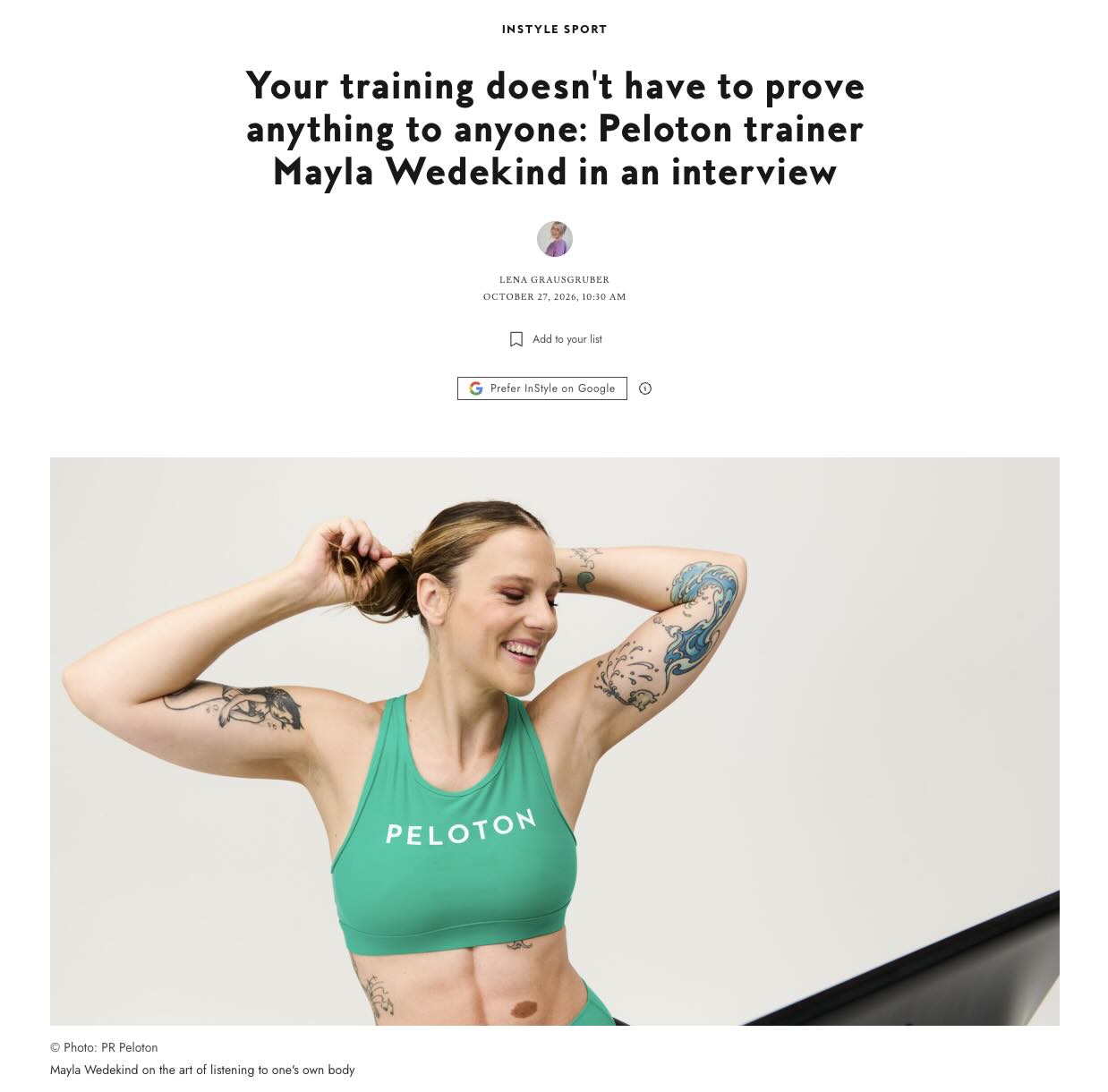
The latest Mayla Wedekind training advice starts with a simple frame for anyone feeling pressure to fit every workout trend into one week: build it around running, strength training, and rest. The Peloton instructor outlined that approach in an interview with InStyle Germany, published October 27.
Wedekind teaches running and cycling classes in German from Peloton Studios London. Before she got into running, she worked as a surf, fitness, and yoga instructor in Bali, and she holds a master’s degree in psychology. (She also designed a line of surf wear apparel!)
In the interview, conducted by Lena Grausgruber, she responds to what the magazine calls workout FOMO, the sense that every new trend and community needs a place on the calendar.
View this post on Instagram
Running Without the Pressure of Pace
Run clubs have made running social again, but sharing pace on social media can turn every run into a comparison. The Mayla Wedekind training advice on pace is to measure progress against yourself. If you feel more energized after a run than before it, the pace was right, whatever the watch says. Beginners can start with run-walk intervals (Ash Pryor’s favorite!), runners building endurance can add speed work to easy runs, and anyone who wants to clear their head can simply start.
The Peloton Tread Vision fits that range, according to the InStyle piece. Jump buttons change pace and incline with one tap, and members can chase the leaderboard one day and run alone the next. Peloton IQ’s running analysis uses the Tread Vision camera to measure cadence, stride length, and the amount of bounce in each step. It then gives a running efficiency score and one tip, such as shortening the stride, which reappears before the next run.
Strength Training as the Foundation for Runners
The Mayla Wedekind training advice on strength is direct: it is the foundation of running, not a competitor to it. Two short sessions a week are enough to start, and squats, lunges, and core work can be done at home. Her reasoning draws on sports psychology, which holds that the lower the barrier, the better. Matt Wilpers is also a proponent of this approach.
On the Tread Vision, the 23.8-inch screen can turn toward a mat after a run so a strength, Pilates, or mobility class follows. The camera gives form feedback and counts repetitions.
Mayla Wedekind Training Advice on Recovery and Rest
Rest is the third part of the mix. The InStyle piece describes recovery as the time when the body adapts to training stress, and it can be a few minutes of stretching, a gentle yoga session, mobility work, or a day with no training. Short nights, stressful weeks, and certain phases of the cycle can all call for less than the toughest workout.
Mayla Wedekind training advice for tougher days follows the same logic. Before each session, she asks herself whether she needs to push, unwind, or rest, and she says all three answers are valid. On days when nothing works, she suggests taking a break or taking a walk. She also notes that sticking with the plan on a day that feels below 100 percent can pay off, since motivation often arrives within a few minutes.
Members who want a closer view of recovery can link WHOOP, Garmin, Fitbit, or Apple Health to Peloton, which feeds workouts into the wearable’s recovery analysis.
How the Mayla Wedekind Training Advice Fits Into a Week
The interview sketches a week that opens with an easy run or brisk walk, adds a compact strength session for legs, glutes, and core, and leaves midweek for mobility, yoga, or a break. Intervals come on a day when the body feels recovered, and the weekend is open to a longer run, a hike, or whichever class appeals. The piece stresses that this is not a checklist, and fewer workouts or more rest days may suit some members better.
Peloton IQ also builds personalized plans that adapt every week to a chosen goal.
Mayla Wedekind training advice comes back to one idea. As she puts it, “Your training doesn’t have to prove anything to anyone.” For members already moving between runs, strength classes, Pilates, and mobility work, that approach treats a lighter week as part of the plan rather than a lapse.
Does her plan sound like your plan? Are there tips here you would add to your routine?
The Clip Out is an independent Peloton news site with reporting, analysis, and community insights. We deliver breaking updates, feature reporting, and expert context on the stories driving the community and the industry.
Our weekly podcast offers deeper conversation and perspective, and you can find us on Apple Podcasts, Spotify, iHeart, TuneIn, and YouTube Music. You can also follow us on our socials on Facebook, Threads, Instagram, BlueSky, and YouTube.
See something in the Peloton universe that you think we should know? Visit us at theclipout.com and submit a tip.
About the Author: Elizabeth Schlosberg

Latest Podcast


Subscribe
Keep up with all the Peloton news!