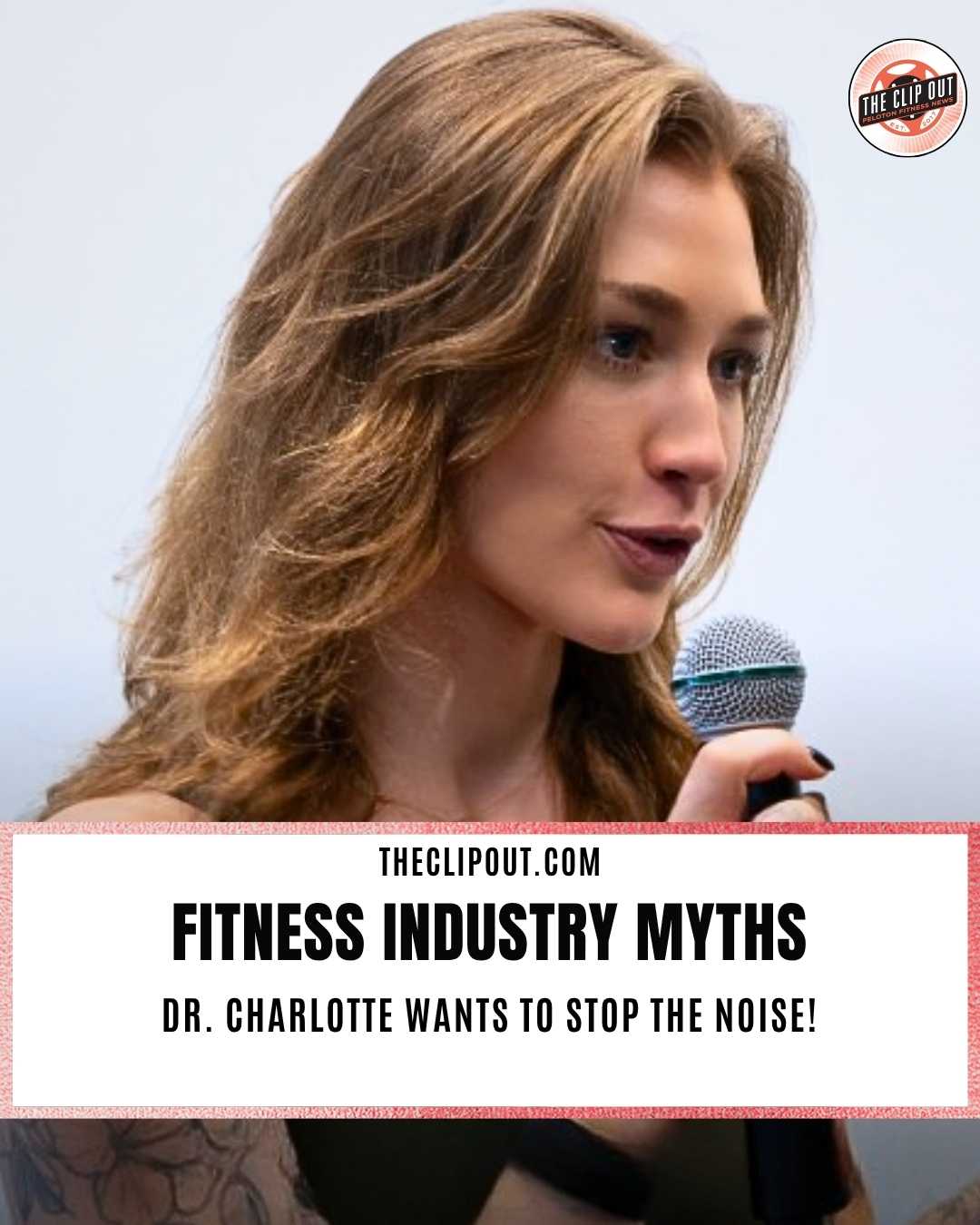
9 Fitness Industry Myths Exposed by Dr. Charlotte Weidenbach
Peloton instructor Dr. Charlotte Weidenbach used her Instagram this week to take on the fitness industry directly, walking followers through nine trends she believes get more credit than they deserve. The German-born physician and Power Zone instructor framed the post as the start of a longer conversation, one she plans to unpack further in the coming weeks.
Charlotte, who earned her medical degree at Charité Berlin before joining Peloton in December 2021, has built a reputation for translating clinical training into practical coaching. Her Instagram account regularly features Q&A series on topics like training frequency and muscle building, and this latest post follows that same pattern: take a widely accepted idea in the fitness industry, explain where it holds up, and explain where it does not.
What Charlotte Says the Fitness Industry Gets Wrong
Charlotte opened her caption by naming the problem directly. There is a lot of fitness information circulating, she wrote, shaped partly by science but also by social media, marketing, and language that sounds scientific without necessarily being accurate. Her goal with the post was to separate the two, and she structured the list as a series of nine “yes, but” statements: each trend gets credit where it is due, followed by the caveat she thinks gets left out.
Here is the full list, as Charlotte laid it out:
- Complicated Exercises. Complexity can have a purpose, she notes, but more moving parts do not automatically create a better training stimulus. A harder-looking exercise is not necessarily a more effective one.
- Constantly Changing Exercises. Variation can help in specific contexts, Charlotte writes, but constant variation is not the same thing as progression. Switching exercises every session can prevent the consistent overload muscles need to adapt.
- Putting Everything Into Boxes. Categories like strength, mobility, endurance, stability, and power are useful language, she says, but the adaptations they describe do not happen in separate boxes. The body does not train in isolated categories, even when programs are built that way.
- Always Wanting More Range of Motion. Mobility matters, and increasing range of motion can be beneficial, Charlotte writes. But more is not inherently better, and she points out that too much mobility is also a real limitation.
- Stretching as the Answer to Everything. Stretching can improve flexibility and range of motion when that is genuinely what a person needs, she says. But not every ache, restriction, or movement problem is actually a flexibility problem.
- Feeling Every Muscle Work. A burn, a pump, or a strong sensation during a workout can be useful feedback, Charlotte notes. Sensation and adaptation, however, are not the same thing, and a workout can build strength without producing a dramatic feeling.
- Proteinising Everything. Protein matters, she writes, but nutrition is bigger than one macronutrient. Adding protein to a food does not automatically make it more nutritious.
- Looking for the Answer in a Supplement. Some supplements are genuinely useful, according to Charlotte, but more supplements do not automatically mean better health or performance. Their value depends on diet, individual needs, the supporting evidence, and the dose.
- The Six-Pack as the Image of Fitness. Aesthetic goals are valid, she says, but appearance and performance are different outcomes. Her hope is that what a body can do becomes just as aspirational as how it looks.
Where Charlotte’s Fitness Industry Critique Fits Her Body of Work
This post continues a pattern that has defined Charlotte’s presence on Instagram since she began pairing her medical background with her Peloton platform. In a previous Q&A, she addressed one of the most common questions members ask, whether it is safe to train every day, explaining that the real issue isn’t the number of training days but whether the body can recover from what is being asked of it. The Clip Out covered that breakdown in Can You Train Every Day? Dr. Charlotte Weidenbach Explains What Actually Works.
She has also used the format to tackle muscle building directly, walking followers through the physiological factors that drive hypertrophy and which ones matter most, covered in Charlotte Weidenbach Answers Your Top Muscle-Building Questions. And at a recent panel appearance alongside a cardiologist, she spoke about the same evidence-first philosophy that shapes this latest fitness industry post, arguing that health information needs fewer opinions and more people who can connect science to real life. That conversation is detailed in Dr. Charlotte Weidenbach Champions Evidence-Based Health.
Taken together, the pattern is consistent. Whether she is addressing training frequency, muscle growth, or now the fitness industry’s broader marketing instincts, Charlotte leans on the same instinct: take the clinical training from her time at Charité Berlin and make it usable for people who are not doctors.
The Question She Keeps Coming Back To
In her closing thoughts, Charlotte suggested the common thread across all nine points is a loss of hierarchy. None of the fitness industry trends she listed are inherently bad, she wrote, but problems start when details, trends, and marketability receive more attention than the principles underneath them. Her suggested fix is a single question she returns to often: what is the purpose?
She indicated this list is only the starting point, with plans to explore each item in more depth over the coming weeks, a format similar to how she previously unpacked training frequency and muscle building in stages.
For members trying to sort useful training information from marketing noise, Dr. Charlotte’s framework offers a simple filter: before adopting any trend the fitness industry promotes, ask what specific problem it actually solves.
The Clip Out is an independent Peloton news site with reporting, analysis, and community insights. We deliver breaking updates, feature reporting, and expert context on the stories driving the community and the industry.
Our weekly podcast offers deeper conversation and perspective, and you can find us on Apple Podcasts, Spotify, iHeart, TuneIn, and YouTube Music. You can also follow us on our socials on Facebook, Threads, Instagram, BlueSky, and YouTube.
See something in the Peloton universe that you think we should know? Visit us at theclipout.com and submit a tip.
About the Author: Liz Nikol (#JustAskForHelp)

Latest Podcast

Subscribe
Keep up with all the Peloton news!