Pilates vs Sculpt Explained With 3 Classic Moves
• Side-lying leg work: In Pilates, Dopp lies on her side with her head resting on her arm, sweeping the top leg forward with the foot flexed and back with the toes pointed. In sculpt, the same pattern becomes a clam shell with a band above the knees, while the top arm moves from a bent position to a full overhead reach holding a weight.
• Core work: In Pilates, she lies on her back with a small ball between hand and knee, changing arm and leg positions as she reaches and extends (Dead Bug). In sculpt, she rolls up with weights, moving from a punches to an overhead press.
• Lunge: Pilates holds a low lunge with arms lifted. Sculpt adds a band above the knees and a weight held at the chest doing a curtsey lunge.
Side by side, the Pilates vs Sculpt contrast is easy to spot. The shapes are nearly identical, while the load and the combinations change. 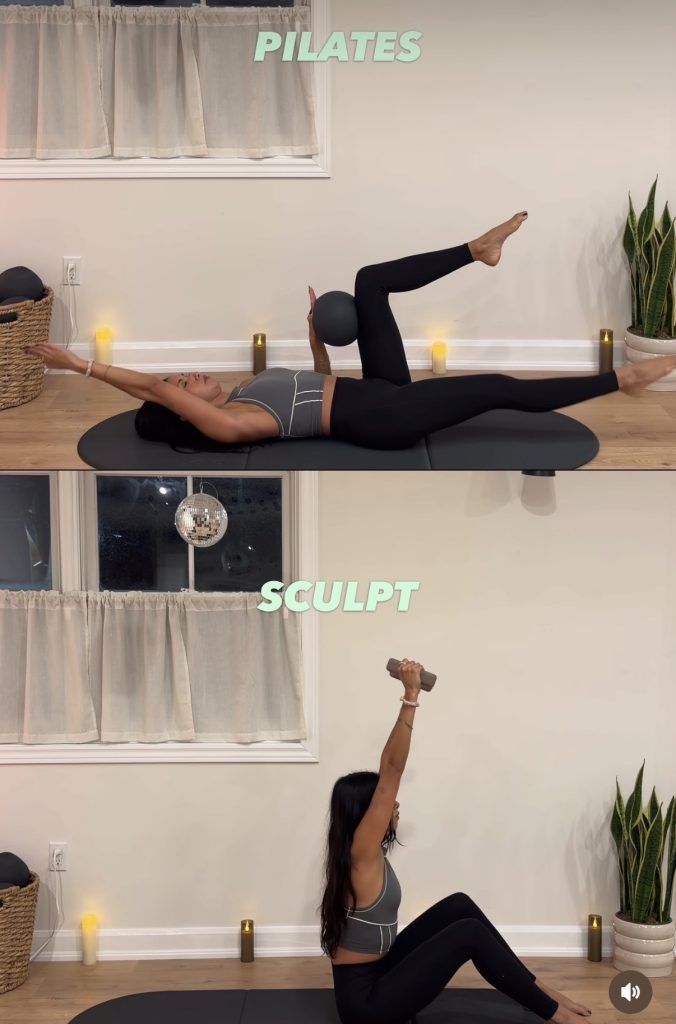
Where Peloton Pilates and Sculpt Overlap
Dopp added a caveat. Members may find some of these sculpt variations in her contemporary Pilates classes, including the ones she calls Feral Fridays, and she doesn’t necessarily see that as wrong.
In her view, movement overlaps and methodologies evolve. What counts is understanding the intention behind what an instructor is teaching and being clear about what people can expect from a class. That makes the Pilates vs Sculpt question less of a strict divide and more of a spectrum.
Choosing Between Pilates vs Sculpt
For members deciding which class fits a given day, Dopp’s breakdown offers a simple filter. Peloton Pilates leans into control, breath, and alignment. Sculpt leans into resistance, endurance, and music-driven combinations. Both can share the same mat and many of the same shapes.
Members new to the sculpt side can start with Dopp’s beginner Sculpt Flow recommendations. For anyone weighing Pilates vs Sculpt, her video suggests a better question than which moves appear in a class: which intention matches the workout you want that day?
[/fusion_text]
The Clip Out is an independent Peloton news site with reporting, analysis, and community insights. We deliver breaking updates, feature reporting, and expert context on the stories driving the community and the industry. Our weekly podcast offers deeper conversation and perspective, and you can find us on Apple Podcasts, Spotify, iHeart, TuneIn, and YouTube Music. You can also follow us on our socials on Facebook, Threads, Instagram, BlueSky, and YouTube. See something in the Peloton universe that you think we should know? Visit us at theclipout.com and submit a tip.
• Side-lying leg work: In Pilates, Dopp lies on her side with her head resting on her arm, sweeping the top leg forward with the foot flexed and back with the toes pointed. In sculpt, the same pattern becomes a clam shell with a band above the knees, while the top arm moves from a bent position to a full overhead reach holding a weight.
• Core work: In Pilates, she lies on her back with a small ball between hand and knee, changing arm and leg positions as she reaches and extends (Dead Bug). In sculpt, she rolls up with weights, moving from a punches to an overhead press.
• Lunge: Pilates holds a low lunge with arms lifted. Sculpt adds a band above the knees and a weight held at the chest doing a curtsey lunge.
Side by side, the Pilates vs Sculpt contrast is easy to spot. The shapes are nearly identical, while the load and the combinations change.
Where Peloton Pilates and Sculpt Overlap
Dopp added a caveat. Members may find some of these sculpt variations in her contemporary Pilates classes, including the ones she calls Feral Fridays, and she doesn’t necessarily see that as wrong.
In her view, movement overlaps and methodologies evolve. What counts is understanding the intention behind what an instructor is teaching and being clear about what people can expect from a class. That makes the Pilates vs Sculpt question less of a strict divide and more of a spectrum.
Choosing Between Pilates vs Sculpt
For members deciding which class fits a given day, Dopp’s breakdown offers a simple filter. Peloton Pilates leans into control, breath, and alignment. Sculpt leans into resistance, endurance, and music-driven combinations. Both can share the same mat and many of the same shapes.
Members new to the sculpt side can start with Dopp’s beginner Sculpt Flow recommendations. For anyone weighing Pilates vs Sculpt, her video suggests a better question than which moves appear in a class: which intention matches the workout you want that day?
[/fusion_text]
The Clip Out is an independent Peloton news site with reporting, analysis, and community insights. We deliver breaking updates, feature reporting, and expert context on the stories driving the community and the industry. Our weekly podcast offers deeper conversation and perspective, and you can find us on Apple Podcasts, Spotify, iHeart, TuneIn, and YouTube Music. You can also follow us on our socials on Facebook, Threads, Instagram, BlueSky, and YouTube. See something in the Peloton universe that you think we should know? Visit us at theclipout.com and submit a tip.
Greta Dopp's side-by-side Pilates vs Sculpt video shows how the same movement patterns change when the intention shifts
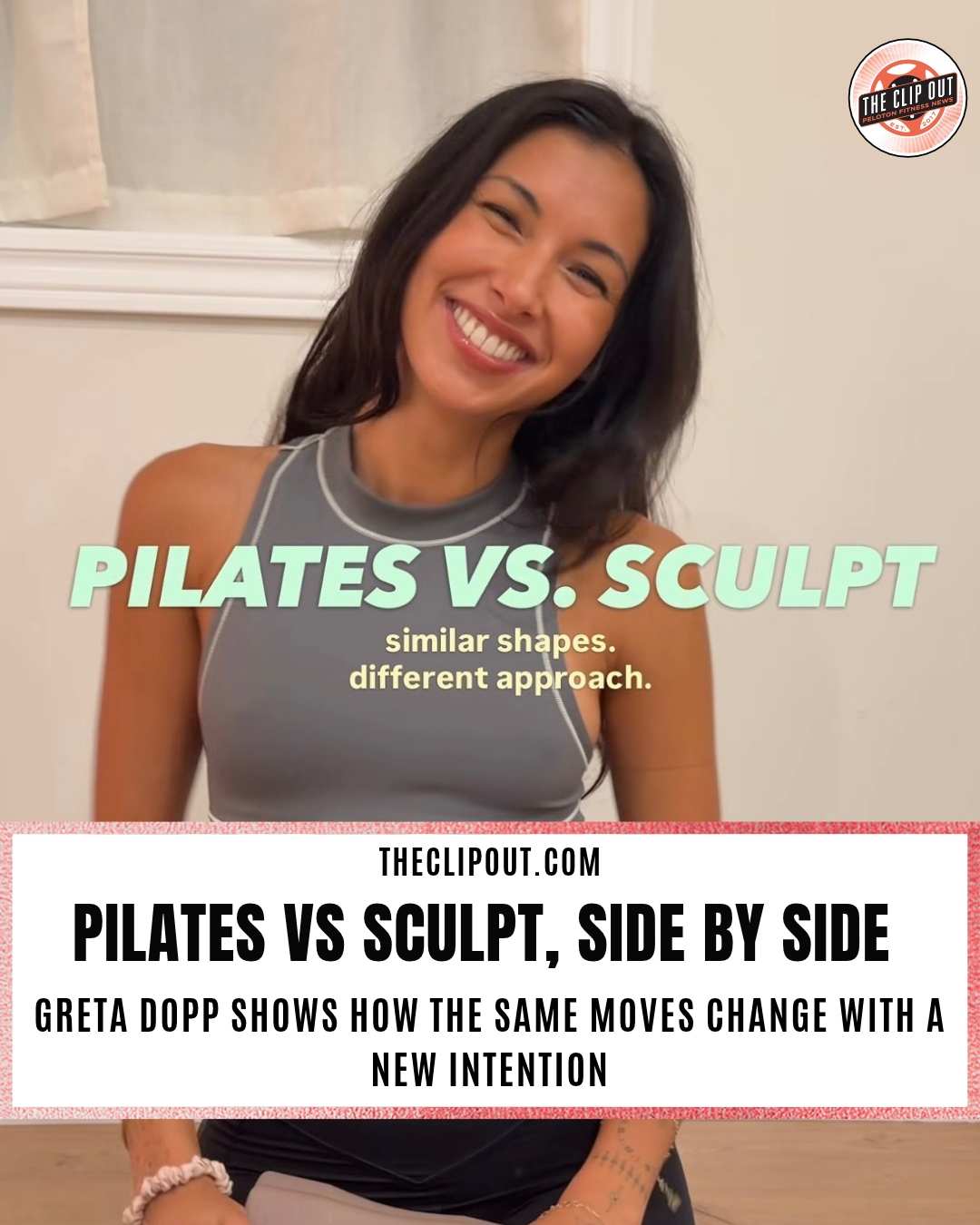
 Pilates vs Sculpt is a comparison Peloton instructor Greta Dopp says she talks about a lot, so she put it on camera. Her recent Instagram video pairs Pilates and sculpt versions of three movement patterns, showing how each one changes when the goal moves from control to resistance.
For members choosing between Peloton Pilates and a sculpt-style class, the video offers a clear visual answer. The movements look alike. The intention behind them does not.
Pilates vs Sculpt Starts With Intention
Dopp framed the video around one idea: similar movement patterns can be approached with different intentions. The difference in Pilates vs Sculpt is less about which exercises appear in a class and more about what each format asks the body to do with them.
That framing gives members a practical way to read a class description. The move list tells part of the story. The purpose behind each move tells the rest.
How Peloton Pilates Approaches the Movement
According to Dopp, Pilates emphasizes five principles:
• Control
• Precision
• Breath
• Alignment
• Coordination
In her video, the Pilates side of each pair stays on the mat with minimal equipment. A small ball appears in the core work, but most of the movement relies on body weight and careful positioning. Those choices keep a Peloton Pilates class focused on form and breath, in line with the principles she lists. 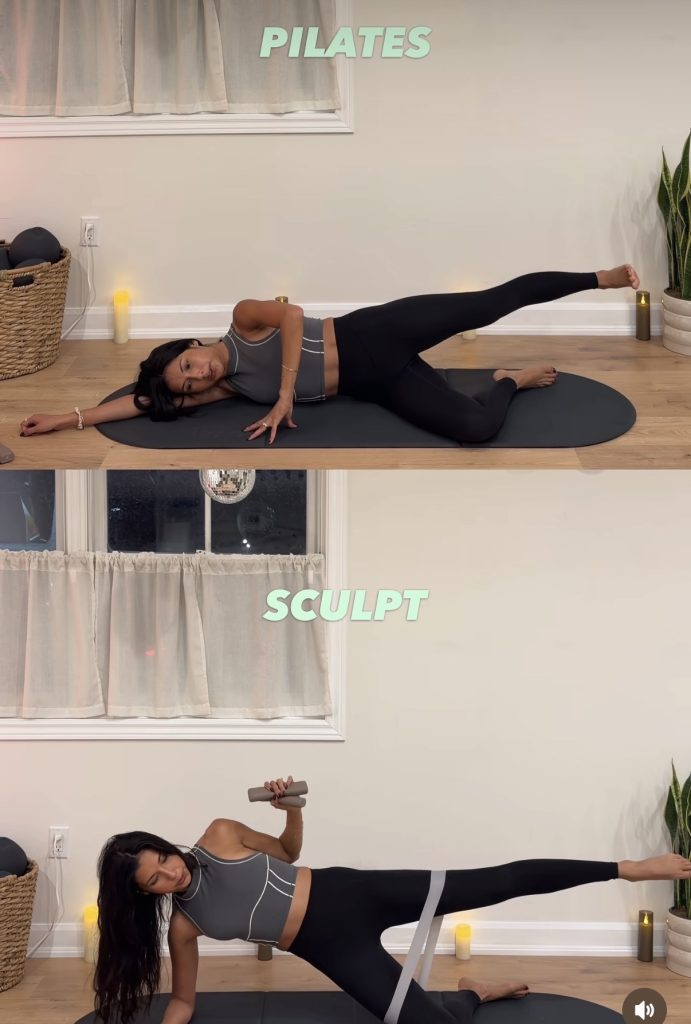
How Sculpt Builds on the Same Patterns
Sculpt, Dopp explains, tends to layer in more resistance, dynamic combinations, muscular endurance, and musicality. Her side-by-side clips show exactly that. The sculpt versions add light hand weights and a mini resistance band, and several moves pair an upper-body press or reach with lower-body work.
Dopp teaches Peloton's Sculpt Flow format, which The Clip Out covered when Peloton launched Sculpt Flow. Peloton's own description of her Sculpt Flow classes notes light weights and high repetitions, which lines up with the resistance and endurance focus she describes.
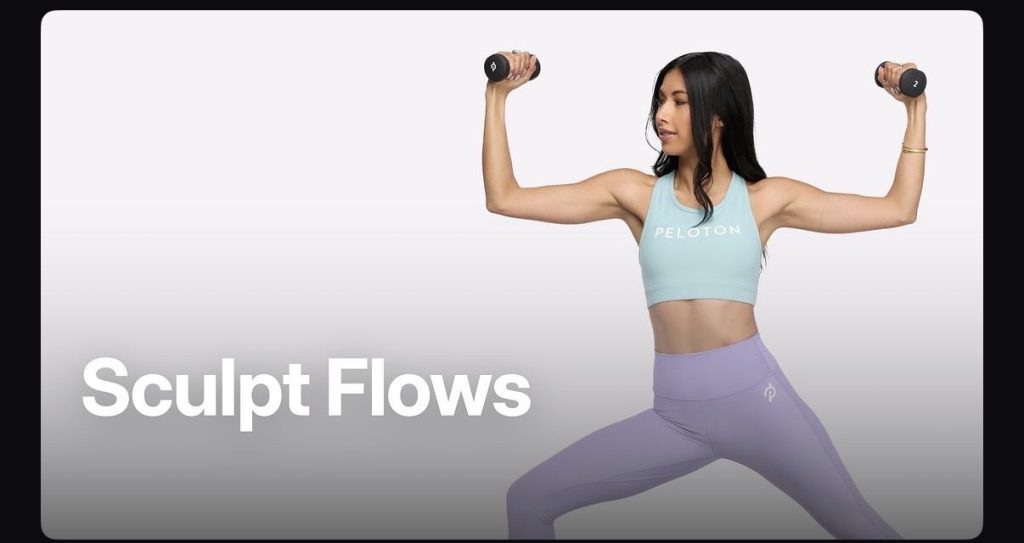
Peloton also groups the format into a Sculpt Flows collection, giving members one place to find these classes when they want the resistance side of the Pilates vs Sculpt comparison.
3 Side-by-Side Moves in the Pilates vs Sculpt Video
Each pair in the Pilates vs Sculpt video starts from a shared movement pattern, with Dopp shifting arm and leg positions within each move:
• Side-lying leg work: In Pilates, Dopp lies on her side with her head resting on her arm, sweeping the top leg forward with the foot flexed and back with the toes pointed. In sculpt, the same pattern becomes a clam shell with a band above the knees, while the top arm moves from a bent position to a full overhead reach holding a weight.
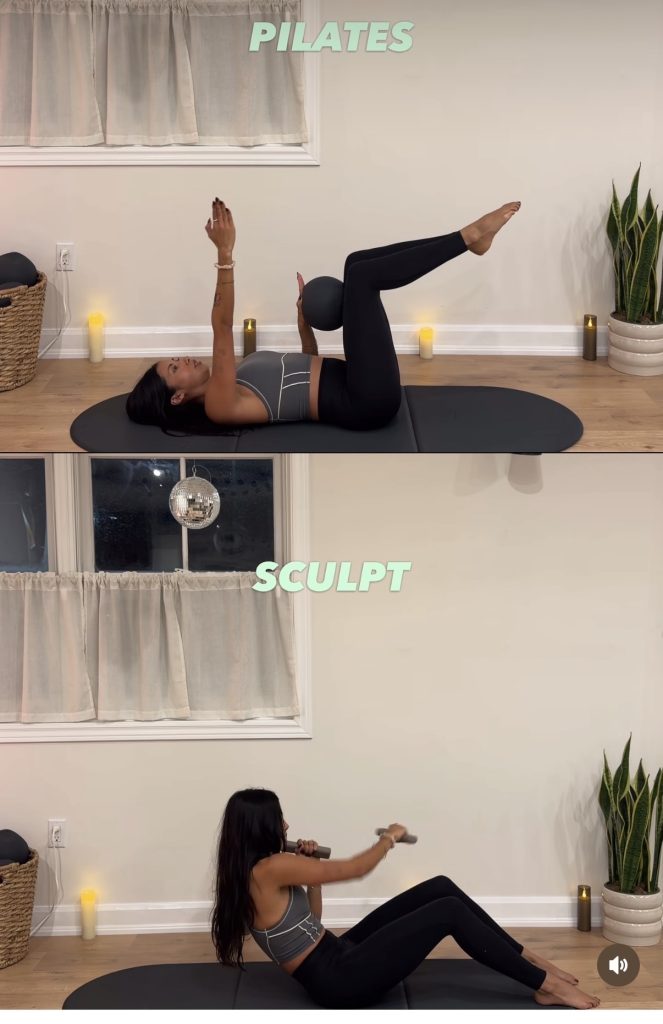
• Core work: In Pilates, she lies on her back with a small ball between hand and knee, changing arm and leg positions as she reaches and extends (Dead Bug). In sculpt, she rolls up with weights, moving from a punches to an overhead press.
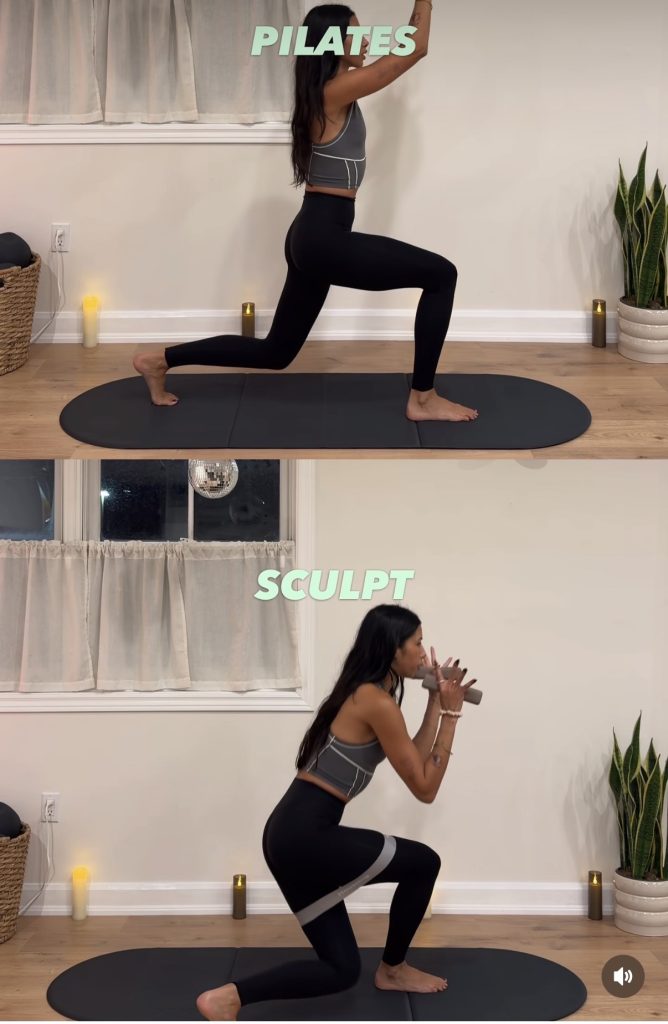
• Lunge: Pilates holds a low lunge with arms lifted. Sculpt adds a band above the knees and a weight held at the chest doing a curtsey lunge.
Side by side, the Pilates vs Sculpt contrast is easy to spot. The shapes are nearly identical, while the load and the combinations change.
Where Peloton Pilates and Sculpt Overlap
Dopp added a caveat. Members may find some of these sculpt variations in her contemporary Pilates classes, including the ones she calls Feral Fridays, and she doesn't necessarily see that as wrong.
In her view, movement overlaps and methodologies evolve. What counts is understanding the intention behind what an instructor is teaching and being clear about what people can expect from a class. That makes the Pilates vs Sculpt question less of a strict divide and more of a spectrum.
Choosing Between Pilates vs Sculpt
For members deciding which class fits a given day, Dopp's breakdown offers a simple filter. Peloton Pilates leans into control, breath, and alignment. Sculpt leans into resistance, endurance, and music-driven combinations. Both can share the same mat and many of the same shapes.
Members new to the sculpt side can start with Dopp's beginner Sculpt Flow recommendations. For anyone weighing Pilates vs Sculpt, her video suggests a better question than which moves appear in a class: which intention matches the workout you want that day?
The Clip Out is an independent Peloton news site with reporting, analysis, and community insights. We deliver breaking updates, feature reporting, and expert context on the stories driving the community and the industry. Our weekly podcast offers deeper conversation and perspective, and you can find us on Apple Podcasts, Spotify, iHeart, TuneIn, and YouTube Music. You can also follow us on our socials on Facebook, Threads, Instagram, BlueSky, and YouTube. See something in the Peloton universe that you think we should know? Visit us at theclipout.com and submit a tip.
About the Author: Jen Kern

Latest Podcast
Subscribe
Keep up with all the Peloton news!