
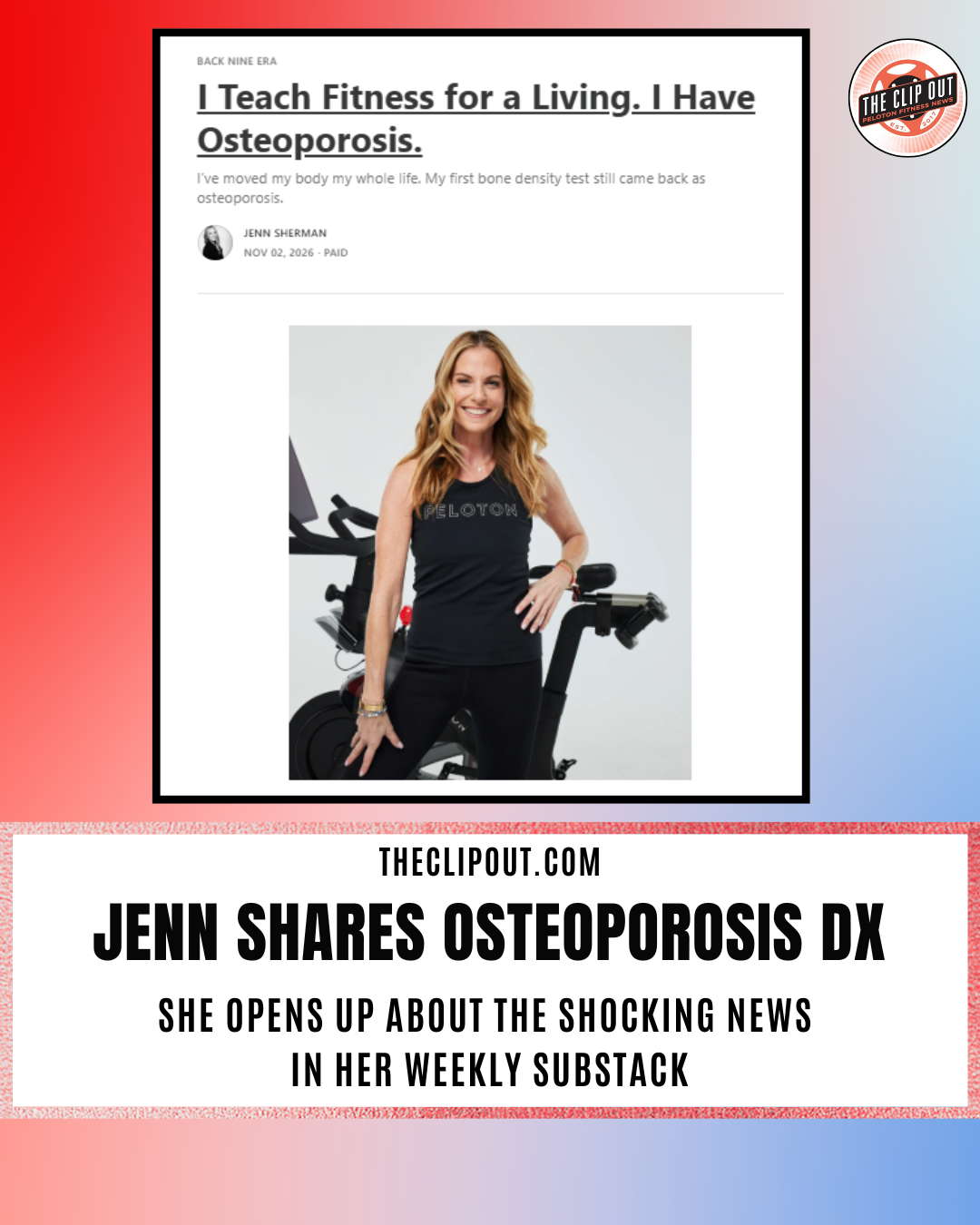
Osteoporosis Diagnosis Revealed in Jenn Sherman Substack
Osteoporosis is the diagnosis at the center of the third post in Jenn Sherman’s Back Nine Era Substack, and she addressed it on Instagram today. The longtime Peloton instructor says a routine DEXA scan in January 2024 found bone loss in her neck, spine and hips, even though she lifts weights and works out four to six days a week.
Jenn is the founder of The Back Nine Era. It is a community built on the idea that the 50s are a stepping into rather than a winding down. As The Clip Out reported when the Substack launched, the weekly newsletter publishes every Monday and is designed for women over 50. The topic of osteoporosis is very likely an issue her audience is concerned about.
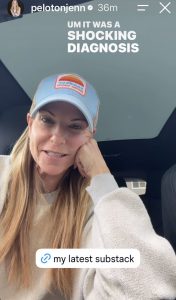
What Jenn Sherman Shared About Her Osteoporosis Diagnosis
In her Instagram story, Jenn called the osteoporosis diagnosis shocking because she considered herself fit and healthy. She described two paths after a result like this. One is to retreat into fear of every movement. The other is to follow your doctors’ advice and manage it. She chose the second. “It’s not the end of the world,” she said, adding that she has it under control.
The Substack preview adds more detail. Jenn writes that she has moved her body her whole life, is a Peloton cycling instructor and assumed that staying active kept her ahead of the average woman. When her doctor told her at 55 that she had never had a bone density test, she did not give it a second thought. A week after the 20-minute scan, her doctor messaged to go over the results – she had osteoporosis.
The full post promises what she learned on that call, the year the plan did not work, where her numbers are now and how it felt.
Osteoporosis Explained: Why Active Women Are Not Immune
Osteoporosis is a condition in which bones lose density and become thin and fragile, which raises the risk of fractures. Bone loss speeds up around menopause. A review in the Cleveland Clinic Journal of Medicine notes that women may lose 5% to 10% of bone mineral density during late perimenopause and the first postmenopausal years.
Exercise builds and protects bone, but it does not cancel out the other drivers. The U.S. Preventive Services Task Force lists risk factors that include low body weight, a parent’s hip fracture, smoking, heavy alcohol use and corticosteroid use. Because bone loss is silent, a consistent training routine can make a diagnosis feel unexpected, which is how Jenn describes it.
What Doctors May Suggest After a Diagnosis
Treatment depends on test results and individual risk, so plans vary. For active people, doctors commonly discuss medication, calcium and vitamin D intake, fall prevention and how to keep exercising safely.
Jenn has not detailed her plan in the material shared so far, so how her training changed is hers to explain. In general, someone with her background might keep resistance training and emphasize progressive loading, balance work and walking. A doctor may also advise adjusting movements that place heavy or repeated stress on the spine. Peloton’s Strength and Tread classes cover much of that range, along with the Bone Health Collection and the Menopause Health Collection of curated classes. Any change should follow a physician’s guidance.
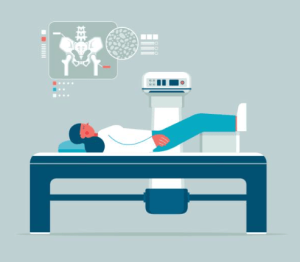
What a DEXA Scan Is and When Women Should Get One
DEXA, short for dual-energy X-ray absorptiometry, uses a low dose of radiation to measure bone density at sites such as the hip and spine. Jenn describes lying in a machine for about 20 minutes and then going home.
The task force recommends screening for all women 65 and older. Postmenopausal women under 65 with one or more risk factors should also be assessed, and the decision for younger women is made individually with a provider. Jenn’s scan came at 55.
She frames her diagnosis as one more thing that can arrive out of nowhere in the “back nine era”. With the rest of her story still unfolding in the Substack, her openness gives members a clear prompt to ask their own doctors about bone density.
The Clip Out is an independent Peloton news site with reporting, analysis, and community insights. We deliver breaking updates, feature reporting, and expert context on the stories driving the community and the industry.
Our weekly podcast offers deeper conversation and perspective, and you can find us on Apple Podcasts, Spotify, iHeart, TuneIn, and YouTube Music. You can also follow us on our socials on Facebook, Threads, Instagram, BlueSky, and YouTube.
See something in the Peloton universe that you think we should know? Visit us at theclipout.com and submit a tip.
About the Author: Liz Nikol (#JustAskForHelp)

Latest Podcast

Subscribe
Keep up with all the Peloton news!