
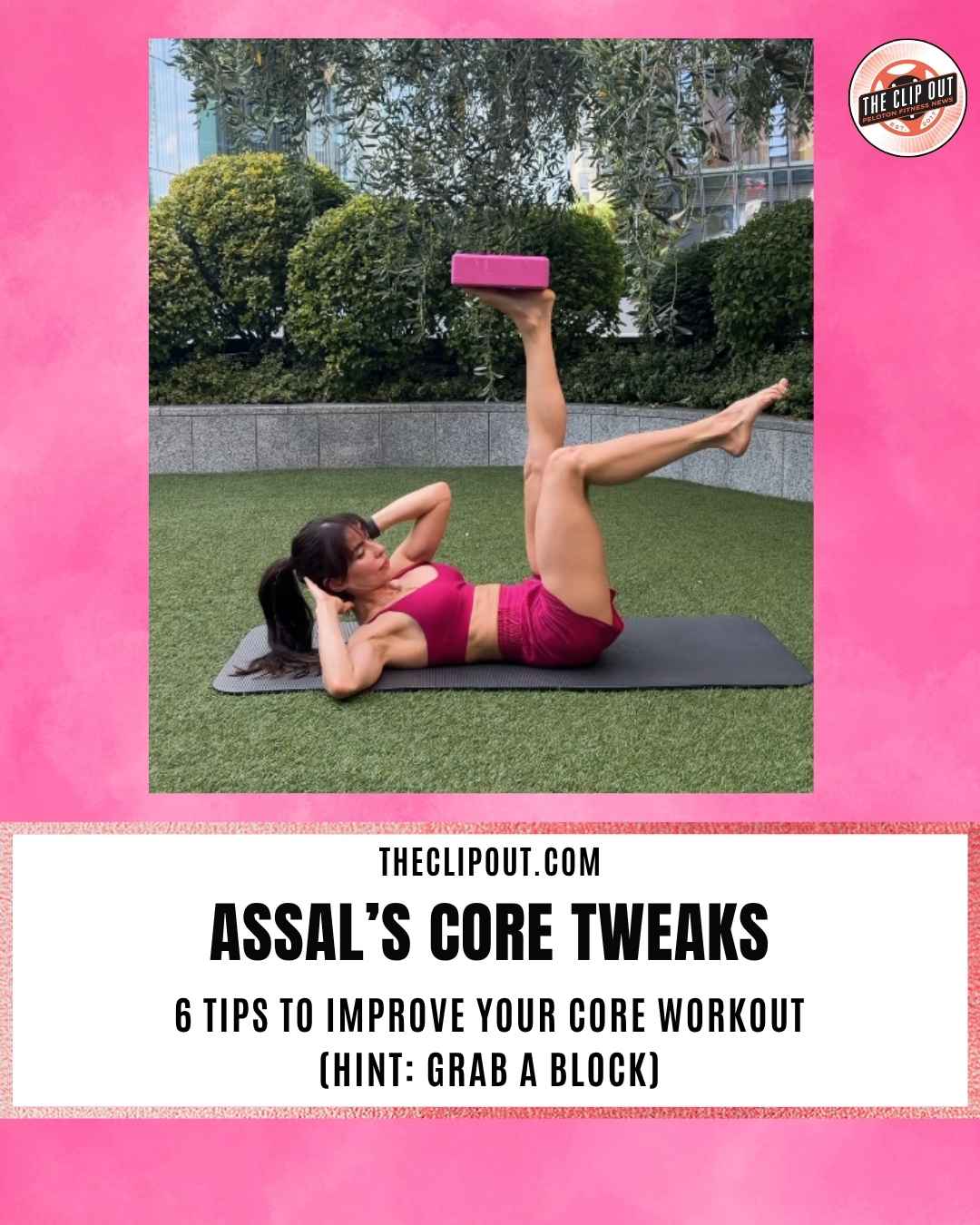
Assal Arian’s 6 Core Tweaks That Actually Work
Peloton instructor Assal Arian is breaking down her approach to core training one small adjustment at a time. In a recent Instagram post, Assal shared six core tweaks she says change how a core session feels and performs, each demonstrated in short clips. The post has resonated with her followers because the advice is specific enough to apply immediately, not vague encouragement to “engage your core.”
Assal teaches Strength classes on the Peloton platform, and her Instagram content regularly focuses on form cues that bridge the gap between an exercise looking right and actually working the intended muscles. This latest set of core tweaks does exactly that, and each one lines up with established movement science rather than trend-driven advice. Grab a yoga block if you have one – it can make these core tweaks even more effective.
Why These Core Tweaks Start With Length, Not Speed
Assal’s first tip is to reach long before rotating, explaining that length creates better core tension. This reflects a basic principle of how the obliques and deep stabilizers generate force. When the limbs extend fully before a rotational movement begins, the core muscles have to work harder to control that extended lever, which increases tension through the trunk before the twist even starts. Rushing into rotation without that setup shortens the working range and shifts load toward momentum instead of muscle control. It is a small sequencing change, reach first, then rotate, but it determines whether the obliques are doing the work or simply along for the ride.
The Rib and Pelvis Connection Behind These Core Tweaks
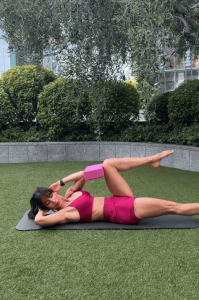
Two of Assal’s cues, keeping ribs heavy on the mat and pressing a thigh into a block, both point to a concept trainers and physical therapists call rib flare correction. When the lower ribs lift away from the pelvis during ab work, the deep core loses its ability to stabilize the spine, and the lower back often arches to compensate. Keeping the ribcage stacked over the pelvis, rather than letting it flare upward during movements like a leg lower, keeps the deep abdominal wall doing the work instead of the hip flexors or lower back muscles.
Pressing the thigh into a block before moving uses a similar mechanism, sometimes called co-contraction, where applying resistance against an object trains the surrounding muscles to switch on before the limb starts moving. That pre-activation is what allows the abs to fire first instead of playing catch-up mid-rep. Together, these two core tweaks address one of the most common complaints in ab training: lower back discomfort that shows up before the abs even feel tired.
Tempo and Alignment Round Out The List
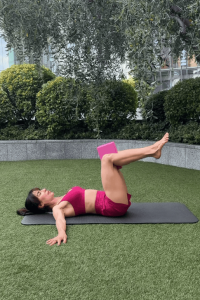
Assal’s fourth tweak, moving slowly through the “sticky point” instead of using momentum, addresses time under tension. Slower, controlled movement through the hardest part of a rep keeps the working muscles under load longer, which is a well-established driver of strength and endurance gains, as opposed to swinging through that point and letting momentum take over. It is often the difference between a rep that builds strength and one that simply moves a limb from point A to point B.
Her fifth cue, getting longer instead of lower, reinforces the same length-and-tension principle from her first tip: extending the body’s line increases resistance without needing a bigger range of motion. This matters for anyone whose lower back tends to take over as a movement gets closer to the floor, since staying longer rather than dropping lower keeps tension in the core instead of transferring it to the spine.
Her final tweak, keeping both shoulders heavy while the hips rotate, targets anti-rotation control, a skill that trains the core to resist unwanted movement through the upper body while the lower body moves independently. That kind of dissociation between upper and lower body is a hallmark of efficient rotational strength, and it shows up in everything from a golf swing to simply turning to grab something off a shelf without straining the back.
The Bigger Picture
What stands out across all six core tweaks is that none of them require complicated moves or extra reps. Assal’s approach treats setup and positioning as the actual work, not a warm-up to the work. That distinction matters more than most people realize: two reps that look identical from the outside can produce very different results depending on whether the ribs are flared, the shoulders are stable, and the tempo is controlled.
For Peloton members taking her Strength classes, these are the kinds of cues likely to show up in class instruction, and applying them at home during any core-focused session can change how effective the same familiar movements feel. The exercises themselves do not need to change. The execution does.
The Clip Out is an independent Peloton news site with reporting, analysis, and community insights. We deliver breaking updates, feature reporting, and expert context on the stories driving the community and the industry.
Our weekly podcast offers deeper conversation and perspective, and you can find us on Apple Podcasts, Spotify, iHeart, TuneIn, and YouTube Music. You can also follow us on our socials on Facebook, Threads, Instagram, BlueSky, and YouTube.
See something in the Peloton universe that you think we should know? Visit us at theclipout.com and submit a tip.
About the Author: Liz Nikol (#JustAskForHelp)

Latest Podcast


Subscribe
Keep up with all the Peloton news!