

Hidden Gem: Peloton Pump Up the Volume Might Be Exactly What Your Routine Has Been Missing
Peloton Pump Up the Volume is exactly the kind of program this Hidden Gems series was created to spotlight. With thousands of classes, a global roster of instructors, and new programming dropping every week, even the most dedicated members can miss genuinely great content. This series is all about cutting through the noise to find the coaches, class types, and features that may not dominate your feed but absolutely deserve a closer look. It is not about chasing hype. It is about discovering what truly adds value to your routine, and Pump Up the Volume does exactly that. It is structured, effective, and surprisingly easy to fit into just about any workout schedule. If it has flown under your radar, consider this your official introduction.
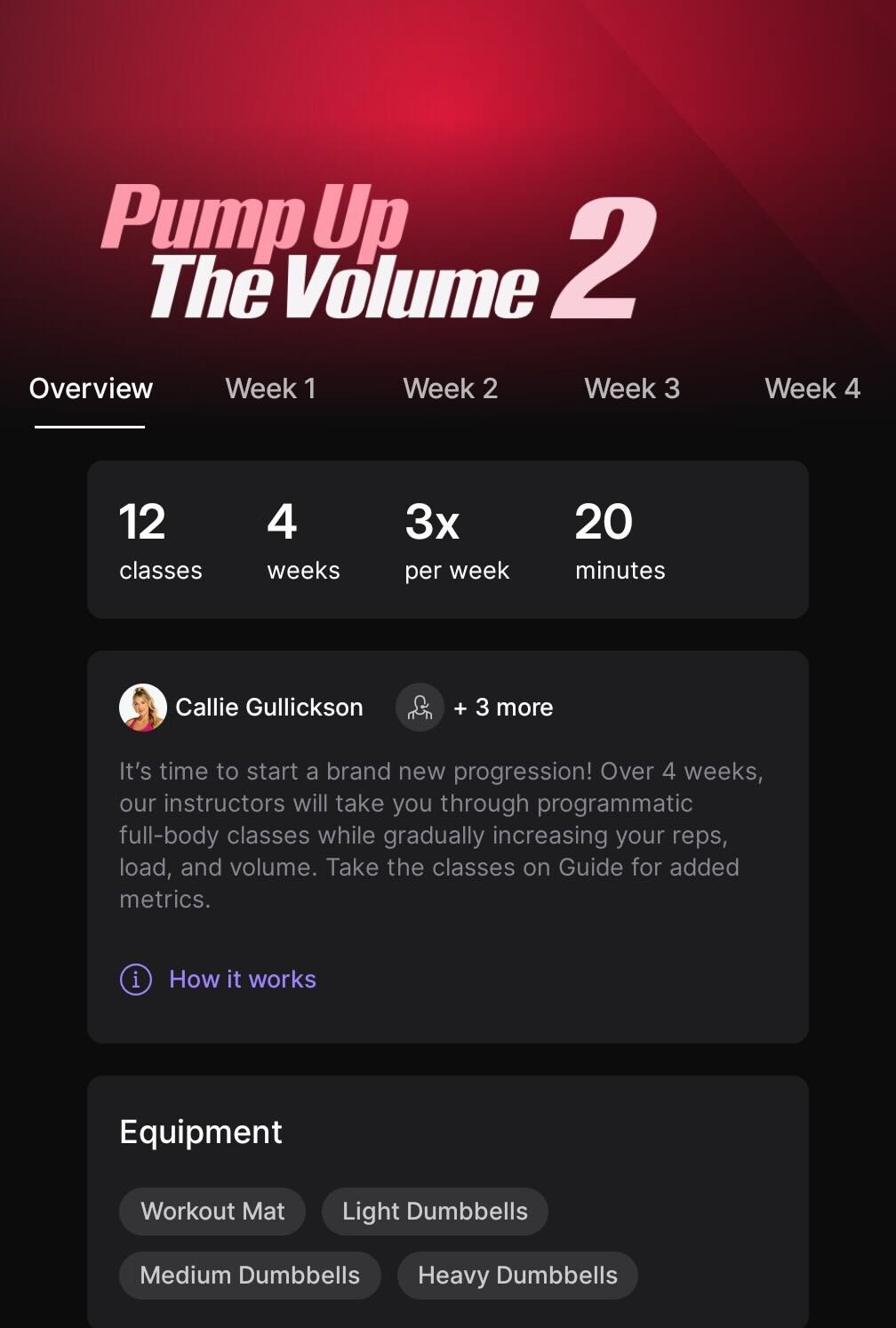
What Is Peloton Pump Up the Volume?
Peloton Pump Up the Volume is a structured strength training program built around the concept of progressive overload. It is designed to help you add more volume to your workout over four weeks by gradually increasing your reps, load, and volume.
In plain terms, that means each week gets a little harder than the last, in a very intentional way. This is not a random playlist of strength classes thrown together. It is a planned lifting block with a clear purpose: to make you stronger.
How the Program Is Structured
One of the reasons Pump Up the Volume works so well is because of its straightforward, manageable structure. Here is what you can expect:
- Length: Four weeks
- Frequency: Roughly three classes per week
- Total classes: Approximately 12 per collection
- Class length: Around 20 minutes each
- Focus areas: Lower body, upper body, and full body
Each week builds on the one before it, gradually increasing the intensity and workload so your muscles are consistently being challenged.
Collection or Program? Here Is the Difference
You might notice that Peloton sometimes lists Pump Up the Volume as a “Collection” and other times as a “Program.” This can be a little confusing, so here is the quick explanation.
It was originally released as a Collection, which gives you more flexibility in how you approach it. It has since been categorized as a Program on the platform. Regardless of how it is labeled, you do not have to follow it in a strict, rigid order. That said, it is genuinely designed to be progressive from week to week, so you will get the most out of it if you work through it in sequence.
Where to Find Peloton Pump Up the Volume
Ready to get started? You can find Pump Up the Volume in the Programs section of the Peloton app or on your device. Here is how to get there:
- Open the Peloton app or navigate to your Peloton device
- Select “More” from the bottom navigation menu
- Tap “Programs”
- Search or scroll to find Pump Up the Volume
From there you will see all available versions listed, so you can choose the one that appeals to you most or simply start with Volume 1 and work your way through the series. Click here to view that Program.
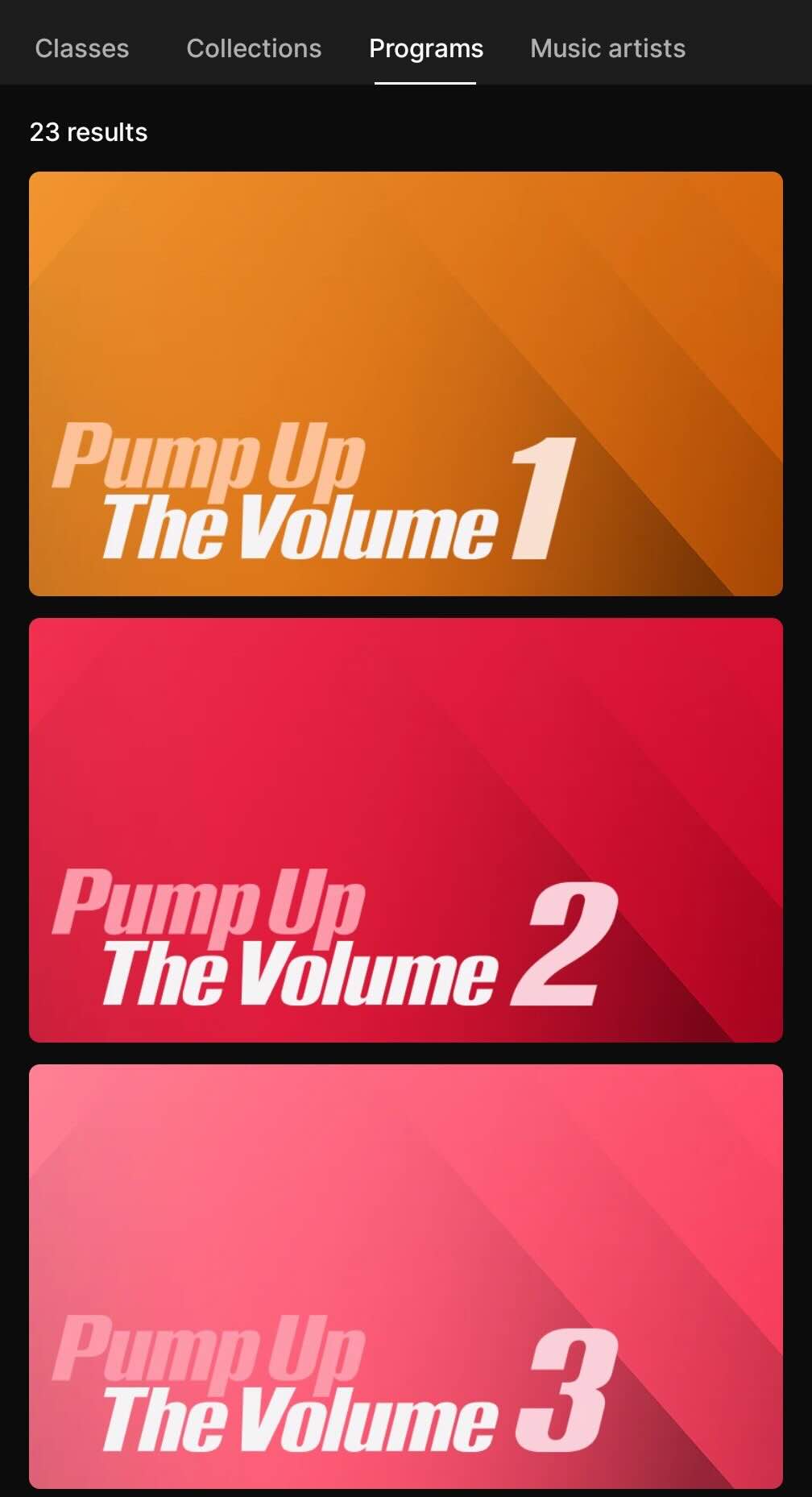
How Many Versions of Peloton Pump Up the Volume Are There?
This is where things get really fun. Peloton has released multiple versions, numbered from 1 through 10 and beyond. Each version features different instructors and slightly different programming styles, so there is plenty of variety to explore.
Some of the instructors you will find across the different versions include:
- Adrian Williams
- Jess Sims
- Rebecca Kennedy
- Jermaine Johnson
- Andy Speer
- Tunde Oyeneyin
This means you can repeat the format multiple times without it feeling repetitive, which is a huge win if you enjoy the structure but want fresh energy each time.
The Training Philosophy Behind It
All versions of the series follow the same core training approach, grounded in three key principles.
- Progressive overload is the foundation. By gradually increasing the stress placed on your muscles over time, your body is pushed to adapt, which leads to real strength and muscle gains. You are not just working hard, you are working smarter.
- Repeated movement patterns are also a big part of the design. You will revisit similar lifts from week to week, but with more volume or intensity as the program progresses. This repetition helps you improve the movements themselves while also driving results.
- Finally, the sessions are short and efficient, typically around 20 minutes. This makes Pump Up the Volume an excellent option for stacking alongside other types of training like running, cycling, or rowing. It fits into a busy schedule without taking over it.
A Few Peloton-Specific Perks
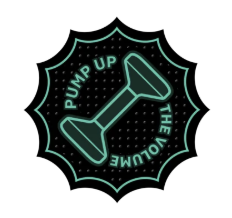
There are a couple of bonus features worth knowing about. You earn a badge just for taking a class in the series, so you do not have to complete the entire program to get some recognition for your effort. The collection was also originally built to integrate with the Peloton Guide for rep tracking, though it is accessible regardless of which equipment you use.
How Peloton Pump Up the Volume Can Work in Your Workout Plan
One of the best things about this program is how naturally it fits alongside other types of training. Because the classes are around 20 minutes and run three days per week, there is plenty of room to build a well-rounded schedule around it.
Here is a simple example of how a week could look:
- Monday: Pump Up the Volume strength class
- Tuesday: Cardio of your choice (cycling, running, rowing)
- Wednesday: Pump Up the Volume strength class
- Thursday: Cardio or active recovery
- Friday: Pump Up the Volume strength class
- Saturday: Longer cardio session or full rest
- Sunday: Rest
A few things worth keeping in mind as you plan:
- Strength and cardio can coexist. You do not have to choose one or the other. Pump Up the Volume is designed to complement, not compete with, your cardio routine.
- Pay attention to how your body feels. As the volume increases week over week, you may want to dial back the intensity of your cardio sessions to give your muscles time to recover.
- When you finish one version, you have options. You can move straight into the next version with a different instructor, repeat the same version to track your progress, or take a lighter recovery week before starting again.
The structure is flexible enough to work for a wide range of schedules, which is a big part of what makes it such a practical addition to any routine.
So, Is It Worth Your Time?
Absolutely. Think of Peloton Pump Up the Volume as a four-week lifting block with built-in progression that you can repeat across multiple versions with different instructors. It is approachable enough for those newer to structured strength training and effective enough to challenge more experienced lifters. If you have been looking for a reason to get more intentional about strength work on Peloton, this is a great place to start.
Another reminder that sometimes the best part of Peloton isn’t what’s trending, it’s what you discover when you look a little closer.
Peloton Hidden Gems: Finds That Are Worth Your Time explores the instructors, programs, and features that may not dominate your feed but deserve a closer look. Consider it your guide to the depth of the platform, one discovery at a time.
The Clip Out is an independent Peloton news site with reporting, analysis, and community insights. We deliver breaking updates, feature reporting, and expert context on the stories driving the community and the industry.
Our weekly podcast offers deeper conversation and perspective, and you can find us on Apple Podcasts, Spotify, iHeart, TuneIn, and YouTube Music. You can also follow us on our socials on Facebook, Threads, Instagram, BlueSky, and YouTube.
See something in the Peloton universe that you think we should know? Visit us at theclipout.com and submit a tip.
About the Author: Lisa Warner

Latest Podcast




Subscribe
Keep up with all the Peloton news!