
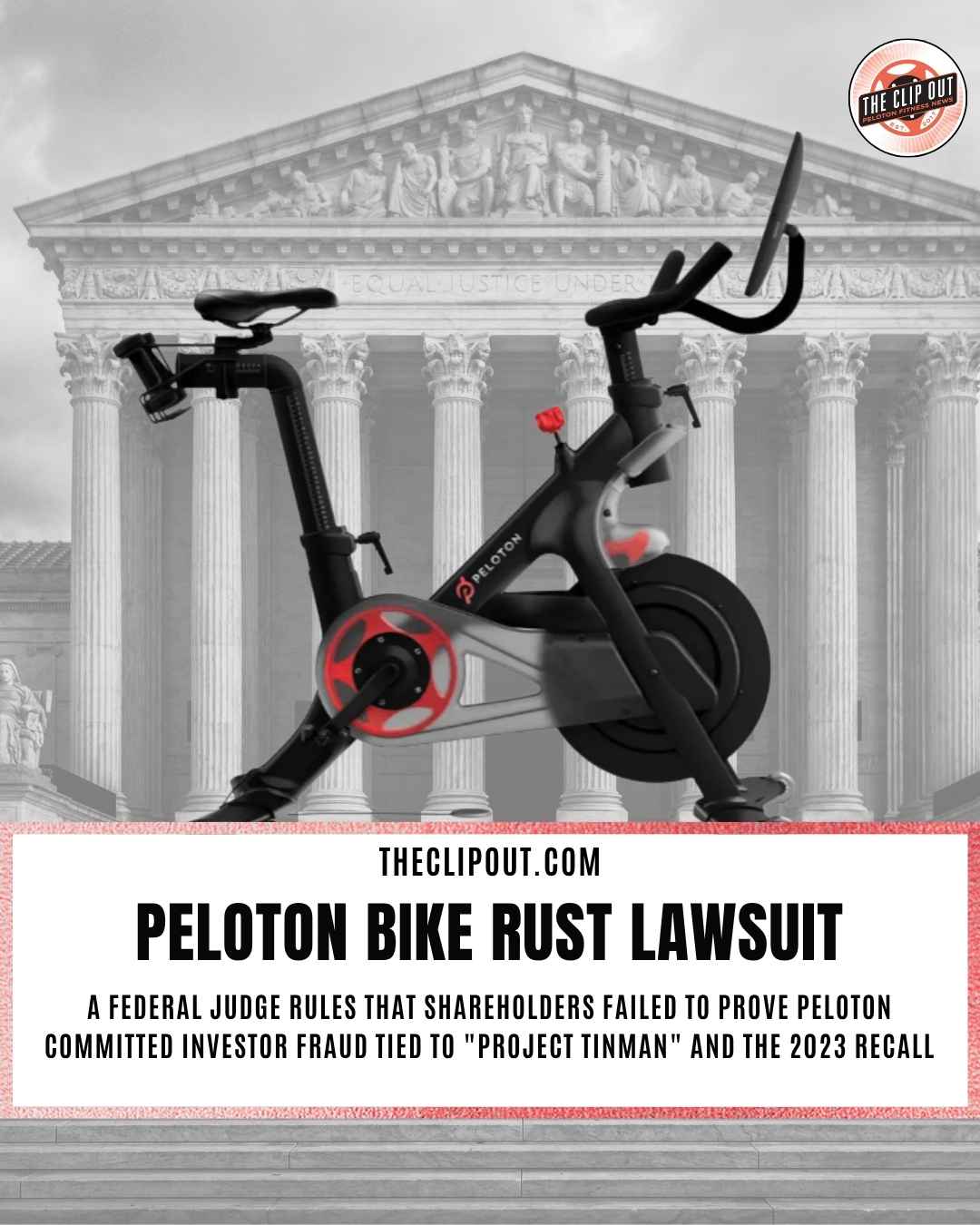
Peloton Bike Rust Lawsuit Officially Dismissed: Inside the Court’s Decision
If you have been following the legal drama surrounding Peloton over the past couple of years, you may have heard about the Peloton bike rust lawsuit that accused the company of deliberately hiding corrosion problems on its original model bikes before shipping them to customers. That case has now officially been dismissed. U.S. District Judge Margo Brodie of the Eastern District of New York issued a 54-page ruling finding that shareholders failed to demonstrate that Peloton committed fraud. Here is a breakdown of what happened, what the court found, and what it means going forward.
What Was the Peloton Bike Rust Lawsuit About?
The lawsuit alleged that Peloton instructed factory workers to conceal rust and corrosion on seat frames before the bikes were shipped to customers. According to court papers and a media report, this alleged internal coverup practice was known within the company as “Project Tinman.” Shareholders argued that while this was happening behind the scenes, Peloton was publicly assuring investors that it prioritized safety and manufactured the best equipment on the market.

Those assurances, investors claimed, were materially misleading and constituted securities fraud. The lawsuit was directly connected to Peloton’s May 2023 voluntary recall of approximately 2.2 million exercise bikes due to fall and injury hazards.
The recall itself triggered significant financial pain. Following the exercise bike recall announcement, Peloton’s Class A common stock price fell approximately 9.3%, from a close of $7.53 on May 10, 2023, to close at $6.86 on May 11, 2023.
What Investors Claimed in the Peloton Bike Rust Lawsuit
Investors argued that Peloton had concealed or failed to disclose a range of serious problems. Among the allegations: that the affected seat posts were prone to breaking or detaching during use, that Peloton did not remedy the defect or suspend sales despite its prior treadmill recall experience, and that Peloton attempted to cover up visible rust and corrosion on the inner frames of new exercise bikes before selling them at full price.
Investors also took issue with how Peloton communicated the financial impact of the recall. Peloton initially disclosed an accrual of $8.4 million in estimated losses related to a voluntary corrective action plan involving certain seat posts, but approximately three months later announced that the recall costs “substantially exceeded” expectations, resulting in an additional accrual of $40 million, which reportedly increased reported losses by 600%. Peloton’s stock price fell 22.6% on that news and closed at $5.41 per share on August 23, 2023.
How the Judge Ruled on the Peloton Bike Rust Lawsuit
In February 2025, Judge Margo Brodie dismissed the investors’ allegations against Peloton, finding that the plaintiffs failed to plead any materially misleading statements or omissions, or any facts establishing that Peloton acted with fraudulent intent.
On the question of Peloton’s safety assurances, the court found that the company had not misled investors because its risk disclosures had already made clear that products could be affected by design and manufacturing defects. The court held that even though plaintiffs accused Peloton of knowing about the bike seat post issue, they did not allege that Peloton knew, at the time of the risk disclosures, that approximately five customer complaints about the seat posts would later lead to a recall of every bike Peloton sold between 2018 and 2023, and therefore Peloton could not be held liable for statements that are only false in hindsight.
On the question of the 35 broken seat post reports that existed before the recall was announced, the judge was equally unconvinced. Judge Brodie wrote that even assuming the plaintiffs were correct that the defendants knew about those complaints, they do not support the argument that those reports would lead to a recall of every original bike Peloton sold between January 2018 and May 2023.
As for the cost estimates, Judge Brodie found no evidence to support the fraud claims, stating that Peloton’s risk disclosures were adequate and did not intentionally mislead investors.
What This Means for Peloton and Its Members
The dismissal of the Peloton bike rust lawsuit is a meaningful legal win for the company, which has been working to rebuild its reputation and stabilize its business following a turbulent few years. Peloton’s shares have fallen approximately 97 percent from their January 2021 peak, and the company has been working to restore demand after its pandemic-era surge subsided.
For members who experienced seat post issues, the recall and replacement program that Peloton launched in May 2023 remains the primary resolution. The court’s ruling does not change the fact that the recall happened or that “Project Tinman” was referenced in court documents. It simply means that shareholders did not meet the legal standard required to prove intentional investor fraud.
What the ruling does signal is that companies can protect themselves in securities litigation when they have issued clear, comprehensive risk disclosures ahead of time, even when a significant product problem later emerges. For Peloton, this chapter appears to be closed. The company can move forward without this particular Peloton bike rust lawsuit weighing on its legal balance sheet.
The Clip Out is an independent Peloton news site with reporting, analysis, and community insights. We deliver breaking updates, feature reporting, and expert context on the stories driving the community and the industry.
Our weekly podcast offers deeper conversation and perspective, and you can find us on Apple Podcasts, Spotify, iHeart, TuneIn, and YouTube Music. You can also follow us on our socials on Facebook, Threads, Instagram, BlueSky, and YouTube.
See something in the Peloton universe that you think we should know? Visit us at theclipout.com and submit a tip.
About the Author: Nikki Smith

Latest Podcast





Subscribe
Keep up with all the Peloton news!