Peloton Strength Training for Menopause and Perimenopause: A Beginner’s Guide to Lifting Smarter
Peloton Strength Training for Menopause and Perimenopause: A Beginner’s Guide to Lifting Smarter
For women navigating perimenopause and menopause, strength training for menopause can feel both essential and overwhelming. Hormonal shifts affect muscle mass, bone density, recovery, joint health, energy levels, and even confidence in the weight room.
This article is part of our Peloton for Perimenopause series, where we explore how to use Peloton’s offerings, beyond cardio, to support strength, bone health, and overall wellness during perimenopause and menopause.
Why lifting matters: Literature consistently shows that heavy strength training is one of the most effective ways to protect muscle and bone during this stage of life. But starting safely is key. Peloton strength training offers far more than standalone workouts. Between structured programs, collections, smart filters, Pilates, mobility work, and personalized weekly plans, Peloton makes it easier to follow a plan—even on days when decision fatigue is real.
This guide walks you through where to start, how to progress, and how to build a beginner-friendly routine that sets you up for long-term strength gains.
Why Strength Training Matters More During Perimenopause
During perimenopause and menopause, declining estrogen can contribute to a range of physical changes that directly impact training, including loss of muscle mass and strength, decreased bone density, slower recovery, increased soreness, and greater joint stiffness, all of which can raise the risk of injury. Consistent strength training plays a crucial role in counteracting these changes, helping to preserve lean muscle, support bone health, improve balance and stability, and enhance metabolic function. Peloton’s strength offerings make it easy to train progressively, intentionally, and flexibly, which is an especially important combination during these hormonal transitions.
Peloton Strength Programs: Your Best Starting Point
When you’re new to strength training or returning to it during perimenopause or menopause, longer, structured programs are often the best place to start. These programs remove guesswork, reinforce proper movement patterns, and allow the body to adapt gradually.
Peloton offers several longer beginner-friendly strength programs designed to build confidence and consistency:
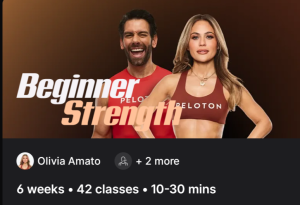
- Beginner Strength (6 Weeks) – specifically designed for beginners with clear progression
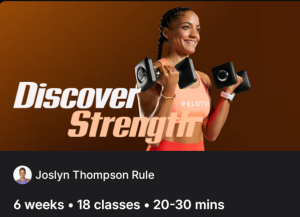
- Discover Strength (6 Weeks) – introduces foundational strength movements
- The Stronger You (Parts 1 & 2) – progressive programs you can grow with over time
- Total Strength with Andy (Parts 1 & 2) – structured, educational, and highly repeatable
- Pump Up the Volume (4 Weeks) – gradually increases reps, load, and volume
These programs work particularly well during perimenopause and menopause because they prioritize consistency over intensity, supporting long-term progress without overwhelming recovery systems.
Shorter, Repeatable Beginner Options
Once you understand basic movements, or if you’re short on time, Peloton also offers shorter, repeatable beginner strength options that still provide structure.
Programs like these can be repeated weekly and adjusted as your schedule allows:
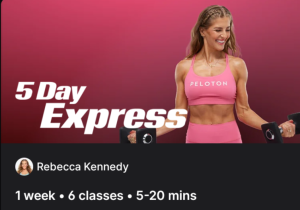
- Rebecca Kennedy’s 5 Day Express – short, approachable total-body strength
- Seated Adaptive Strength – form-focused, inclusive entry point
- Standing Adaptive Strength – beginner-friendly classes emphasizing control
- Beginner Split Programs
- Matty’s 5 Day Beginner Split
- Assal’s Abs 5 Day Beginner Split (German)
These options allow you to build consistency without planning individual workouts—especially helpful during busy or lower-energy weeks.
Peloton Strength Collections: Flexible and Focused
Peloton Collections are a smart way to access a set of classes grouped around a theme, goal, or training focus without committing to a full multi-week program. Unlike Programs, collections don’t require you to follow a strict schedule or order, making them perfect for flexible weeks when energy, time, or recovery needs fluctuate.
For women navigating perimenopause and menopause, strength-focused Collections can help you build consistency, target specific areas, and adapt to your body day by day:
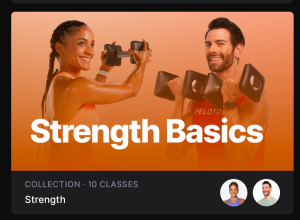
- Strength Basics – perfect for building foundational strength safely
- Discover Kettlebells – adds variety and challenges your full body
- Build Your Barre – strengthens core, glutes, and posture
- Strength Roll Call – Beginner Week – approachable, repeatable, and ideal for starting your routine
- Resistance Band Training (German) – gentle on joints, great for building muscle control
- Strong as a Mother – Pre/Postnatal Collection – surprisingly useful for core and stability work
Peloton Collections can include a variety of class types, from full-body strength sessions and upper-body or core-focused workouts to lift-specific training like squats, deadlifts, and presses, as well as sport-specific programs designed for runners, cyclists, or other activities. The beauty of collections is their flexibility: you can choose classes based on your goals, energy levels, or how your body feels that day. This makes them especially helpful during perimenopause and menopause, when some days call for a full-body challenge and other days are better suited to a shorter, targeted session.
Newer Additions
Rebecca Kennedy is part of two newer collections you might want to try. She leads The HiLiT Training Program, a 4-week progressive plan combining strength, mobility, and cardio (note that it’s technically a Program but is currently housed in the Collection library, allowing easier access to specific classes). She’s also featured in the Weighted Vest Collection alongside other instructors, using a weighted vest during walks and daily movement to build strength and boost aerobic fitness without stressing your joints.
Using Filters to Find Beginner Strength Classes
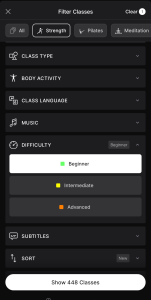
Peloton’s filters make strength training far more approachable, especially when you’re easing back in. To find beginner-friendly classes, simply go to the Strength category, open the Filter tab, and select Difficulty → Beginner. You can also filter by class length, instructor, or equipment to tailor sessions to your schedule and needs. This feature is especially helpful on days when your energy is low, recovery is still in progress, or you want to lift without overdoing it, giving you the confidence to stay consistent while listening to your body.
Pilates: A Powerful Strength Companion During Perimenopause
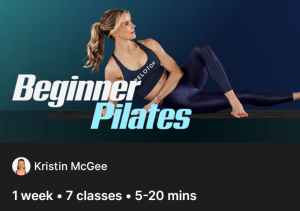
Peloton Pilates deserves its own spotlight – and now it has one, with its own Class category (no longer bundled under Strength). By building strength through controlled movement, core engagement, and joint-friendly loading, Pilates is an excellent option during hormonal transitions. You can filter classes by Beginner, use Pilates on recovery days, or pair it with heavier lifting sessions to improve stability. Beyond just movement, Pilates supports posture, balance, and deep core strength—all especially important as estrogen declines during perimenopause and menopause.
Mobility, Stretching, and Recovery: The Missing Link in Strength Training
Strength gains don’t happen without recovery, and Peloton makes this part easy to integrate. During perimenopause and menopause, knowing when to push and when to slow down is essential. Mobility, stretching, and recovery classes help you listen to your body, reduce injury risk, and recover faster between lifting sessions.
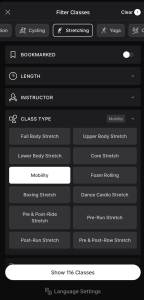
Peloton offers multiple ways to make recovery targeted and convenient. Mobility classes improve joint range of motion and overall movement quality, while stretching classes can be filtered by body area to focus on hips, shoulders, spine, or full body. Warm-ups and cool-downs are designed specifically to complement strength sessions. Using the Filters tab in Stretching, you can select exactly the type of class you need. Pairing these sessions with your strength program supports safer lifting, better performance, and faster recovery—perfect for the hormonal shifts of perimenopause and menopause.
Personalized Weekly Plans: Take the Guesswork Out of Strength Training
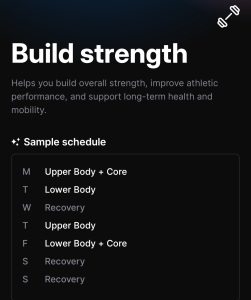
One of Peloton’s newer features, the Personalized Weekly Plan, is especially helpful during perimenopause. Every Monday, Peloton delivers a custom, strength-focused plan tailored to your preferences. You can select Build Strength as your fitness goal, choose your experience level, set the number of days per week and session length, decide whether to include cardio, and add optional recovery days. Peloton then builds a plan using strength classes, recovery sessions, and optional cardio, which you can adjust anytime if your schedule changes. For women navigating fluctuating energy levels or unpredictable weeks, this feature removes decision fatigue and makes it much easier to stay consistent with strength training.
When Following a Plan Is the Smartest Choice
During perimenopause, decision-making can feel harder… especially when energy, sleep, and stress levels fluctuate. In those weeks, following a program or a personalized plan can be far more effective than piecing together workouts on your own. Peloton’s structured programs and weekly plans allow you to show up without overthinking, train consistently, and adjust as needed without guilt. Sometimes, the best training decision is simply letting the plan decide for you, giving your body the guidance it needs while reducing stress and decision fatigue.
The Takeaway: Strength Training That Adapts to You
Peloton offers one of the most adaptable strength training ecosystems available for women in perimenopause and menopause. Whether you prefer structured programs, flexible collections, beginner filters, Pilates, or personalized weekly plans, there’s a way to build strength that fits your body and your life. Strength training during this stage isn’t about doing more—it’s about doing what works now.
Tune in to The Clip Out every Friday to hear Tom and Crystal’s take on this and other hot Pelotopics. We’re available on Apple Podcasts, Spotify, Google Podcasts, iHeart, TuneIn. Be sure and follow us so you never miss an episode. You can also find the show online on Facebook.com/TheClipOut. While you’re there, like the page and join the group. Lastly, find us on our YouTube channel, YouTube.com/TheClipOut, where you can watch all of our shows.
See something in the Peloton Universe that you think we should know? Visit theclipout.com and click on Submit a Tip!
About the Author: Lisa Warner

Latest Podcast



Subscribe
Keep up with all the Peloton news!