
The Peloton HSS Partnership: Extend Healthspan, Not Just Lifespan
The collaboration between Peloton and the Hospital for Special Surgery brings clinical musculoskeletal expertise directly into the platform’s programming. This strategic alliance was first announced in October 2025 and they provided a dedicated phone number for members in March 2026.
Americans are living longer than ever, but the years gained don’t always come with good health attached. The Peloton HSS partnership, discussed this week by Peloton CEO Peter Stern and Hospital for Special Surgery President Bryan T. Kelly in an article co-written for Fortune, sets out to change that by weaving clinical musculoskeletal expertise directly into Peloton’s fitness programming.
The Gap Between Lifespan and Healthspan
The average American lifespan now stretches past 79 years. Healthspan – the number of those years spent in genuine physical health – hasn’t kept up. That gap is the target the Peloton HSS partnership is explicitly designed to narrow.
“Living longer isn’t enough,” write Stern and Kelly, “We need to live better, too.” It’s a framing that reflects a broader evolution in how the fitness industry is being pushed to think about its role. Metrics like endurance output, weight lifted, and calories burned have long dominated the conversation. Mobility, injury prevention, and long-term physical function have received far less structured attention — until now.
HSS, consistently ranked among the top orthopedic hospitals in the country, brings deep clinical authority to this initiative. Pairing that expertise with Peloton’s platform – which reaches millions of members through strength training, Tread workouts, biking, Pilates, yoga, stretching, rowing, and more – creates a reach that a hospital system alone could never match.
Why Musculoskeletal Health Is the Focus of the Peloton HSS Partnership
Musculoskeletal conditions (injuries and disorders affecting muscles, bones, tendons, ligaments, and joints) are the leading cause of disability globally. Despite that scale, they’re most often treated reactively. People seek care after something goes wrong, not before.
The Peloton HSS partnership flips that model. By building preventive and rehabilitative logic into classes before an injury ever occurs, the collaboration is positioning Peloton’s platform as a tool for managing long-term physical health, not just fitness performance.
This is a particularly meaningful shift for Peloton’s community, which skews toward members who are already engaged with their health and motivated to stay active. That’s exactly the population that benefits most from structured attention to mobility, recovery, and joint health and also the population most likely to push through warning signs until something breaks.
What the Peloton HSS Partnership Looks Like in Practice
The collaboration will produce virtual classes developed with direct input from HSS doctors and clinicians. These classes won’t simply be lower-intensity alternatives to existing programming. They’ll be built with specific goals: improving mobility, supporting recovery, preventing injury, and extending the number of years members can keep moving at the pace they want.
Peloton instructors will work alongside HSS clinicians in developing content. That’s a meaningful distinction. It’s not a licensing deal where HSS stamps approval on existing classes. It’s a content development partnership, with clinical thinking shaping programming from the ground up.
The classes will appear on the Peloton platform, which already offers a broad range of modalities including strength training, biking, running and walking on the Tread, Pilates, yoga, stretching, row, and mat-based cardio. The Peloton HSS partnership will expand what that content is designed to do, adding clinical intent to the fitness foundation already in place.
Treating the Whole Person, Not Just the Workout
For Peloton members, this represents something more than new class types. It signals a deliberate commitment from the company to treat physical wellness as a long-term project — one that includes recovery, mobility, and joint health alongside the performance metrics members have always tracked.
Personal records matter. So does the ability to keep chasing them as we age. The Peloton HSS partnership is built on the recognition that those two things are connected, and that a fitness platform has a role to play in bridging them.
That’s a meaningful evolution for a platform whose community has always been health-motivated at its core. Peloton members aren’t casual exercisers. They’re people who prioritize movement and take their routines seriously. Giving that community direct access to clinical expertise — embedded in the classes they’re already doing — removes a significant barrier between fitness and long-term physical health management.

A Bigger Shift in Fitness
The Peloton HSS partnership isn’t happening in a vacuum. It reflects a broader recognition across the fitness and wellness industry that lifespan gains mean little without corresponding healthspan gains. The rise of longevity-focused health content, the growing interest in mobility and recovery work, and the mainstreaming of concepts like zone training and functional fitness all point in the same direction.
Peloton is moving to be part of that shift at the platform level, not just the content level. Embedding a top-ranked orthopedic institution’s clinical judgment into programming is a structural change to how the platform thinks about what it’s offering members.
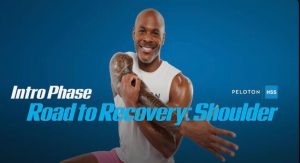
The most recent partnership programming added to the platform is the Intro Phase of Road to Recovery: ACL. It features 15 classes taught by Jess Sims, Kirra Michel and Nico Sarani with the focus being Resistance Band warm-ups and meditations. Phase 1, 2 and 3 are also available, along the Road to Recovery: Shoulder program, Intro, Phase 1, Phase 2 and Phase 3. These programs have a specific and deliberate order and provide a wide variety of instructors and class types.
Additional classes are coming. The specifics of the rollout – timelines, class formats, which modalities will be prioritized – haven’t been fully detailed yet. What’s clear is the direction: a fitness platform built not just around what members can do today, but around how long they can keep doing it.
The Clip Out is an independent Peloton news site with reporting, analysis, and community insights. We deliver breaking updates, feature reporting, and expert context on the stories driving the community and the industry.
Our weekly podcast offers deeper conversation and perspective, and you can find us on Apple Podcasts, Spotify, iHeart, TuneIn, and YouTube Music. You can also follow us on our socials on Facebook, Threads, Instagram, BlueSky, and YouTube.
See something in the Peloton universe that you think we should know? Visit us at theclipout.com and submit a tip.
About the Author: Liz Nikol (#JustAskForHelp)

Latest Podcast
Subscribe
Keep up with all the Peloton news!