Peloton HiLit Drives 48% Q3 Pilates Surge
Peloton HiLit Training Plan Drives 48% Pilates Surge in Q3
Rebecca Kennedy’s cross-training program is reshaping how members engage with the platform, and the numbers from Q3 earnings prove it.
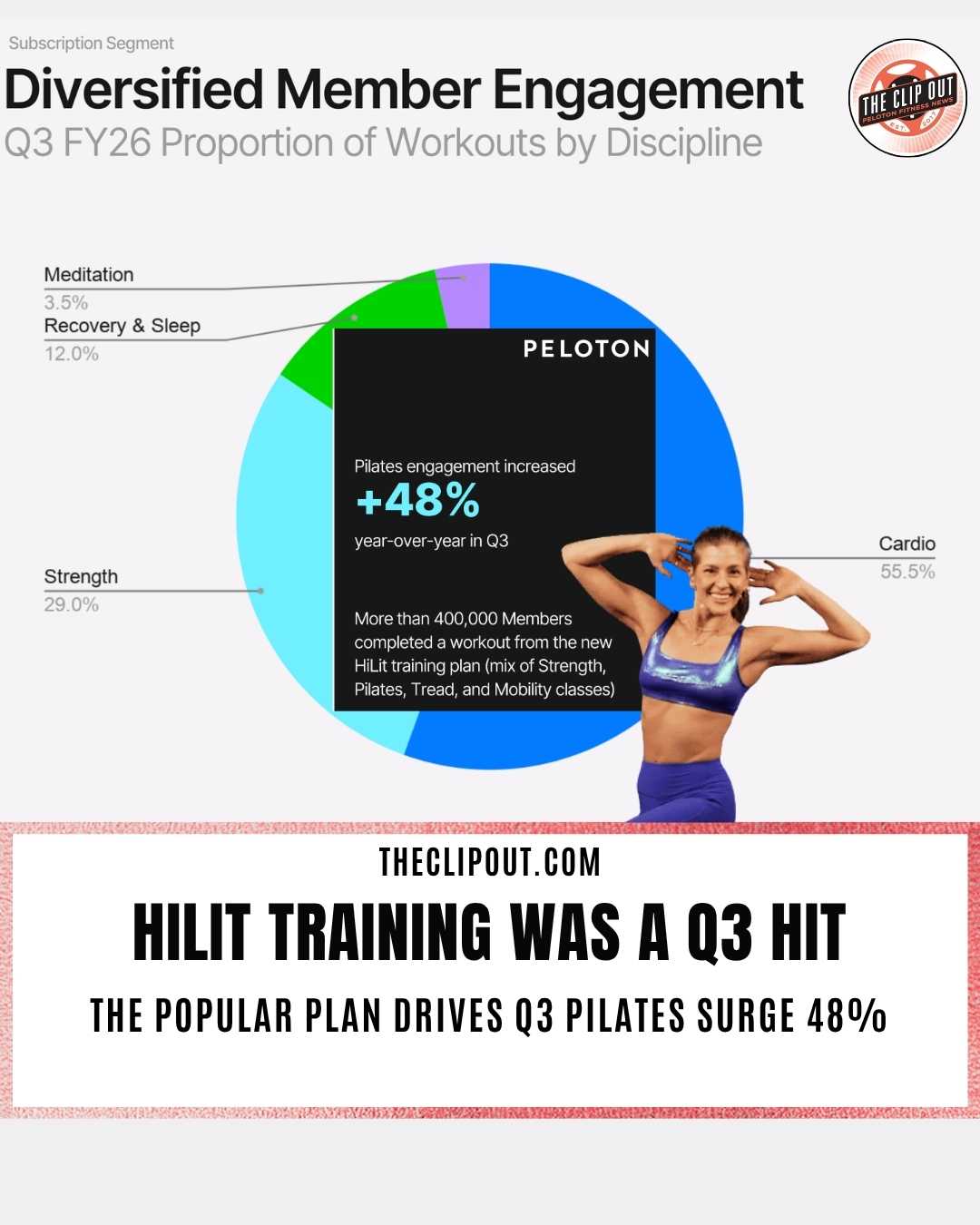
Peloton’s Q3 FY2026 earnings report, released May 7, delivered a clear signal about where members are spending their time: Pilates workouts grew 48% year-over-year last quarter, driven in part by Rebecca Kennedy’s HiLit Training Plan, which drew 400,000 members in Q3 alone. The Peloton HiLit Training Plan is one of the most concrete engagement wins Peloton has highlighted in recent quarters, and the scale of participation puts real numbers behind the company’s push to position itself as a full wellness platform.

What the Peloton HiLit Training Plan Is
HiLit stands for High Intensity, Low Impact Training. The program is a four-week training plan that combines strength, cardio, and mobility exercises designed to deliver results without straining joints. It draws on multiple disciplines within the Peloton platform — including strength, walking, pilates, and mobility classes — rather than anchoring members to any single modality.
That design is the point. Members who complete the full plan are effectively cross-training across the platform, which builds habits that extend beyond a single class type. For Peloton, that kind of engagement is more durable than one-off workouts and harder to replicate outside the ecosystem. When it launched live, members were excited to have their five days of classes dropping each week, and they were new (not repeating a split-style workout for multiple weeks).
The Clip Out covered the Peloton HiLit Training Plan in depth when it launched — you can read our full HiLit review and access all HiLit training resources including week-by-week trackers.
Why the Pilates Numbers Matter
A 48% year-over-year increase in Pilates engagement is not a minor uptick. It reflects both the reach of a structured program like HiLit — which incorporates Pilates as a core component of recovery and conditioning — and a broader shift in how members are using the platform.
Pilates sits at the intersection of strength, mobility, and low-impact training, which is exactly where a growing share of the Peloton catalog is focused. For members who might have originally come to the platform through cardio or tread classes, pilates represents a meaningful expansion of their training habits.
The 400,000 members who engaged with the Peloton HiLit Training Plan in a single quarter is also notable context. Peloton ended Q3 with 2.662 million paid connected fitness subscriptions. That means roughly 15% of the paid connected fitness subscriber base participated in a single structured plan — an unusually high rate of participation for any one program.
Breathwork, Recovery, and What’s Coming Next
The Pilates surge doesn’t stand alone. During the Q3 earnings call, Peloton leadership noted the addition of 140 instructor-led classes on the Breathwrk app, which Peloton acquired last year. Breathwork, recovery, and mobility are increasingly central to how Peloton presents its content, and the member response to both HiLit and the broader wellness content expansion appears to be validating that direction.
The Bigger Platform Story
These numbers come alongside a Q3 earnings report that showed total revenue of $631 million, up 1% year-over-year, with net income of $26 million and adjusted EBITDA rising 41% year-over-year to $126 million. The financial recovery and the engagement data are related. Members who train across multiple modalities tend to stick around longer, and programs like HiLit are specifically designed to encourage that behavior.
Peloton CEO Peter Stern said the quarter reflected progress on “deepening our relationships with our Members” and described the company’s direction as an evolution into “a comprehensive, global wellness ecosystem.”
The Pilates surge and the HiLit participation numbers are the kind of evidence that makes that framing credible. Members are not just showing up for one type of workout, they’re moving across the platform, following structured plans, and engaging with content that didn’t exist in Peloton’s library a few years ago. That’s the behavior Peloton has been trying to cultivate, and in Q3, it showed up in the data.
The Clip Out is an independent Peloton news site with reporting, analysis, and community insights. We deliver breaking updates, feature reporting, and expert context on the stories driving the community and the industry.
Our weekly podcast offers deeper conversation and perspective, and you can find us on Apple Podcasts, Spotify, iHeart, TuneIn, and YouTube Music. You can also follow us on our socials on Facebook, Threads, Instagram, BlueSky, and YouTube.
See something in the Peloton universe that you think we should know? Visit us at theclipout.com and submit a tip.
About the Author: Elizabeth Schlosberg

Latest Podcast


Subscribe
Keep up with all the Peloton news!