Understanding the Peloton Healthspan Strategy and What It Means for Members
Understanding the Peloton healthspan strategy and what it means for the future of your workouts.
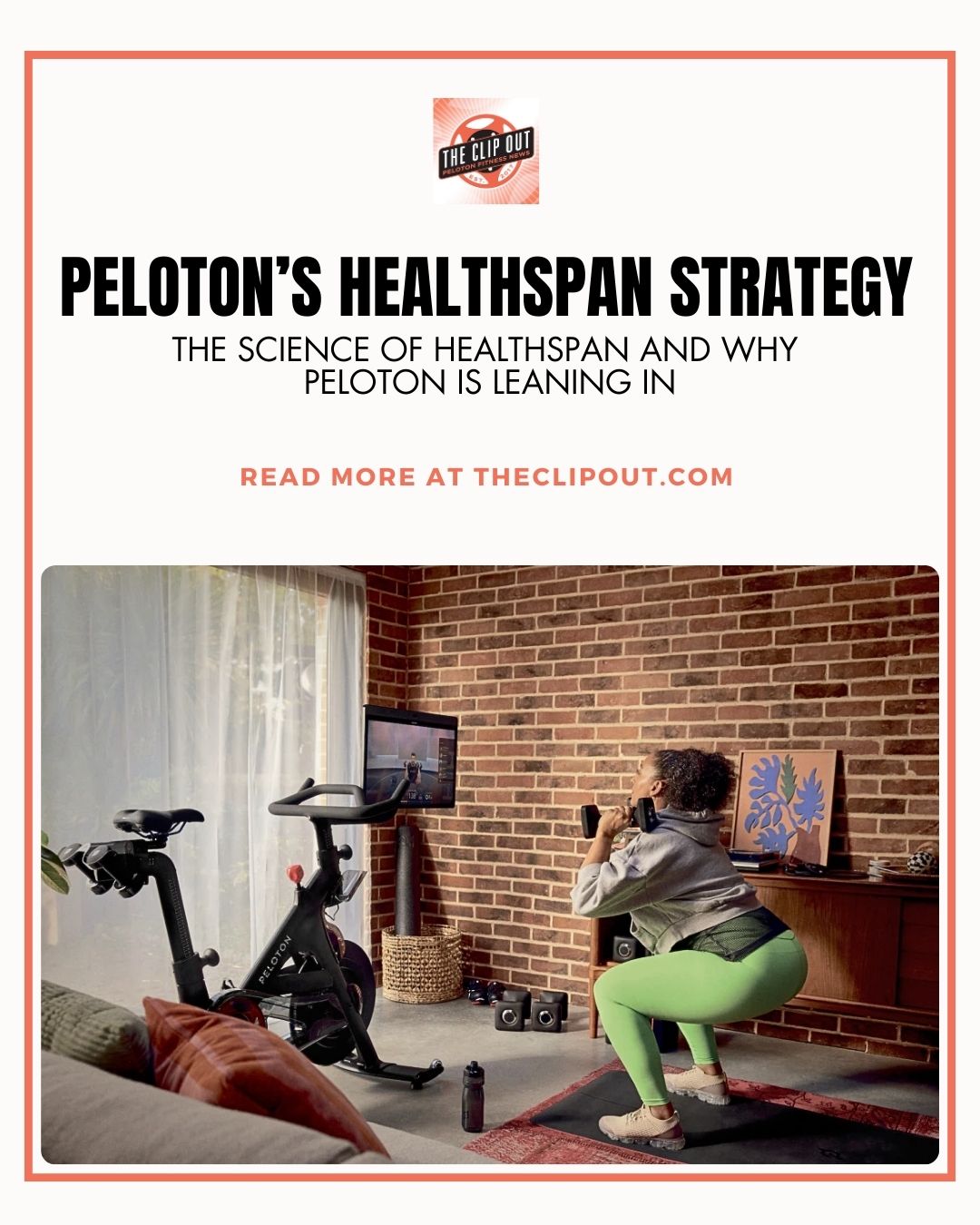
If you’ve scanned any health-related headlines or listened to even one of the last two Peloton earnings calls, chances are you’ve either read or heard the word Healthspan. It’s a buzzword that’s becoming increasingly more common in the fitness space, and certainly one that Peloton is leaning into. But, what does healthspan really mean? And, more importantly, what does healthspan mean for you, both as an individual and as a Peloton member?
For years, the fitness industry has focused on one big question: How do we help people live longer? But increasingly, scientists, healthcare providers, and wellness leaders are asking a better one: How do we help people live better, longer?
That idea has a name: Healthspan. And, it’s rapidly becoming a central theme in how Peloton is thinking about the future of its platform and its Members.
Healthspan isn’t simply about adding more years to your life. It’s about increasing the number of years you live healthy, mobile, mentally sharp, and free from chronic disease. And while Peloton isn’t a healthcare company, its growing emphasis on science-backed wellness, personalization, and whole-person support fits squarely into this evolving conversation.
At the center of that shift is one of Peloton’s four strategic pillars: Improve Member Outcomes.
What Is Healthspan (and Why Everyone’s Talking About It)?
Healthspan refers to the years of life spent in good health. Not just alive, but functional, independent, and engaged. According to UCLA Health, most people live a significant portion of their later years managing chronic conditions, mobility limitations, or cognitive decline. The goal of healthspan-focused living is to shorten that period as much as possible.
In other words, lifespan asks how long you live.
Healthspan asks how well you live while you’re here.
Decades of research point to the same key contributors to a longer healthspan:
- Regular physical activity (especially strength training)
- Cardiovascular fitness
- Mobility and balance
- Stress management and mental well-being
- Quality sleep
- Sustainable, personalized habits
Which brings us to Peloton’s evolving role.
Peloton’s Four Strategic Objectives and Where Healthspan Fits
Peloton has outlined four core business pillars that guide its strategy:
- Improve Member Outcomes
- Meet Members Everywhere
- Members for Life
- Business Excellence
While all four influence the Member experience, the Peloton healthspan strategy, and the science behind it, is most closely aligned with the ‘Improve Member Outcomes’ objective.. This pillar focuses on helping Members achieve better results through equipment and software, science-backed wellness (beyond just cardio), more personalized coaching and smarter use of data, AI, and wearables.
Rather than chasing output for output’s sake, Peloton is shifting the emphasis toward what actually improves quality of life over time.
Improve Member Outcomes: A Healthspan-Aligned Strategy
Peloton’s focus on improving outcomes represents a clear pivot from being “just” a cardio platform to becoming a holistic wellness partner for its Members. The goal isn’t, and has never been, weight loss or calorie burn, but it is evolving into helping Members stay strong, capable, and fulfilled as they age.
Here’s how that shows up across the platform.
Strength Training = Independence as You Age
Research consistently shows that maintaining muscle mass and strength is one of the strongest predictors of healthy aging. In other words, muscle matters. Stronger muscles are linked to:
- Lower risk of falls and injury
- Better metabolic health
- Longer functional independence
In some studies, muscle strength is a better predictor of longevity than BMI, which helps explain why Peloton continues to invest heavily in strength programming alongside cardio.
Cardio Supports Both Lifespan and Healthspan
Cardiovascular exercise isn’t just about endurance or burning calories. Large-scale studies show regular aerobic activity:
- Lowers risk of heart disease, diabetes, and stroke
- Improves cognitive function and mood
- Supports long-term mobility and daily function
Translation: cardio helps you live longer and feel better while doing it.
Mobility, Flexibility & Balance Matter More Than We Think
Mobility and flexibility training play a critical role in healthy aging by:
- Preserving joint function
- Reducing chronic pain
- Improving balance and coordination
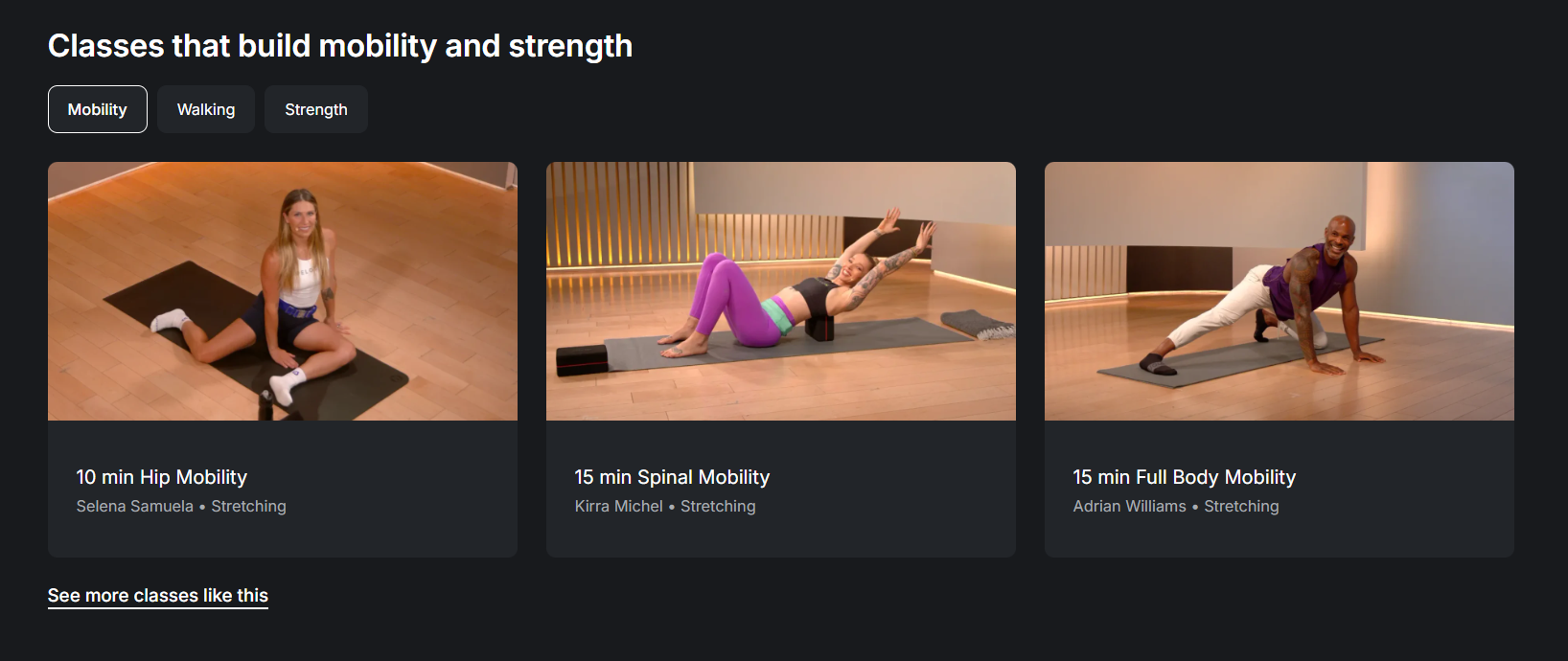
This supports Peloton’s expansion of mobility, stretching, and yoga content, especially as their members age and prioritize how their bodies feel, not just how they perform.
Mental Wellness & Sleep Are Core to Longevity
Decades of research show that mental health, sleep quality, and stress management directly affect healthspan. Poor sleep and chronic stress are linked to:
- Increased inflammation
- Higher risk of chronic disease
- Faster physical and cognitive decline
Meditation, breathwork, and sleep content aren’t “extras,” they’re foundational to long-term health.
Lifestyle Habits Matter More Than Genetics
Long-running population studies suggest that daily behaviors, including movement, sleep, nutrition, and social connection, play a larger role in how well we age than genetics alone.
That’s a big reason Peloton’s vision goes beyond workouts and is beginning to lean toward supporting the whole person, on a daily basis.
Healthspan Is a Major Focus in Modern Science
Healthspan research is now a priority across medicine, academia, and innovation. Global initiatives and medical institutions increasingly focus on:
- Extending years lived without disability
- Preserving cognitive and physical function
- Improving quality of life, not just longevity
Healthspan isn’t an abstract concept for Peloton, either. Peloton’s pivot toward science-backed, personalized wellness aligns directly with where aging research is headed, and it’s already showing up on the platform. You can see the blueprint taking shape in Rebecca Kennedy’s HiLit program, in Christine D’Ercole’s SIT classes, and in Peloton’s partnership with RE-SPiN. Member’s really don’t have to look far to see what Peloton’s plans are.
What Peloton’s Healthspan Focus Means for You
If all this talk about healthspan and strategic pillars feels a little big-picture, here’s the part that actually matters: how this shows up in your day-to-day Peloton life.
You’re not just training for today.
More strength, mobility, and recovery content means your workouts are designed to help you move better now and stay capable as you age, not just chase short-term PRs (although, those are still awesome!).
Cardio isn’t taking a backseat, it’s just getting smarter.
Zone training, sprint interval training (SIT), endurance work, and low-impact options support heart health without burning you out. Think longevity over leaderboard chaos.
Recovery is an integral part of the plan.
Mobility, restorative yoga, and sleep content aren’t “extras” or anymore. They deserve a spot on the workout plan and they’re tools to help you train consistently, avoid injury, and feel better while you’re living your life.
Your workouts are becoming more personalized.
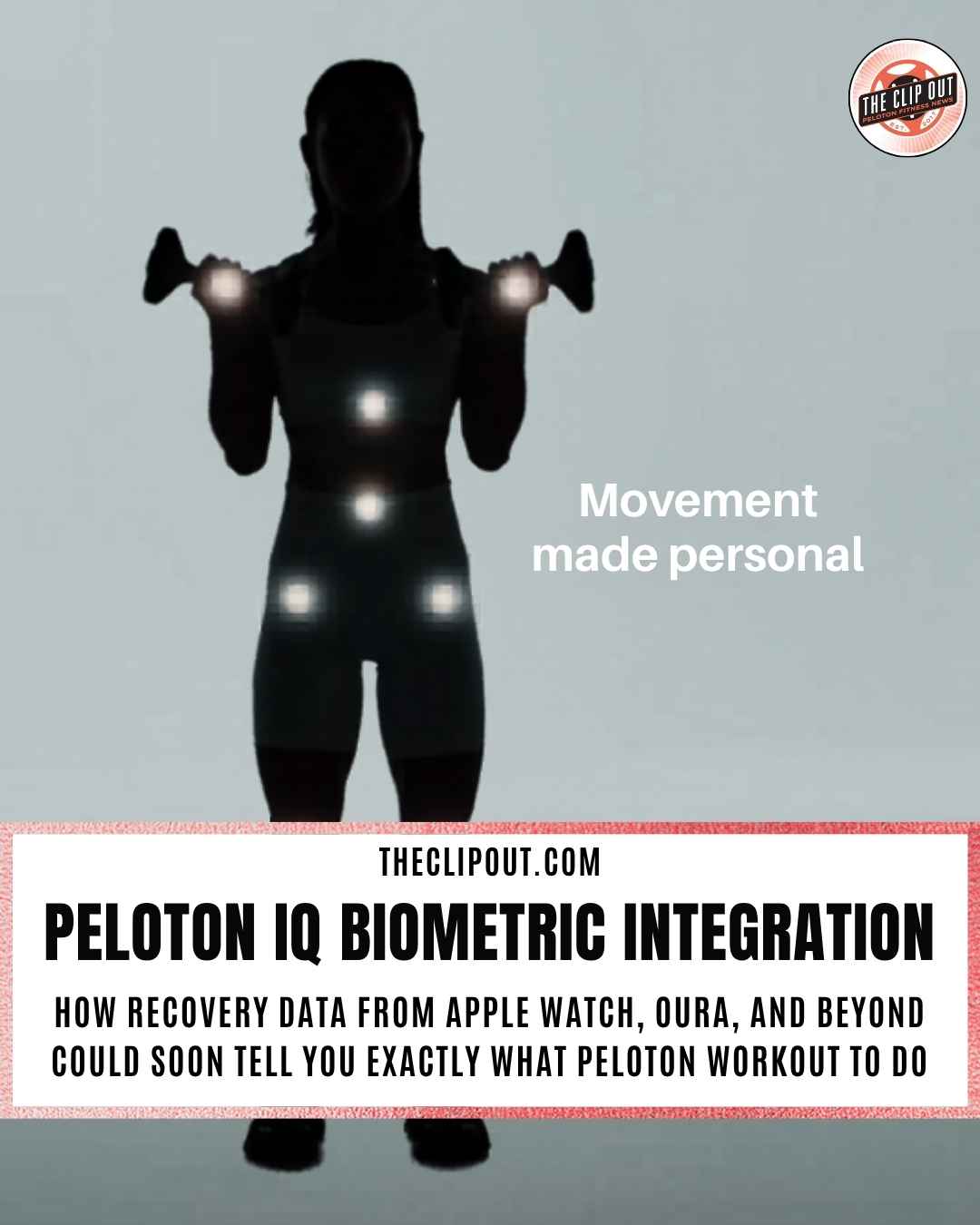
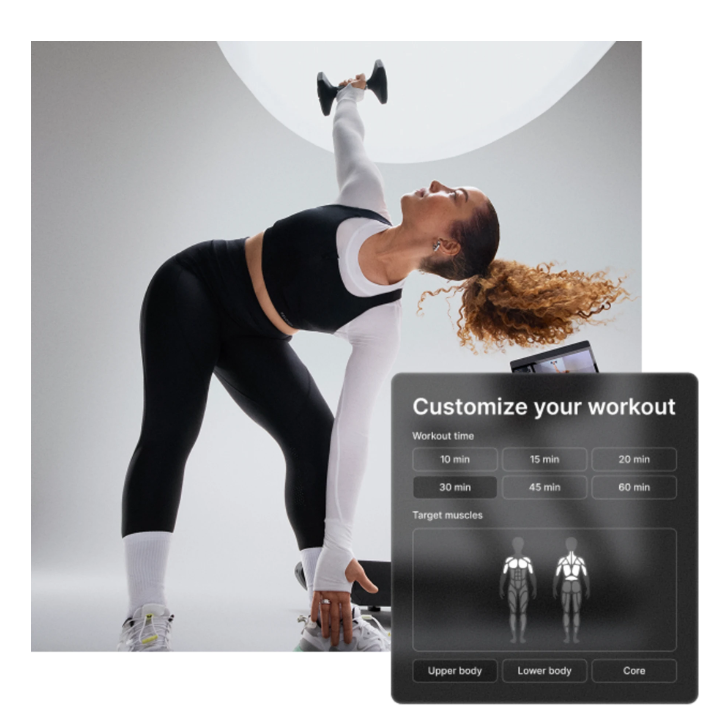
As Peloton continues to integrate AI via Peloton IQ and wearable data via their FitBit partnership and Apple Watch and Garmin integration, the goal is better guidance based on your body, habits, and recovery, not a one-size-fits-all approach.
As it pushes further into it’s healthspan strategy, Peloton is clearly thinking about Members as people who want to stay strong, independent, and engaged for decades, not just shredded for summer. Cliché though it may be, it’s not just about adding years to life, it really does come down to adding life to those years.
What is My Healthspan?
Determining healthspan requires a shift in perspective, moving away from the simple absence of illness and toward a comprehensive evaluation of a person’s total vitality. This assessment isn’t a single data point; it’s a multifaceted diagnostic that layers clinical screenings and cognitive tests with functional ability and emotional resilience.
Additionally, health insurers are shifting from reactive “sick care” to proactive models that prioritize healthspan to reduce long-term costs. Through value-based care, they now reward providers for patient outcomes like sustained mobility rather than procedure volume. Many carriers also offer premium discounts and subsidies for wearables or fitness platforms, incentivizing the habits that extend functional, independent years.
True longevity is built on a foundation of social connectivity and mental health just as much as disease prevention. By looking at the whole person, how they move, how they think, and how they connect, healthcare and wellness providers can move beyond merely extending life, instead tailoring interventions that actively enhance the quality of the years we have.
Healthspan at Peloton: What to Try First
If you’re ready to lean into a healthspan-focused approach but don’t know where to start, try this:
☑️ Add 2 – 3 strength classes per week
Prioritize full-body or upper/lower splits to build muscle, support bone density, and protect long-term mobility.
☑️ Bookend workouts with mobility
Even 5 –10 minutes of hips, hamstrings, or spine mobility can improve movement quality and reduce injury risk.
☑️ Schedule recovery (on purpose)
Restorative yoga, stretch, or foam rolling = part of the plan, not an afterthought.
☑️ Balance intensity with endurance
Mix HIIT or intervals with endurance and low-impact cardio to support heart health without overtraining.
☑️ Don’t skip mental fitness
Meditation, breathing, and sleep content aren’t fluff, they support stress management, consistency, and overall well-being.
☑️ Listen to your body (and your data)
Use your data, not your ego. Use metrics like heart rate, output trends, and perceived effort to guide decisions, not punish yourself.
☑️ Think long-term, not just next week
The goal isn’t to survive one hard class, it’s to keep moving well, feeling strong, and showing up consistently for years.
Remember: Healthspan-focused training isn’t about doing more. It’s about doing what works consistently for the long haul.
The Big Takeaway For Members
Peloton’s increasing focus on improving Member outcomes aligns with this reality: better data, better programming, and better support can lead to better years, not just more of them and Members will continue to see the evolution of this in the Peloton ethos for years to come.
Tune in to The Clip Out every Friday to hear Tom and Crystal’s take on this and other hot Pelotopics. We’re available on Apple Podcasts, Spotify, Google Podcasts, iHeart, TuneIn. Be sure and follow us so you never miss an episode. You can also find the show online on Facebook.com/TheClipOut. While you’re there, like the page and join the group. Lastly, find us on our YouTube channel, YouTube.com/TheClipOut, where you can watch all of our shows.
See something in the Peloton Universe that you think we should know? Visit theclipout.com and click on Submit a Tip!
About the Author: Nikki Smith

Latest Podcast



Subscribe
Keep up with all the Peloton news!